Rap Atlas: Miami — 2 Live Crew, Slip-N-Slide and DJ Khaled
This edition traces Miami’s rap history through three overlapping threads. One is Luther Campbell’s: a Liberty City DJ whose Ghetto Style DJs parties and Luke Skyywalker Records (later Luke Records) carried 2 Live Crew’s bass-heavy sound into a 1989 RIAA platinum certification and through the 1990 obscenity case and its 1992 reversal; in a separate copyright case, the group’s 1994 Supreme Court ruling Campbell v. Acuff-Rose held that commercial parody could qualify as fair use under the Copyright Act’s fair-use doctrine (17 U.S.C. § 107). Another is Ted Lucas’s Slip-N-Slide Records (1994), which released, out of Liberty City, Trick Daddy’s www.thug.com (1998) and Trina’s Da Baddest Bitch (2000), then carried Carol City’s Rick Ross to a Billboard 200 No. 1 with Port of Miami (2006). A third runs through Pitbull, who signed to Luke Records in 2001 and took Miami’s Latin sound to the Hot 100’s top spot, and DJ Khaled, a New Orleans native who came up through Miami’s 99 Jamz starting in 1998 and built We the Best Music Group into a run of Billboard 200 No. 1 albums; in the 2010s, Broward County’s SoundCloud generation and Opa-locka and Liberty City’s City Girls carried a newer wave of the scene onto national charts and streaming platforms.
This Rap Atlas entry documents nine core acts, twelve dated turning points, and fourteen registry entries covering the scene’s labels, crews, districts and sounds, drawn from the verified registry behind this page. Every place attribution is split into born, raised or based, and where the record could not confirm a detail, this article says so.
What to know
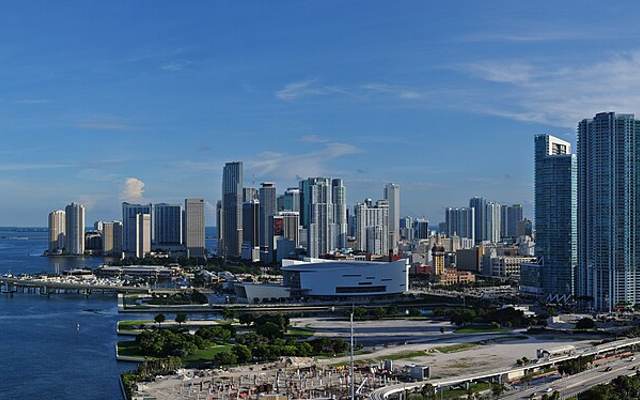
The Miami rap scene is defined here as Miami-Dade and Broward counties in Florida: Liberty City, Carol City/Miami Gardens, Opa-locka and Hialeah in Miami-Dade, and Miramar/Davie, Pompano Beach and Fort Lauderdale/Lauderhill in Broward. Its documented arc runs from the early 1980s, when Luther Campbell led the Ghetto Style DJs in Liberty City and built Luke Skyywalker Records (later Luke Records) around 2 Live Crew, through the 1989 RIAA platinum certification of As Nasty As They Wanna Be, the 1990-1992 obscenity case and appeal, and, in a separate copyright case, the group’s 1994 U.S. Supreme Court fair-use ruling, to Ted Lucas’s Slip-N-Slide Records (1994) and its run of Trick Daddy, Trina and Rick Ross releases, to Pitbull and DJ Khaled’s national and global chart runs from the 2000s through the 2020s, and to the 2010s SoundCloud-era wave and City Girls’ rise out of Opa-locka and Liberty City.
Nine acts appear in this edition: Uncle Luke, Trick Daddy, Trina, Rick Ross, Pitbull, DJ Khaled, Denzel Curry, Kodak Black and City Girls. Eight are marked verified against A-grade sources (Miami New Times, LA Times archives from 1990-1992, Rolling Stone, Billboard’s own chart pages and articles, RIAA, Grammy.com, The FADER, Sun Sentinel, Pitchfork, Complex, law.cornell.edu, and official label sites); Rick Ross is marked partial because A-grade sources disagree on his place of birth. The list is not a ranking; order is roughly chronological by career start, and placement is not sold. Acts outside this edition’s verification scope are not judged less important; the correction window is open.
Timeline: Miami Rap, 1980s–2025
In the early 1980s, Luther Campbell led the Ghetto Style DJs in Liberty City and began making vocal-less, bass-driven tracks for teen parties at his club, Pac Jam. Campbell describes this himself as the start of what became known as Miami bass, in a Red Bull Music Academy interview. In 1990, the LA Times recorded that Campbell, who grew up in a tough section of Liberty City, started out as an outdoor-dance DJ under the name “Luke Skyywalker.”
In 1986, the California group 2 Live Crew, formed at Riverside’s March Air Force Base, teamed with Campbell to record “Throw the D,” which Campbell sold by hand from the trunk of his car, moving more than 250,000 copies according to the LA Times. The group subsequently relocated to Miami, recording at a studio on 71st Street in Liberty City, per member Brother Marquis’s account to Miami New Times.
Between 1988 and December 1989, the RIAA certified The 2 Live Crew Is What We Are (dated 1988-05-13) and Move Somethin’ (1988-11-28) gold, and certified As Nasty As They Wanna Be (Luke Records) platinum, dated 1989-12-14.
On June 6, 1990, in a civil case brought by the label against Broward County sheriff Nick Navarro, federal district judge Jose Gonzalez ruled As Nasty As They Wanna Be obscene, a declaratory ruling that made retail sale of the album unlawful in Broward, Dade and Palm Beach counties. Separately, a Fort Lauderdale record store owner was criminally arrested for selling the album on June 8, and Campbell and other 2 Live Crew members were criminally arrested after a live performance in Hollywood, Florida the following day, June 9 (these specific dates are drawn from secondary aggregation rather than directly retrieved LA Times body text in this session); a jury acquitted the group that same year on the performance obscenity charge, per the LA Times. In parallel, Campbell settled a Lucasfilm trademark suit and renamed the label from Luke Skyywalker Records to Luke Records. “Banned in the U.S.A.” was certified RIAA gold, dated 1990-09-25.
On May 7, 1992, the Eleventh Circuit Court of Appeals in Atlanta overturned the 1990 obscenity finding, ruling that no evidence had been presented that the work lacked artistic value, according to the LA Times and Rolling Stone.
On March 7, 1994, the U.S. Supreme Court ruled in Campbell v. Acuff-Rose Music, Inc. (510 U.S. 569) that 2 Live Crew’s parody of Roy Orbison’s “Oh, Pretty Woman” could qualify as fair use even with a commercial purpose, reversing the appeals court below. The decision addressed parody and fair use.
In 1994, Ted Lucas founded Slip-N-Slide Records in Miami, per Miami New Times’ 2023 retrospective (the paper’s own 1999 profile instead gives 1993, a discrepancy this record notes rather than resolves). On March 28, 1995, Luke Records entered involuntary bankruptcy following a creditor’s petition, per the Eleventh Circuit’s opinion; staff from its publicity operation moved over to Slip-N-Slide, though the year of that move is not confirmed in this edition (Miami New Times, 1999).
Trick Daddy’s www.thug.com (1998, Slip-N-Slide, distributed by Atlantic) produced “Nann,” featuring Trina, which Miami New Times’ 2023 retrospective places at No. 62 on the Hot 100 and No. 3 on the Rap Songs chart; the paper’s own 1999 coverage instead described the song as reaching No. 4 on the rap chart, a discrepancy this record notes rather than resolves. The album was certified RIAA gold, dated 1999-07-02. Trina’s Da Baddest Bitch (2000, Atlantic) followed, certified gold dated 2000-11-13.
Pitbull signed with Luke Records in 2001 and appeared on Uncle Luke’s Something Nasty. In 2004 he released his debut album, M.I.A.M.I., known for the single “Culo,” per Miami New Times and Billboard.
Rick Ross’s Port of Miami (Slip-N-Slide/Def Jam) debuted at No. 1 on the Billboard 200, dated 2006-08-26; “Hustlin'” was later certified RIAA 2× platinum, dated 2021-08-31. DJ Khaled’s Listennn… the Album (2006) reached No. 12 on the Billboard 200. Ross founded Maybach Music Group in 2008, per Miami New Times. We the Best Music Group’s own chronology, per Epic Records’ 2016 official announcement, traces a 2006 founding with a 2008 Def Jam distribution deal; Miami New Times’ account instead dates the label’s founding to 2008, and this record states both rather than resolving the difference.
Between 2013 and 2018, SpaceGhostPurrp’s Raider Klan (with Denzel Curry and Xavier Wulf among its members) drew attention for a Memphis-indebted, lo-fi sound, and South Florida acts that followed it — XXXTentacion, Ski Mask the Slump God and Smokepurpp among them — were folded into what became known nationally as SoundCloud rap. Smokepurpp’s own account, given to XXL and REVOLT, is that he was born in Chicago and moved to Miami in early childhood, where he was raised, so the Broward County framing applied to some of his SoundCloud-era peers does not extend to him, per Rolling Stone (2017), Pitchfork and Miami New Times. XXXTentacion was shot and killed in Deerfield Beach on June 18, 2018, per Miami New Times.
Between 2016 and 2025, DJ Khaled reached No. 1 on the Billboard 200 four times — Major Key (dated 2016-08-20), Grateful (2017-07-15), Khaled Khaled (2021-05-15) and GOD DID (2022) — and won a Grammy for “Higher” at the 62nd ceremony in January 2020. Drake’s “In My Feelings,” featuring City Girls, topped the Hot 100 dated 2018-07-21. Kodak Black’s Dying to Live debuted at No. 1 on the Billboard 200, dated 2018-12-29. On July 8, 2025, the city of Pompano Beach presented Kodak Black with a key to the city, per Sun Sentinel.
Districts and Venues
This edition covers Miami-Dade and Broward counties in Florida, taking in Liberty City, Carol City/Miami Gardens, Opa-locka and Hialeah in Miami-Dade, and Miramar/Davie, Pompano Beach and Fort Lauderdale/Lauderhill in Broward. Liberty City, a district in northwest Miami, is recorded across multiple sources as the home turf of Luther Campbell, Trick Daddy, Trina, JT of City Girls, DJ Uncle Al and Jacki-O, and includes the Liberty Square (Pork ‘n’ Beans) housing project. Carol City/Miami Gardens, at the northern edge of Miami-Dade County, is where Rick Ross, Denzel Curry and JT of City Girls were raised; Curry has stressed in interviews that the district sits in Dade County, not Broward. Opa-locka, also in Miami-Dade, is where Yung Miami of City Girls was raised and is home to the radio station 99 Jamz. Pompano Beach, in Broward County, is Kodak Black’s hometown, where the city presented him with a key to the city in 2025.
Representative Acts
Uncle Luke. Luther Campbell was born in Liberty City, Miami, per Miami New Times’ 2023 retrospective, and was raised there, per an LA Times account describing his upbringing in a tough section of the district; he was based in Miami, where Luke Records operated through the 1990s. He founded Luke Skyywalker Records, later renamed Luke Records, and led 2 Live Crew, a California group he brought to Miami. As Nasty As They Wanna Be (Luke Records) is certified RIAA platinum, dated 1989-12-14, and Banned in the U.S.A. is certified gold, dated 1990-09-25. He was a named party in the 1990 civil obscenity ruling against the label and its 1992 reversal on appeal, was criminally arrested on June 9, 1990 after a live performance in Hollywood, Florida (a jury acquitted the group that same year), and was a named party in the 1994 U.S. Supreme Court copyright ruling in Campbell v. Acuff-Rose Music, Inc.
Trick Daddy. Raised in Liberty City’s Liberty Square housing project, known as Pork ‘n’ Beans, per Miami New Times’ 1999 interview describing him as a “Liberty City native”; his exact place of birth is not confirmed in this edition. He was the artist who built Slip-N-Slide Records’ national profile, and his 1998 album www.thug.com, distributed through Atlantic, produced “Nann” featuring Trina. The album was certified RIAA gold, dated 1999-07-02. His catalog also includes Thugs Are Us, certified platinum in 2001, and Thug Matrimony, certified platinum in 2024.
Trina. Raised in Liberty City, at her grandmother’s house near NW 66th Street and 15th Avenue, near Miami Northwestern High School, per Miami New Times’ 1999 profile describing her as a “Liberty City native”; her exact place of birth is not confirmed in this edition. She appeared on Trick Daddy’s “Nann” in 1998 and debuted with Da Baddest Bitch (Slip-N-Slide/Atlantic) in 2000, certified RIAA gold, dated 2000-11-13; her single “Here We Go” was certified gold in 2006. Billboard’s artist profile calls her “one of the most consistent rappers” of the 2000s and 2010s, and Miami New Times’ 2023 retrospective covers her as part of the Slip-N-Slide era.
Rick Ross. Raised in Carol City, per Billboard’s description of him as “born and raised in Carol City” and Miami New Times’ 2008 profile, which records his graduation from Carol City Senior High School; his place of birth is disputed between A-grade sources, with Billboard and Miami New Times’ 2008 account stating Carol City and grammy.com’s own artist page stating Clarksdale, Mississippi, a discrepancy this record does not resolve. He debuted with Port of Miami (Slip-N-Slide/Def Jam) in 2006, which entered the Billboard 200 at No. 1, dated 2006-08-26; “Hustlin'” was later certified RIAA 2× platinum, dated 2021-08-31. He founded Maybach Music Group in 2008, per Miami New Times, with a roster that has included Wale, Meek Mill, Teedra Moses and Gunplay. Grammy.com’s artist page records nine Grammy nominations and no wins. This entry is marked partial.
Pitbull. Born in Miami, per Miami New Times’ description of him as a “Miami native” and Billboard’s description of him as a “Cuban-American rapper from Miami”; A-grade text confirms only Billboard’s “Cuban-American” description, not an explicit statement about his parents’ background, and any upbringing in Little Havana is not confirmed in this edition. He signed with Luke Records in 2001, appeared on Uncle Luke’s Something Nasty, and debuted with M.I.A.M.I. in 2004. “Give Me Everything” reached No. 1 on the Hot 100, dated 2011-07-09. RIAA certifications include “Timber” at 12× platinum, “Give Me Everything” at 11× platinum, and Planet Pit and Global Warming each at 3× platinum, under Mr. 305 Records/Polo Grounds/RCA. He won Best Latin Rock, Urban or Alternative Album for Dale at the 58th Grammy Awards in 2016, per grammy.com, and leads his own label, Mr. 305 Inc.
DJ Khaled. Born and raised in New Orleans, per Miami New Times’ description of him as “born and reared in New Orleans” and The FADER’s account that he got his start there, to Palestinian immigrant parents; he was based in Miami from 1994, when Miami New Times’ 2016 interview places his move to the city, and co-hosted 99 Jamz’s The Luke Show starting in 1998. He is not Miami-born. He built We the Best Music Group, with a founding this record dates two ways: Epic Records’ 2016 official announcement distinguishes a 2006 founding from a 2008 Def Jam distribution deal, while Miami New Times separately dates the label’s founding to 2008. He reached No. 1 on the Billboard 200 four times — Major Key (2016), Grateful (2017), Khaled Khaled (2021) and GOD DID (2022) — per Billboard’s own chart pages and Universal Music Canada’s official count. “Higher,” featuring Nipsey Hussle and John Legend, won a Grammy at the 62nd ceremony in January 2020, not the commonly circulated 2022 date. His 2019 album Father of Asahd reached No. 2, not No. 1, dated 2019-06-01. RIAA certifications include “I’m the One” at diamond and “Wild Thoughts” at 9× platinum.
Denzel Curry. Raised in Carol City, Miami Gardens, in what he has called Zone 3, per his own account to Complex in 2014 describing 19 years spent growing up there, and per Miami New Times’ and Pitchfork’s descriptions of him as a Carol City native; Miami New Times’ 2019 album review states “Born in Carol City,” though this article holds off on adopting a specific birthplace pending further review. He came up through SpaceGhostPurrp’s Raider Klan before going independent with Nostalgic 64 in 2013. TA13OO (PH/Loma Vista, 2018) reached No. 28 on the Billboard 200, dated 2018-08-11, and Complex included it in a year-end albums list in 2018. RIAA certifications include “Ultimate” at platinum (2026), “Walkin” at platinum (2025) and “Ricky” at gold. Miami New Times’ 2019 coverage reports that he later moved to Los Angeles.
Kodak Black. Born June 11, 1997, and raised in Pompano Beach’s Golden Acres housing project, per Sun Sentinel’s description of him as “born and raised in Pompano Beach,” and of Haitian descent, per Miami New Times. He broke out with “No Flockin” in 2014 and signed with Atlantic. Painting Pictures (2017) reached No. 3 on the Billboard 200, per Sun Sentinel and Billboard, and Dying to Live (2018) debuted at No. 1, dated 2018-12-29. RIAA certifications include “Tunnel Vision” and “Zeze” at 9× platinum, “Super Gremlin” at 6× platinum, and Painting Pictures at 2× platinum, under Atlantic. Under his birth name, Dieuson Octave, grammy.com’s artist page records two Grammy nominations and no wins; a FADER interview confirms this is the same person. On July 8, 2025, Pompano Beach presented him with a key to the city, per Sun Sentinel.
City Girls. The duo of Yung Miami, raised in Opa-locka, and JT, raised in Carol City and Liberty City, per Miami New Times’ 2018 interview; the paper’s 2023 retrospective describes the pair as being from “Liberty City and Opa-locka.” Neither member’s place of birth is confirmed by an explicit statement in this edition’s A-grade text. After “Fuck Dat Nigga” (2017), the duo signed with Atlanta’s Quality Control Music in December 2017, per The FADER; the label is not based in Miami. They appeared on Drake’s “In My Feelings,” which reached No. 1 on the Hot 100, dated 2018-07-21, and followed it with “Act Up” in 2019. RIAA certifications include “Act Up” at 3× platinum and “Twerk” at platinum, under Quality Control/Motown. Their Grammy record could not be confirmed in this edition.
Labels, Distribution and Crews
Luke Skyywalker Records → Luke Records. Founded by Luther Campbell around the mid-1980s (its founding year is not confirmed in this edition), with a roster that included 2 Live Crew, Anquette, Poison Clan (JT Money) and MC Shy D. Campbell settled a Lucasfilm trademark suit in 1990 and renamed the label from Luke Skyywalker Records to Luke Records, per the LA Times. On March 28, 1995, the label entered involuntary bankruptcy after a creditor’s petition, per the Eleventh Circuit’s opinion. It signed Pitbull in 2001.
2 Live Crew. Formed in Riverside, California (at March Air Force Base) and relocated to Miami, per an editorial note within a Red Bull Music Academy (RBMA) interview with Uncle Luke — a source outside this edition’s standard A-grade list, used here only for this detail; its members were Mr. Mixx, Fresh Kid Ice, Brother Marquis and Luke. The group recorded at a studio on 71st Street in Liberty City, per Brother Marquis’s account. It holds six RIAA-certified releases and was the named party in the 1990 obscenity case and the 1994 Supreme Court ruling.
Pac Jam / Ghetto Style DJs. Campbell’s Liberty City club, Pac Jam, and his DJ crew, Ghetto Style DJs. In a Red Bull Music Academy interview, Campbell describes the vocal-less, bass-heavy tracks he made to play at Pac Jam as the start of what became Miami bass — his own account, not independently confirmed in this edition’s A-grade outlet text beyond that interview.
Miami bass (the sound). A low-end, uptempo dance-rap sound that coalesced around 2 Live Crew and Luke Records in the mid-1980s. Miami New Times has connected the sound to later rap and pop production, and lists L’Trimm, Anquette, MC Luscious and 69 Boyz among the sound’s other acts.
Slip-N-Slide Records. Founded by Ted Lucas in Miami — Miami New Times’ 2023 retrospective dates this to 1994, while the paper’s own 1999 profile gives 1993, a discrepancy this record notes rather than resolves. Its roster has included Trick Daddy, Trina, Rick Ross and Plies. Trick Daddy’s releases were distributed through Atlantic, and RIAA certifications record the label as “Slip N Slide/Atlantic.”
Maybach Music Group (MMG). Founded by Rick Ross in 2008, per Miami New Times. Its roster has included Wale, Meek Mill, Teedra Moses and Gunplay.
We the Best Music Group. DJ Khaled’s label. Epic Records’ 2016 official announcement dates a 2006 founding with a 2008 Def Jam distribution deal; Miami New Times separately dates the label’s founding to 2008, a discrepancy this record states rather than resolves. The label released Ace Hood’s Gutta in 2008, and its roster has included Mavado and Flipp Dinero. RIAA certifications record the label as “We the Best/Epic.”
Mr. 305 Inc. Pitbull’s label. RIAA certifications record it as “Mr. 305 Records/Polo Grounds/RCA.” Its founding year is not confirmed in this edition’s A-grade text.
Raider Klan. A Miami collective led by SpaceGhostPurrp, built on a sound indebted to Three 6 Mafia and Memphis horrorcore, with Denzel Curry, Xavier Wulf, Chris Travis and Lil Ugly Mane among its participants; core members had left the group by the mid-2010s, per Miami New Times and Complex.
Quality Control Music. An Atlanta label (Coach K, Pierre “Pee” Thomas) that signed City Girls in December 2017, per The FADER. It is not based in Miami.
99 Jamz (WEDR). An Opa-locka radio station where DJ Khaled co-hosted The Luke Show starting in 1998 and later took over The Takeover from 2003, per Miami New Times. DJ Uncle Al also appeared on the station, per Miami New Times. Khaled has described his own path as going “from pirate radio to 99 Jamz,” per The FADER.
Liberty City (district). A northwest Miami district recorded across multiple sources as the home turf of Luther Campbell, Trick Daddy, Trina, JT of City Girls, DJ Uncle Al and Jacki-O, and home to the Liberty Square (Pork ‘n’ Beans) housing project.
Carol City, a neighborhood within Miami Gardens. A district at the northern edge of Miami-Dade County, part of the city of Miami Gardens (not synonymous with the city as a whole), where Rick Ross, Denzel Curry and JT of City Girls were raised; Curry has stressed in interviews that the district sits in Dade County, not Broward.
Opa-locka / Pompano Beach (districts). Opa-locka, in Miami-Dade County, is where Yung Miami of City Girls was raised and is home to 99 Jamz. Pompano Beach, in Broward County, is Kodak Black’s hometown; the city presented him with a key to the city in 2025.
Inclusion, Exclusion and Correction Policy
Rap Atlas does not sell placement and does not rank the selected artists. The full criteria are published at Rap Atlas criteria; the points that governed this edition are below.
- A core act qualifies under the published Rap Atlas criteria: Criterion 1 is an official streaming release record plus verifiable national or specialist-media coverage, a documented performance, or chart evidence; Criterion 2 is a documented historical role in the regional scene. Eight entries are marked verified; Rick Ross is partial.
- Geography is stated as born, raised or based, and only from the body text of an A-grade source. Wikipedia was used only to find leads and appears nowhere as a basis or citation.
- Order is roughly chronological by career start and carries no ranking.
- Legal matters are handled minimally, following the published policy. 2 Live Crew’s 1990 federal obscenity finding, the arrests that followed, the same-year jury acquittal on the performance charge, the 1992 appellate reversal and the 1994 Supreme Court ruling are recorded as core, dated scene history because they bear directly on Miami rap’s First Amendment and fair-use record. Kodak Black’s, Trick Daddy’s and City Girls member JT’s legal histories are not covered in the body of this article, following this record’s own published policy of minimal legal-matters coverage.
- One producer with Miami ties is held out of this edition under an editorial hold for insufficient evidence and is not named or treated as a subject.
- Corrections: send evidence via the contact page. A contributor is named only on request; anonymous corrections are accepted. Acts outside this edition’s scope — including XXXTentacion, Ski Mask the Slump God, Smokepurpp, Lil Pump, SpaceGhostPurrp, JT Money/Poison Clan, Anquette, L’Trimm, 69 Boyz, Jacki-O, Plies, Ace Hood, Gunplay, Wale and Meek Mill — are the primary target of the reader-supplement window.
Evidence Limits and Uncertainty Register
Verification was carried out on September 3, 2026, checking all nine acts against A-grade full text: Miami New Times, LA Times archives from 1990-1992, Rolling Stone, Billboard’s own chart pages and articles, RIAA, Grammy.com, The FADER, Sun Sentinel, Pitchfork, Complex, law.cornell.edu and official label sites. Billboard chart facts were confirmed against Billboard’s own weekly chart pages for the relevant week. Wikipedia was used only to extract source leads and appears nowhere as a citation.
The session began with the WebSearch quota exhausted, so source discovery relied on Wikipedia reference-URL extraction, site search, tag pages and URL guessing rather than open search, and coverage is accordingly less exhaustive than in editions built with full search access. The Miami Herald and The Washington Post could not be reached (timeouts), NYTimes returned 403, and Spin, Brave and DuckDuckGo were blocked. Miami New Times blocked WebFetch with 403 errors but was retrievable via direct HTTP request. Some Complex articles rendered their body text through JavaScript and could not be confirmed; only those with retrievable body text (a 2014 Denzel Curry feature and a 2018 year-end albums list) were used. A Red Bull Music Academy (RBMA) interview with Uncle Luke was used as a source outside the standard A-grade list, and is flagged wherever it is the basis for a claim (Pac Jam, Ghetto Style DJs); the RBMA piece is also the source for 2 Live Crew’s formation location, though that specific detail appears in an editorial note within the piece rather than in Campbell’s own words, and is flagged accordingly.
Multiple A-grade sources agree on the core entries: all nine acts’ South Florida attribution and Criterion 1 evidence are confirmed across independent sources. 2 Live Crew’s June 6, 1990 obscenity finding, the May 7, 1992 reversal, the March 7, 1994 Campbell v. Acuff-Rose ruling, the 1990 renaming to Luke Records, Slip-N-Slide’s founding (dated 1994 by Miami New Times’ 2023 retrospective, though the paper’s own 1999 profile gives 1993), Port of Miami‘s No. 1 debut (dated 2006-08-26), DJ Khaled’s four Billboard 200 No. 1 albums (2016, 2017, 2021 and 2022’s GOD DID, per Universal Music Canada’s official count), Dying to Live‘s No. 1 debut (dated 2018-12-29), “In My Feelings” at No. 1 (dated 2018-07-21) and “Give Me Everything” at No. 1 (dated 2011-07-09) are all confirmed in full text.
Several items remain flagged as uncertain. Rick Ross’s place of birth is disputed between A-grade sources: Billboard and Miami New Times’ 2008 profile state Carol City, while grammy.com’s own artist page states Clarksdale, Mississippi; this record does not resolve the discrepancy. City Girls members’, Trina’s and Trick Daddy’s “born” attributions rest on Miami New Times’ “native” language rather than an explicit birth-record statement. Denzel Curry’s is an exception: Miami New Times’ 2019 album review states “Born in Carol City,” though this edition holds off on adopting that as a settled birthplace pending further review. Pitbull’s parents’ Cuban origin and any upbringing in Little Havana are unconfirmed beyond “Cuban-American” and “Miami native.” DJ Khaled’s Father of Asahd reached No. 2, not No. 1, dated 2019-06-01; the “Higher” Grammy win dates to the 62nd ceremony in January 2020, not the commonly circulated 2022; and his move to Miami is dated to 1994, with his 99 Jamz program start dated to 1998, per a 2016 Miami New Times interview. Smokepurpp’s origin was corrected in this pass: XXL and REVOLT interviews record that he was born in Chicago, moved to Miami in early childhood, and was raised there, rather than being a Broward County native like some of his SoundCloud-era peers. We the Best Music Group’s founding year carries a source discrepancy this record states rather than resolves: Miami New Times dates the label’s founding to 2008, while Epic Records’ own 2016 announcement distinguishes a 2006 founding from a 2008 Def Jam distribution deal. The June 8 and June 9, 1990 dates given for the record-store-owner and band-member arrests are drawn from secondary aggregation, since this session could not retrieve full LA Times body text (paywalled) for those specific dates.
One producer with Miami ties is not included because the editorial ledger marks the evidence insufficient; he is not named. XXXTentacion, Ski Mask the Slump God, Smokepurpp, Lil Pump, SpaceGhostPurrp, JT Money/Poison Clan, Anquette, L’Trimm, 69 Boyz, Jacki-O, Plies, Ace Hood, Gunplay, Wale and Meek Mill sit outside this edition’s fixed nine-act list; several appear above only in passing, and the rest are named here to flag them for the reader-supplement channel. That reflects the scope of this session’s verification, not a judgment that they merit less coverage.
2 Live Crew’s 1990 obscenity finding, the arrests that followed, the same-year jury acquittal on the performance charge, the 1992 appellate reversal and the 1994 Supreme Court ruling are recorded as settled fact from the LA Times, Rolling Stone and the court’s own opinions. Legal history involving individual acts elsewhere in this edition is reported by outlets including Sun Sentinel, Complex, Rolling Stone and The FADER, but is not covered in the body of this article, following this record’s own published policy of minimal legal-matters coverage.
Last verified: 2026-09-03 (initial fact-checking against sources). Grammy-win and Grammy-nomination fields, along with an initial consistency pass, were added on 2026-09-10, followed by a subsequent consistency pass and a final round of Fable-approved r3 fixes — correcting Smokepurpp’s origin and clarifying We the Best Music Group’s 2006/2008 founding chronology — also dated 2026-09-10. A further Fable-approved pass, also on 2026-09-10, addressed a Codex ultra-audit (r1): the Kodak Black clemency wording, separation of the 2 Live Crew obscenity and Supreme Court copyright cases, and several legal-minimalism and attribution trims. This edition was assembled and audited on 2026-09-10.
Main References
The sources below support the claims made throughout this article; this edition does not carry inline citation links next to individual sentences. As a rule of thumb: certifications trace to RIAA, awards and nominations to Grammy.com, chart positions to Billboard’s own chart pages, and narrative details to the news sources listed below.
- Miami New Times — 50 Years of Miami Hip-Hop, Ghetto Glorious, Rick Ross Spins a New One, Interview with JT and Yung Miami of City Girls, Interview with Miami Rapper Denzel Curry, Miami Music in the 2010s, 2 Live Crew’s Brother Marquis on Three Decades of Dirty Rap, Album Review: Denzel Curry’s Zuu, DJ Khaled’s Journey of Success Started Long Before Snapchat
- LA Times — July 1990 archive, June 1990 archive, May 1992 archive, September 1990 archive
- Rolling Stone — 7 Ways the World Went Crazy With As Nasty As They Wanna Be, City Girls, Separated by Prison, Want to Be Icons, City Girls’ Girl Code Album, Look at Me: The SoundCloud Revolution Redefining Rap
- law.cornell.edu — Campbell v. Acuff-Rose Music, Inc.
- Billboard — Billboard 200, 2006-08-26, Billboard 200, 2018-12-29, Billboard 200, 2016-08-20, Billboard 200, 2017-07-15, Billboard 200, 2021-05-15, Hot 100, 2018-07-21, Hot 100, 2011-07-09, Pitbull artist page, Trina artist page, Kodak Black artist page, Rick Ross: Port of Miami, Set in Stone
- RIAA (artist/title-specific certification searches) — 2 Live Crew, Trick Daddy, Trina — Da Baddest Bitch, Rick Ross — Hustlin’, Pitbull, DJ Khaled, Denzel Curry, Kodak Black, City Girls
- Grammy.com — Rick Ross, Pitbull, DJ Khaled, Dieuson Octave (Kodak Black)
- The FADER — DJ Khaled interview, Kodak Black Gen F interview, Yung Miami / City Girls interview
- Sun Sentinel — How Kodak Black Made It Big — and Could Lose It All, Kodak Black Gets Key to the City in Pompano Beach
- Pitchfork — Rick Ross — Port of Miami, Denzel Curry — TA13OO, How Denzel Curry Helped Pioneer SoundCloud Rap
- Complex — Who Is Denzel Curry, Best Albums of 2018
- XXL — The Break Presents: Smokepurpp, Every 2018 XXL Freshman Interview
- REVOLT — Smokepurpp Talks Drill Music’s Inspiration and Miami’s New Rap Scene
- Red Bull Music Academy — Uncle Luke interview
- PR Newswire — DJ Khaled and We the Best Music Group Signed to Epic Records
- Universal Music Canada — DJ Khaled Announces Exclusive Partnership With Def Jam Recordings
- Eleventh Circuit Court of Appeals — Opinion on Luke Records’ involuntary bankruptcy
- Luke Records — lukerecords.com
- Mr. 305 Inc. — mr305inc.com
Related Guides and Coverage
Rap Atlas
- Rap Atlas: United States hub — Miami entry
- Rap Atlas: all regions
- Rap Atlas criteria and correction policy
Corrections
Frequently asked questions
- What is the Miami rap scene?
- The Miami rap scene is defined here as Miami-Dade and Broward counties in Florida: Liberty City, Carol City/Miami Gardens, Opa-locka and Hialeah in Miami-Dade, and Miramar/Davie, Pompano Beach and Fort Lauderdale/Lauderhill in Broward.
- Which acts define Miami rap?
- Uncle Luke, Trick Daddy, Trina, Rick Ross, Pitbull, DJ Khaled, Denzel Curry, Kodak Black. See the Representative Acts section for sourcing.
- Which labels and crews matter in Miami?
- Luke Skyywalker Records → Luke Records, Maybach Music Group (MMG), Mr. 305 Inc., Quality Control Music, Slip-N-Slide Records, We the Best Music Group. See the Labels and Crews section for sourcing.
- When did the Miami rap scene take shape?
- A low-end, uptempo dance-rap sound that coalesced around 2 Live Crew and Luke Records in the mid-1980s.
- How is this guide fact-checked?
- Every claim is sourced to outlets like XXL, Complex, RIAA and Rolling Stone, with a public correction log in the article.