Rap Atlas US: Los Angeles — 17 Acts, Their Works and Neighborhoods
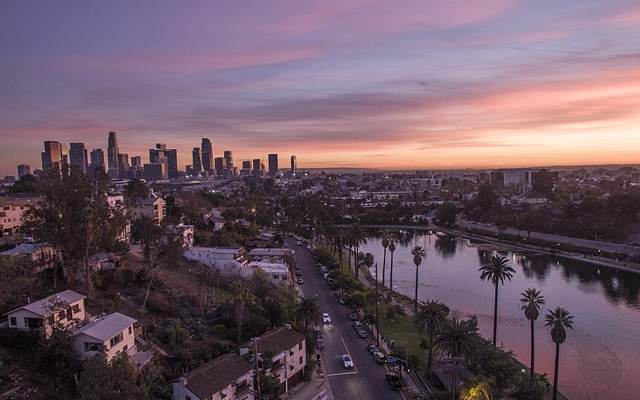
From record shops to studios and from local neighborhoods to other cities, Los Angeles rap becomes clearer when its makers and places are connected. This guide follows Compton’s N.W.A., Long Beach’s 213, TDE’s production circle and Doja Cat’s early work with Yeti Beats in Echo Park through 17 profiles and a timeline.
At a Glance
The scope is Los Angeles County, California. The City of Los Angeles, Compton, Long Beach, Inglewood and Hawthorne are distinguished as the guide follows 17 acts through their works and local connections. Birthplace, upbringing, recording location and career base remain distinct.
Acts appear alphabetically. Groups and solo artists count as separate editorial entries. Links lead to streaming editions, interviews with artists and participants, award bodies and certification histories.
More Than One Sound
There are three routes through this guide: the timeline for records across time, the local guide for connections between places, and the 17 profiles for individual makers. Ice-T and Cypress Hill also illustrate how people connected through LA could record in New York. A regional identity does not prescribe one sound or one recording location.
Timeline: Works and Activity, 1978–2025
These are selected events, not a claim to identify the origins of all local rap.
1978–1996
| Year | Work or event |
|---|---|
| 1978 | Gid Martin recalls a December party at Alpine Village as an early step toward Uncle Jamm’s Army. Participants’ oral history. |
| 1983 | Greg Mack joins KDAY as music director. Interview. |
| 1987 | Ice-T releases Rhyme Pays, made with Afrika Islam in the South Bronx. Their account. |
| 1988 | N.W.A.’s Straight Outta Compton and Eazy-E’s Eazy-Duz-It. Production history / streaming catalog. |
| 1990 | Ice Cube’s AmeriKKKa’s Most Wanted follows work with the Bomb Squad in New York, visited with Sir Jinx. His account. |
| 1992–1993 | Dr. Dre’s The Chronic leads into Snoop Dogg’s Doggystyle. 1992 album / 1993 album. |
| 1994 | Warren G releases Regulate… G Funk Era. Meanwhile, Project Blowed carries the Good Life community into Leimert Park. Warren G interview / organizers’ history. |
| 1995–1996 | 2Pac works at Can-Am in autumn 1995; All Eyez On Me is released February 13, 1996. XXL oral history / catalog. |
| 1996 | March 22 reporting leaves Dre’s next label unnamed. Contemporary report. |
2005–2025
| Year | Work or event |
|---|---|
| 2005 | The Game releases The Documentary. Official catalog. |
| 2012 | Kendrick Lamar’s good kid, m.A.A.d city brings TDE’s production circle together with outside producers. Sounwave interview. |
| 2014 | YG releases My Krazy Life. Official catalog. |
| 2015 | Vince Staples releases Summertime ’06 and discusses making it with No I.D. and other producers. Interview. |
| 2017–2018 | Kendrick’s 2017 release DAMN. wins the 2018 Pulitzer; Nipsey Hussle releases Victory Lap in 2018. Pulitzer / catalog. |
| 2019 | Tyler’s IGOR, Doja Cat’s Hot Pink and Roddy Ricch’s Please Excuse Me for Being Antisocial. IGOR / Hot Pink / Please Excuse Me for Being Antisocial. |
| 2022 | The Super Bowl LVI halftime show takes place at SoFi Stadium in Inglewood. Reporting / NFL performance. |
| 2025 | Kendrick’s “Not Like Us” wins five Grammys. 2025 winners list. SZA joins his Super Bowl performance. NFL video. |
Neighborhoods, Shops and Recording Places
- Compton/Torrance — Distinguish N.W.A.’s geographical identity from recording at Audio Achievements. Production history.
- Long Beach — A studio in the back of VIP Records and the connections among Snoop, Warren G and Nate Dogg. The city’s 2017 account.
- South Central/Leimert Park — The open-mic history connecting Good Life and Project Blowed. The organizers’ history identifies Ben Caldwell’s venue and figures including Aceyalone and Abstract Rude.
- Crenshaw/Slauson — For Nipsey Hussle’s shop and All Money In releases, see his profile.
- Hawthorne/Tarzana/Echo Park — A school, birthplace and studio establish different connections. See Tyler and Doja Cat.
Representative Artists and Groups: 17 Acts
Alphabetical, without ranking; individual and group careers are separate entries.
2Pac
Born in New York, 2Pac enters this guide through his Los Angeles work during the Death Row period. XXL’s October 2004 oral history places the sessions for All Eyez On Me (1996) at Can-Am Studios in Los Angeles from autumn 1995. Kurupt remembers “Ambitionz Az a Ridah” as an immediate arrival session; Daz explains making its beat. See the participants’ account, printed pages 104 and 106.
The connection is audible in work with Daz and engineer Dave Aron and grounded in a sustained studio setting. That career geography remains distinct from birthplace and upbringing.
RIAA title history: the album All Eyez On Me was certified diamond on July 23, 2014.
Cypress Hill
Los Angeles group Cypress Hill’s Black Sunday (1993) separates local identity from recording location. In the participants’ account republished on their official site, B-Real, Sen Dog and DJ Muggs recall recording the vocals for “I Ain’t Goin’ Out Like That” at New York’s Baby Monster Studios, then sequencing and playing through the album.
Sen Dog had thought “Insane in the Brain” would be an album track; the label selected it as the lead single. For a connection outside the group, HIPHOPCs’ DJ Couz interview, in Japanese, discusses Couz’s “Floating,” featuring B-Real and Glasses Malone. That is a Couz record featuring B-Real, rather than a Cypress Hill release.
RIAA title history: the album Black Sunday was certified 4× platinum on July 7, 2023.
Doja Cat
Born in Tarzana, Doja Cat developed the partnership behind Hot Pink (2019) through sessions with Yeti Beats. In his Recording Academy interview, Yeti recalls Jerry Powell playing him “So High” on SoundCloud at his Echo Park studio in 2013. He invited Doja to record; their collaboration continued through Purrr!, Amala and Hot Pink.
Her movement between rap and singing also leads to “Kiss Me More” with SZA, the 2022 winner of Best Pop Duo/Group Performance. The record, collaboration and award category offer separate ways into her work.
Dr. Dre
Compton-born Dr. Dre’s The Chronic (1992) offers a way to hear the work behind G-funk. In his 2018 interview, bassist Colin Wolfe recalls discussing Parliament-Funkadelic with Dre, playing bass on “Let Me Ride” and “Nuthin’ but a ‘G’ Thang,” and Moog on “Dre Day.” His account directs attention to live playing and synthesizers alongside samples.
Wolfe also describes making “Deep Cover,” featuring Snoop. Following those sessions connects The Chronic to a wider group of collaborators. “Let Me Ride” won Best Rap Solo Performance in 1994.
RIAA title history: the album The Chronic was certified 3× platinum on November 3, 1993.
Eazy-E
Ruthless Records’ own history identifies founder Eazy-E as a Compton native and places the “Boyz-N-The-Hood” twelve-inch at the start of the business. Eazy-Duz-It (1988) connects that organizing role with his own recordings. The title song’s streaming credits name Eazy-E, Dr. Dre and MC Ren on vocals, with Dre and DJ Yella producing.
It is a useful counterpart to N.W.A.’s group recordings: overlapping collaborators working around a different lead voice. Eazy-E died on March 26, 1995.
RIAA title history: the album Eazy-Duz-It was certified 2× platinum on September 1, 1992.
Ice Cube
Born in South Central Los Angeles, Ice Cube worked with New York’s Bomb Squad on AmeriKKKa's Most Wanted (1990). In the XXL interview republished on his official site, he recalls traveling to New York with Sir Jinx and meeting Chuck D at Def Jam. It is another example of LA subjects taking shape through work with producers elsewhere.
Death Certificate followed, including “Steady Mobbin’,” “A Bird in the Hand” and “No Vaseline.” Cube’s official discography dates its release October 29, 1991. RIAA’s release field instead says October 21; the work’s own catalog date is used here, separately from the certification below.
RIAA title history: the album Death Certificate was certified platinum on December 20, 1991.
Ice-T
Ice-T’s official podcast biography describes a New Jersey birth, upbringing with an aunt in LA and attendance at Crenshaw High. His local club years provide context for Rhyme Pays (1987), including “6 ’N the Mornin’.”
In a 2023 Harvard Gazette interview published ahead of their campus visit, Ice-T and Afrika Islam traced their partnership to LA’s Radiotron in the early 1980s. They subsequently made the album in Islam’s small South Bronx apartment. A connection formed in Los Angeles led to recording in New York.
Kendrick Lamar
Compton-born Kendrick Lamar’s good kid, m.A.A.d city (2012) provides an entry into his TDE period. In a contemporary FADER interview, Sounwave describes Lamar directing producers toward the sound he wanted and recalls arranging live strings for “Sing About Me.” The album’s concept connected several different makers.
DAMN. was released on April 14, 2017, and won the 2018 Pulitzer Prize for Music. Its release, award and the later 2025 milestones in the timeline are distinct events. See the Kendrick Lamar profile for further background.
N.W.A.
N.W.A.’s Straight Outta Compton (1988) places Compton in the title without making it every member’s birthplace. Eazy-E, Dr. Dre, Ice Cube, MC Ren, DJ Yella and Arabian Prince belonged to the album’s circle. Ben Westhoff’s Library of Congress essay describes work at Audio Achievements in Torrance, discussing Dre, Yella, Donovan Smith and Arabian Prince alongside Cube and Ren’s writing.
Its discussion of “Express Yourself” and “Something 2 Dance 2” also points beyond the force of the opening tracks. The album entered the 2016 National Recording Registry. The 2016 Rock Hall induction lists Eazy-E, Dre, Cube, Ren and Yella, with Kendrick Lamar inducting them. Album participants and inductees are different lists.
RIAA title history: the album Straight Outta Compton was certified 3× platinum on November 11, 2015.
Nipsey Hussle
Los Angeles-born Nipsey Hussle operated The Marathon Clothing at Crenshaw and Slauson. In their 2017 interview, Mike & Keys trace their collaboration to 2012 and discuss the sessions leading to Victory Lap (2018). The interim Marathon Mondays releases sometimes rebuilt existing verses with new beats, hooks and guests.
A production connection with Japan appears in HIPHOPCs’ DJ Couz interview, in Japanese: Couz describes meeting Nipsey in 2011 and the path to the “Rich Rollin’” project. After Victory Lap, “Racks in the Middle,” featuring Roddy Ricch and Hit-Boy, won Best Rap Performance in 2020.
Roddy Ricch
GQ’s 2020 interview identifies Roddy Ricch as Compton-born. He recalls making “The Box,” the last song for Please Excuse Me for Being Antisocial (2019), around 7 a.m. in New York after an overnight session. The local connection does not make every recording a hometown session.
“Racks in the Middle,” with Nipsey Hussle and Hit-Boy, offers another entry. The Recording Academy’s 2020 winning record lists Roddy under his legal name, Rodrick Moore, linking the artist billing to the award credit.
RIAA title history: the single The Box was certified diamond on December 6, 2021.
Snoop Dogg
Raised in Long Beach, Snoop Dogg can be approached through 213 with Warren G and Nate Dogg. Long Beach’s 2017 VIP Records report describes Kelvin Anderson acquiring recording equipment with Sir Jinx’s help and creating a space for local youth. A record shop forms part of the background to Doggystyle (1993).
For a later session, HIPHOPCs’ original DJ2high interview, in Japanese follows “We’ll Miss You.” After receiving his beat, Daz went to Snoop’s compound to record and film; DJ2high recalls the video being finished by the next morning. It connects a specific work to a participant’s account of making it.
RIAA title history: the album Doggystyle was certified 4× platinum on May 31, 1994.
The Game
The Game’s Compton story also travels through the Bay Area. In XXL’s 2005 interview, he recalls meeting JT the Bigga Figga at LA’s 2002 Hip-Hop Summit and recording in San Francisco’s Fillmore the following week. Mixtape recordings later reached Dre, leading toward work with Aftermath and G-Unit.
The Documentary (2005) is his Aftermath/G-Unit debut at the end of that route. The 50 Cent collaborations “How We Do” and “Hate It or Love It” provide an entry into that moment of national exposure. See the official streaming edition and track list.
RIAA title history: the album The Documentary was certified 2× platinum on March 23, 2005.
Tyler, the Creator
Tyler, the Creator attended Hawthorne High, developing his solo catalog from the Odd Future collective. The FADER’s account of his published credits for IGOR (2019) identifies him as producer throughout, with Kanye West on “Puppet” and vocal contributions from Solange and Santigold.
His production and the placement of those voices offer a route into the record. IGOR won Best Rap Album in 2020; the 2021 album Call Me If You Get Lost won the category in 2022. The Recording Academy’s work-by-work record distinguishes release years from award years.
Vince Staples
Long Beach rapper Vince Staples looks back on summer 2006 in Summertime '06 (2015). In FACT’s contemporary interview, he discusses those experiences and a process led by No I.D., alongside Clams Casino, DJ Dahi and Christian Rich. Making music from scratch expanded his role beyond choosing ready-made beats.
Approach “Norf Norf” with those collaborators in mind as well as the place invoked by its title. This is another generation of Long Beach music, with its own process rather than a requirement to reproduce Snoop or Warren G’s sound.
RIAA title history: the single Norf Norf was certified platinum on March 15, 2023.
Warren G
In his 2024 Recording Academy interview, Warren G recalls Long Beach’s King Park and after-school visits to VIP Records. “Regulate,” with Nate Dogg, builds on Michael McDonald’s “I Keep Forgettin’.” It appeared on the Above the Rim soundtrack before Regulate… G Funk Era (June 7, 1994).
Alongside the 213 partnership with Snoop and Nate, the album opens other listening routes: Mtume and Junior in “Do You See,” and The Dove Shack on “This Is the Shack.” Warren’s account links source records, collaborators and local memories.
RIAA title history: the album Regulate… G Funk Era was certified 3× platinum on August 1, 1995.
YG
Compton’s YG told The FADER in 2013 that Mustard had been his DJ before making beats, and described working together in his Hollywood home studio at that time. My Krazy Life (2014) is a way to follow that partnership.
In his 2014 XXL interview, Mustard explains building the “Left, Right” beat around YG’s hook. For “My Hitta,” Rich Homie Quan joined an Atlanta session through Jeezy. An LA working relationship and a collaboration in another city meet on the same album.
RIAA title history: the album My Krazy Life was certified platinum on April 27, 2017.
Labels and Routes of Collaboration
Ruthless’s founding date differs by source: 1986 in its official history, versus 1987 or 1988 in Los Angeles Times obituaries. Straight Outta Compton connects Ruthless with Priority distribution; The Chronic, Doggystyle and All Eyez On Me connect overlapping collaborators in the Death Row period. These are relationships tied to the works’ respective eras.
At TDE, Sounwave’s 2012 interview distinguishes Digi-Phonics’ work with Kendrick, Schoolboy Q, Ab-Soul and Jay Rock. All Money In’s 2017 partnership with Atlantic likewise complicates a simple division between independent activity and major distribution. YG/Mustard and Tyler/Odd Future are addressed at the periods described in their profiles.
Places and Listening Routes
Parties at Alpine Village, the studio at VIP Records, Project Blowed open mics and the SoFi Stadium performance served different scales and purposes. DJing, recording, live rap and reaching a large audience offer routes across the profiles. Historical venue descriptions do not establish current opening hours or event schedules.
An interview route between Hiroshima and Los Angeles
DJ Yuko, originally from Hiroshima, moved to Los Angeles in 2011. In her HIPHOPCs interview, she recalls learning in Hiroshima’s clubs and building her first LA residency. Her account offers a DJ’s perspective on the connection between the two places. Start with her profile and source-linked milestones, or continue to the Hiroshima and Chugoku guide.
October 13, 2026: Added links to the DJ Yuko interview and profile. The existing artist selection and historical sections are unchanged.
Selection and Corrections
The published Rap Atlas criteria provide two routes: official streaming releases plus national or specialist-media coverage, appearances or chart records; or a historical local role documented by multiple independent sources. Regional connections rely on public statements, interviews or reliable reporting, without guessing birthplace, upbringing or base.
For additions or corrections to works, places or other details, use the contact page and include the relevant passage and supporting material.
Reading the Sources
Production accounts link to artists or participants; release information to official streaming editions and catalogs; awards to awarding bodies; and certifications to RIAA title histories. The date of a retrospective is distinct from the event it describes. Because RIAA release fields can differ from work catalogs, a certification history is not used as a substitute for release documentation. The listed certification histories were consulted on September 24, 2026.
Related
Revision
September 24, 2026: Consolidated the 17 acts into one alphabetical list; revised links to works, recording places and interviews, the timeline, certification histories and FAQ.
Frequently asked questions
- What is the Los Angeles rap scene?
- The scope is Los Angeles County, California. The City of Los Angeles, Compton, Long Beach, Inglewood and Hawthorne are distinguished as the guide follows 17 acts through their works and local connections. Birthplace, upbringing, recording location and career base remain distinct.
- Which acts are included in this Los Angeles guide?
- The 17 acts are 2Pac, Cypress Hill, Doja Cat, Dr. Dre, Eazy-E, Ice Cube, Ice-T, Kendrick Lamar, N.W.A., Nipsey Hussle, Roddy Ricch, Snoop Dogg, The Game, Tyler, the Creator, Vince Staples, Warren G, YG. See the alphabetical Representative Artists and Groups section. Individual and group careers are separate entries; this is not a ranking.
- Which labels and crews matter in Los Angeles?
- The guide follows Ruthless, Priority, Death Row, TDE, and All Money In's relationship with Atlantic at the relevant periods. It also discusses 213, Odd Future, Uncle Jamm's Army, and the Good Life-to-Project Blowed community. See Labels and Routes of Collaboration, the profiles and timeline.
- When does this timeline begin?
- Selected events run from Gid Martin's recollection of a December 1978 Alpine Village party to Kendrick Lamar's 2025 awards and performance. The first entry is a scene in the activity leading to Uncle Jamm's Army, not a claim to identify the origins of all local rap.
- How is this guide fact-checked?
- Production accounts come from artists and participants; works from official streaming editions and catalogs; awards from awarding bodies; certifications from RIAA title histories. Birthplace, upbringing, recording place and base, and release and certification dates remain distinct. Material source differences are stated. Corrections go through the contact page in Selection and Corrections.