$till.J.Cark on WORK: Day Jobs, Desire and Changing Your Own Life
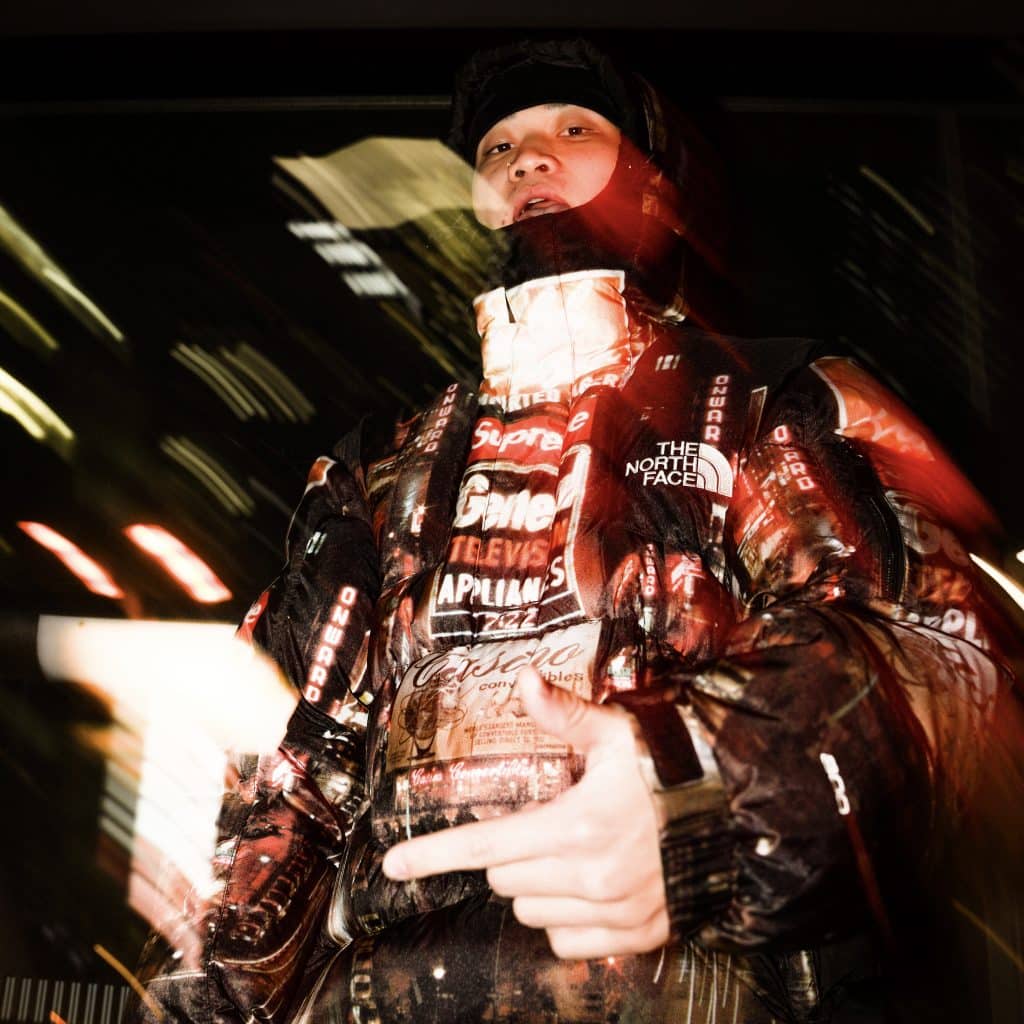
English edition of the HIPHOPCs interview first published in Japanese on October 2, 2026. All six questions and answers are translated below. The answers reflect the time of the original interview. Japanese lyric excerpts are retained where their wording matters, with English translations or explanations alongside them.
An hour-long commute each way, the thinking behind “500,000 yen take-home,” and desire and idleness rendered in red and yellow. $till.J.Cark explains how everyday working life became “WORK.”
He writes lyrics during a commute of about an hour each way, goes to work and makes music in whatever time is left. Even while taking part in auditions in Korea, $till.J.Cark’s life continued to revolve around work and making music.

Released on September 23, 2026, “WORK” was, he says, the first song he made after being eliminated in the third round of the SHOW ME THE MONEY 12 auditions. Along with disappointment, he brought home an experience that made a life spent making music feel real to him for the first time.
Behind the lyric’s goal of “500,000 yen take-home” is a desire to sustain his own life and give what he earns beyond that back to the people around him and the culture. At the same time, his writing makes room for desire, idleness and his own contradictions. He is not trying to tell a neat story about working hard without sleep.
We asked about making the track with KiDD, the wordplay tucked into his collaborators’ names, and the meaning of the video’s red and yellow. And why someone who calls himself ordinary keeps moving.

The first song he made after returning to Japan
—What directly prompted you to make “WORK”?
$till.J.Cark: “WORK” was the first song I made after I was eliminated in the third round of the SHOW ME THE MONEY 12 auditions.
During the auditions, I spent most of a month going back and forth between Korea and Japan. It was my first time in Korea. Seeing different artists and people involved in music, I felt how high the quality of the Korean music scene was.
At the same time, a lot of the people I saw gave me the impression that they had prepared specifically for this audition and put everything on the line for it.
For me, the audition was just one part of everyday life. I worked, made music and lived my life, and the audition existed within that. That’s why, even though I was frustrated that I didn’t get the result I wanted, I also thought, “If I’ve come this far, maybe I can go further.”
Seeing people in Korea actually living their lives while making music, I thought for the first time, in a real way, “If a life like this exists, maybe I can get there too if I keep going.”
Back in Japan, it was back to working and making music in my free time. Even so, instead of overthinking what was ahead, I just wanted to do it. Just go hard.
“WORK” puts my life and feelings from that period straight into a song.

Beyond “500,000 yen take-home,” giving back
—What does a normal day look like as you balance your job with making music?
$till.J.Cark: It takes about an hour each way to get to work, so I used that time to write lyrics or watch rappers making music and giving interviews. I like films, too, so I also watched a lot of documentaries and interviews about actors and their lives.
Watching different people, I realized that even after they become successful and start earning money, they still keep running.
The line “まぁ俺の中のゴールは手取り50万、頭出た分周りへpass” [“My own goal is 500,000 yen take-home; pass whatever goes over that to the people around me”] isn’t about wanting to be rich. I just think that amount would be enough for me to live an ordinary life.
Even if I were able to earn 10 million yen, I’d be fine with keeping about 500,000 for myself. I’d want to spend the rest on the people around me, the culture or things I find interesting.
I didn’t grow up well-off, and even if I become successful, I don’t want to lose the ability to eat Peyoung instant yakisoba and simply think they taste good. The people listening to my music are probably people who work for a living, like I do now. I don’t want to drift away from that.
Honestly, I do feel a kind of opposition to hip-hop becoming more and more commercialized. But if you want to grow, there are parts of the current system you have to use. That can’t be helped.
In that case, I want to use what I gain from it to change, at the root, the things about that system that don’t sit right with me.
The line “常自らmy self、静かに俺戦ってる” [“Always myself, I’m quietly fighting”] isn’t saying I’m the only one fighting. Everyone is doing their own thing within their own life. So I think it’s better to do what you need to do and show it through results, rather than say too much about it.
Translation note: “Take-home” means pay after deductions. The interview does not specify a pay period.
Does an ordinary person have to stay ordinary?
—Which lines in “WORK” are especially important to you? What were you thinking of when you wrote them?
$till.J.Cark: The part that matters most is the stretch from “ただ耽ってった制作つまらね愚痴吐くだけなら積み重ねるma pain” to “天才じゃね分後天的伸ばしてきたセンスで向こうside it.”
Translation note: These are the original Japanese lines he identifies. The passage contrasts getting absorbed in making music and building on his pain with simply complaining, then points to the artistic sense he has developed through practice rather than innate genius. His explanation follows.
I think a lot of people blame the country, their environment or anything other than themselves. I used to be that way, too, so I think I understand how those people feel.
But nothing changes if you just keep complaining. In the end, I realized I had to act for myself.
I’m not a thug, and I’m not a genius. I wasn’t born with anything special. I don’t have some extraordinary talent, but it’s not as if there’s anything particularly wrong, either. I’m not poor. Does that mean an ordinary person like me has to live an ordinary life forever? I don’t think so.
Whether you’re a pusher or a salaried worker, I think the next conversation starts after you’ve first committed yourself to something like an athlete. Nothing begins if you talk about lacking talent or having a bad environment before you’ve done anything.
So I just acted. I wanted to show it through action rather than talk. I kept making music while working, made songs, played shows and went to Korea. As I kept doing those things, I think I gradually developed my own artistic sense through experience.
In the end, you’re the only one who can change your own life. Don’t stop at complaining. Act for yourself, keep building and show it through the results.
Those lyrics also carry that feeling of reminding myself of all this.
With KiDD, building a hook that gains momentum
—How did you and KiDD work together this time? What did you pay particular attention to in the beat and the way the rap comes across?
$till.J.Cark: First, I asked KiDD to put together the basic shape of the beat. From there, I felt I wanted a slightly more distinctive sound, so I picked out sounds I wanted to use.
As we worked those sounds in, KiDD kept coming up with ideas, like, “What if we added more of this here?” We changed the arrangement wherever the ad-libs or verses felt monotonous, adjusted things so the groove wouldn’t break, and worked through the details together as we made it.
With the hook in particular, I wanted the second half to swell and pulse more intensely than the first, so the song would gain momentum as it went along. That took its current form as I worked on it with KiDD. If I’d been making it alone, I probably wouldn’t have worked it out in that much detail.
The lyrics “アダルトなKiDDも待ってる/RAF BOYシリアスにediってる/甘くないMsDoeも歌詞書いてる” [“The grown-up KiDD is waiting too / RAF BOY is seriously editing / MsDoe, who isn’t sweet, is writing lyrics too”] are wordplay using the names of three people who regularly help me out.
KiDD is older than me, so he’s “adult.” RAF BOY is the filmmaker who regularly shoots for me; against the image his name suggests, he’s seriously editing. MsDoe is a very disciplined beatmaker, so I expressed that through the image of a “not-sweet Misdo.”
I wanted to put respect for the people I regularly work with into that part, while having a little fun with the words.
Translation note: “Misdo” is a Japanese nickname for Mister Donut. The sound of MsDoe’s name makes the “not sweet” wordplay work in Japanese.
Red desire, yellow idleness: the video’s endless cycle
—How do “desire” and “idleness,” the themes you described for the video, connect for you? Could you also explain the use of red and yellow and any scenes you particularly want people to watch?
$till.J.Cark: In the video, red represents desire and yellow represents idleness. Those are the two things it depicts.
In the first half, I’m fighting the red desire. At first, I thought desire was something that made me suffer. But as it goes on, I accept that desire and turn it into my own strength. Then the yellow idleness appears.
I thought desire was bad, but if you can’t really hunger for what you want, idleness comes after you instead. Then, when you try to cut off idleness, desire keeps growing again until it finally swallows you.
It isn’t a story where defeating one of them ends everything. When you try to do something about one, the other comes back. I’m expressing that kind of repetition.
Horror films don’t always resolve everything at the end. They can have a bad ending, or leave you thinking, “So it’s still not over?” I put some of that feeling into this, too.
For me, red means desire and yellow means idleness. But what people feel from there is up to each viewer.

“If you want to insist on having your own way, get results”
—What do you most want to communicate to people discovering you through “WORK”?
$till.J.Cark: I don’t want to tell some neat, admirable story like, “I’m not well-known, so I work without sleeping.”
We’re human, after all. We’re not saints. We have messy human sides, ugly sides and all kinds of contradictions. I don’t think it’s necessarily bad if those things change from moment to moment, either.
But when something feels wrong to you, or something makes you happy, that’s something real that you personally felt. I think you can start by affirming it. Sometimes it’s okay to bring people around you into it and insist on your own sense of justice or your ego.
I’m not a special person myself. I think I’m ordinary. But I want to be honest with myself, at least. And “WORK” has this idea in it: if you want to insist on having your own way like that, get results.
Acting so I can change even a little from where I am now and expand what I believe is possible for me. That’s what “WORK” means to me.
Release information

$till.J.Cark — “WORK”
Released September 23, 2026.
Production: KiDD.
Artwork: Yuuki Matsuura.
Listen to “WORK” on streaming services.
Watch the official “WORK” music video. Published October 2, 2026, at 7 p.m. JST. The Japanese edition’s advance scheduling note has been updated here to reflect the published video.
“WORK” production credits
- Production: KiDD
- Artwork: Yuuki Matsuura
- Stylist: Tsubasa Aikawa (@tsubasa__aikawa)
- MV Director: KOBE (@daizumonster)
- AD: Kouta Takamori (@koutaaa___)
- DOP: Naoto Nagatsuma (@naotonagatsuma)
- Gaffer: Sojiro Hirai (@sojiro_hirai)
- Project Staff: Shinfu Nico (@c.lazy_shinfu)
SPECIAL THANKS
TIVE, DaRiyo, Ryowitzki, RAFBOY, PADAWAN, DUNK11, BBG Shady Jay, Essosa Vee, Kee, Dai, KEN, ICHIRO, LAW, aoshi
Related interviews
- AUDIO RADICAL on corporate life and continuing to make rap
- Yuta Kato, formerly PIZZA LOVE, on work, music and returning to rap
- More HIPHOPCs original interviews in English
Interview and original editorial text: HIPHOPCs editorial team. English translation: HIPHOPCs editorial team. Interview material: written answers, lyrics and production credits supplied by the artist. Photographs and artwork supplied by $till.J.Cark, with the artwork credit retained above. Release date: Apple Music’s “WORK” listing. Video publication: the YouTube listing for “WORK” (Official Music Video).