BraidKingNori Interview: OZworld, Black Hair and Self-Expression
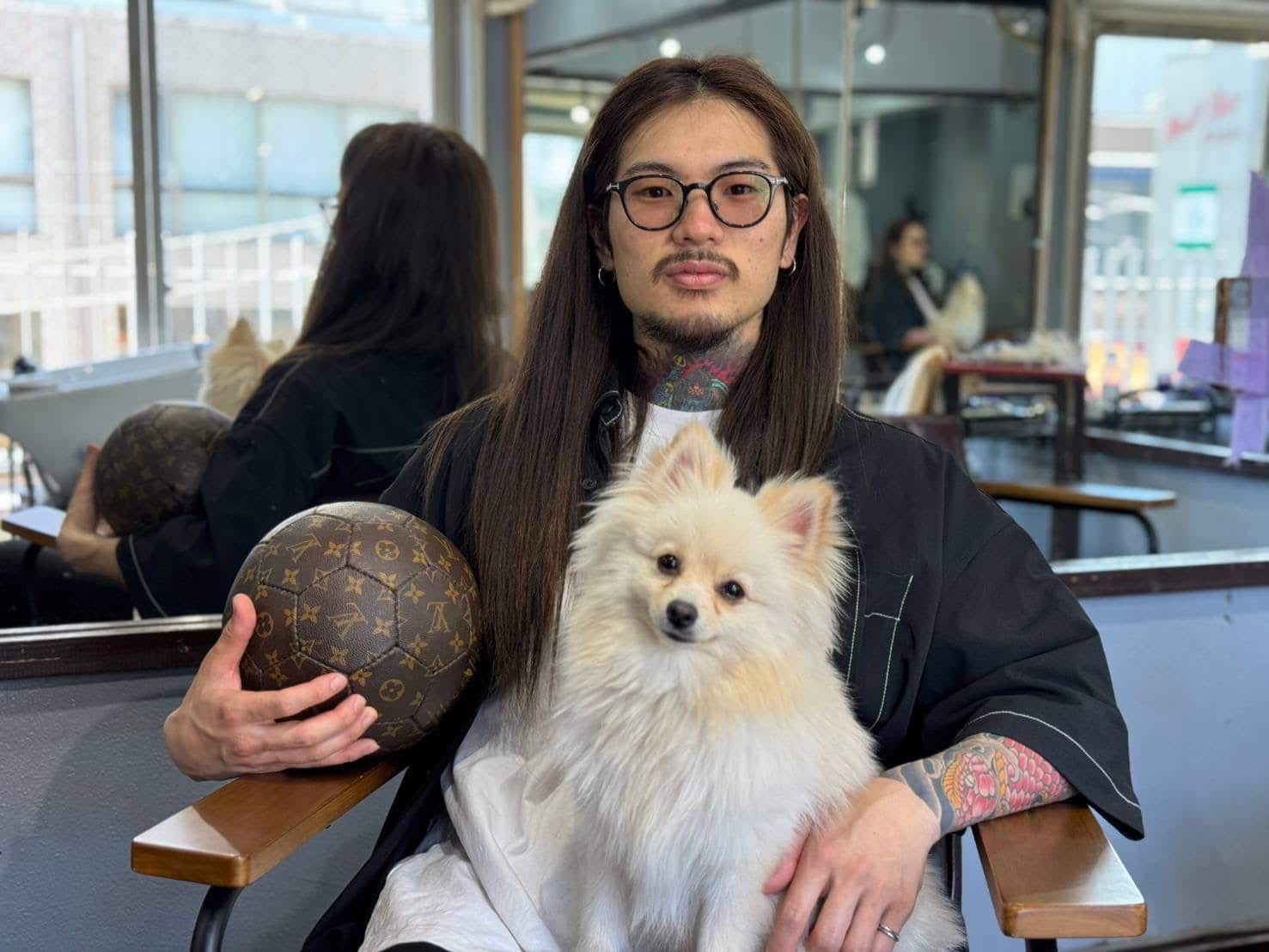
Translation note: This English edition is translated and edited from Sei’s Japanese interview, published September 29, 2026. It is not a new interview conducted in English. The interviewer’s questions and brief comments have been edited for clarity. A contradictory self-description in one question and an inconsistent reference to audio in one comment have been omitted. The question about good cornrows is retained. Nori’s views on culture and his accounts of clients and artists remain attributed to him. Historical social-media figures are his own November 2025 figures, not current audience totals. The Japanese edition’s clarification about sign languages is retained.
BraidKingNori is a Tokyo-based hair artist working with braids and cornrows. In this conversation with Sei, he explains how OZworld inspired his first attempts, why he builds designs with each client, and how a deaf regular client helped shape his videos without spoken commentary.
I was scrolling through Instagram when something suddenly made my finger stop.
“BraidKing…?”
That was quite a bold name.
The man behind it is BraidKingNori, a hairstylist specializing in Black hairstyles such as cornrows and braids. In the videos he posts on social media, he rarely speaks. Instead, he lets his hands—and the sounds of the braiding process—show the work.
And viewers on the other side of the screen find themselves just as captivated by his skill.
In a note post published November 12, 2025, Nori said his Instagram following had grown from approximately 4,000 to 150,000 in about six months, while TikTok had reached 300,000 followers, YouTube 40,000 subscribers, and his social-media content more than 500 million combined views. These are his self-reported figures as of that post.
But as I learned during our conversation, the origins of what has now become his signature “silent” style can be traced back to an encounter with a deaf client.
And tracing his journey into Black hair takes us back to his admiration for Okinawan rapper OZworld. At the beginning, Nori knew nothing about the cultural background of Black hair. It started with something much simpler:
“I just thought the hairstyle looked cool.”
Today, with his work being watched by people around the world, Nori spoke candidly about the roots of Black hair, respect, and the sensitive debate surrounding cultural appropriation.
From the thinking behind the audacious name “BraidKing,” to his unexpected relationship with OZworld, what professionals actually look for in a well-executed cornrow, and why he describes braids as a form of self-expression.
Technique, culture, respect, and the future.
Like weaving together a braid, let’s follow the strands of Nori’s story, one by one.
Born Into a Family of Hairstylists: But Braiding Was Actually His Weak Point
SEI: First, what made you want to become a hairstylist?
NORI: My mother and my older brother were both hairstylists. I grew up in a family of hairstylists, so by the time I was around the middle grades of elementary school, it already felt like my path was pretty much decided.
SEI: Oh, really? So were you already doing things like braiding back then?
NORI: Actually, no. (laughs) My mother and brother were both more conventional hairstylists, doing things like coloring and cutting, mostly for women. Braiding was actually something I wasn’t very good at.
SEI: Really? I imagined you must have been one of those kids who was incredibly good with his hands.
NORI: People leave comments saying, “You’re so good with your hands,” but that really wasn’t the case. If anything, I was a pretty clumsy kid.
SEI: Wow, that’s really unexpected. I thought you’d been braiding all kinds of things since you were a kid. (laughs)
BraidKingNori’s introduction from Tokyo. Instagram: @braidkingnori / @kamiyugiclub.
BraidKingNori’s Roots: An Admiration for OZworld
SEI: Out of all the different hairstyles out there, what first drew you to cornrows, braids, and what we generally call Black hair?
NORI: There was a Japanese rapper I really liked. Do you know OZworld?
SEI: Of course…the rapper from Okinawa! You’ve done his hair too, right?
NORI: Yeah. I was originally a fan of his. I’d been following him since he had around 10,000 followers. He was wearing those kinds of hairstyles, and I thought, “I want to try that too.”
At the time, I didn’t know anything about Black culture or the cultural background behind the hairstyles. I was simply influenced by the hairstyle itself and thought it looked cool. Then I tried braiding, and I realized there aren’t many beauty services that can create such a dramatic before-and-after transformation the way braiding can. That made me think, “I want to try doing this.”
SEI: So you started by braiding your own hair?
NORI: Yes. It started with doing my own hair. Later, I also went to the salon in Okinawa that OZworld used to go to.
Learning on YouTube in Slow Motion, Practicing Late Into the Night
SEI: How did you learn braiding and cornrow techniques after that?
NORI: I was working at a regular hair salon at the time, and after business hours, I would just keep braiding while watching YouTube. If you searched things like “how to braid” or “cornrows,” videos would come up.
SEI: YouTube. That makes sense.
NORI: And you can slow the videos down. I watched a lot of different braiding methods, found techniques that worked for me, and practiced them.
SEI: So when it comes to the person who influenced you most, would you still say OZworld?
NORI: Yeah. It feels like I kind of got swept up into OZworld’s world. (laughs) That influence was probably the biggest.
What Is OZworld Really Like? From Idol to Close Friend
SEI: I’ve heard he’s an incredibly nice guy. Is that actually true? What’s he like?
NORI: Yeah, that’s exactly right.
SEI: So the rumors are true. (laughs) He does seem like a genuinely nice person. Although, given your position, there might be things you can’t really say about him.
NORI: He’s the same person in public and private. There’s almost nothing where I’d have to say, “I can’t talk about that.”
SEI: Oh, wow. So he really is just himself. That’s nice. People like that are easy to be around.
NORI: Yeah. We even have the same birthday.
SEI: Really? Can I ask when? Or maybe I shouldn’t because that’s personal information. (laughs)
NORI: It’s fine. It’s public. November 17.
SEI: Scorpio?
NORI: Yes, Scorpio. And we’re the same age too.
SEI: Seriously? You’re basically twins then. (laughs)
NORI: Exactly. So we’re pretty much on the same wavelength.
SEI: So someone you once admired has now become a friend?
NORI: Yeah, we’ve become pretty close.

Watch OZworld’s “UTAGE3.0” music video. Hairstyling: BraidKingNori, as credited in the original HIPHOPCs interview.
Why “BraidKingNori”? A Name That Made People Say, “You’re Going Big”
SEI: What meaning or intention is behind the name “BraidKingNori”?
NORI: I originally went by something like “Hair Artist Nori,” but it felt a little weak if I wanted to put myself out there globally. So I talked with different people I knew and came up with ideas.
There were ideas like “God of Hair Artist” too. (laughs) But when I suggested “BraidKingNori,” someone I knew said, “Wow, you’re really going for it,” or, “That’s a pretty bold claim.”
SEI: I mean, it is pretty bold. (laughs) But it’s incredibly catchy. It made me stop scrolling too. I was like, “Wait… BraidKing?” It’s a strong name.
NORI: I figured a strong name would have more impact and be more memorable. And I also thought maybe I could grow into the name. By giving myself such a big title, maybe it would push me to reach a higher level. That’s why I chose it.
Hip-Hop Is More Than Music: BraidKingNori on Braiding as Expression
SEI: Do you listen to Hip-Hop yourself?
NORI: A lot of my clients are rappers, so I listen to it through them. But I wouldn’t say I’m extremely knowledgeable about overseas Hip-Hop culture. I listen to all kinds of music. Rock too. Not jazz, though. (laughs) Reggae, some Hip-Hop…things like that.
SEI: I see Hip-Hop as a culture that includes more than rap and music—it includes fashion, hairstyles, language, art, and so on. For you, is the act of braiding hair also a form of expression within Hip-Hop and street culture?
NORI: Yes. Absolutely.
Watch BraidKingNori on TikTok.
Knowing the Roots vs. Choosing a Hairstyle
SEI: Cornrows and braids have a long history and cultural background. How important do you think it is to understand that background, rather than learning only the technique?
NORI: As a practitioner or teacher, I think having at least a basic understanding of that background is absolutely essential. But when it comes to what I do—bringing braiding into fashion—for example, if an Asian person wants to wear braids, I don’t necessarily think that person has to know the roots.
I’m a hairstylist, so I want people to see the hairstyle as a design—as a finished work in itself. I think the fact that someone chooses to wear that design can itself reflect respect for its roots. It’s a hairstyle you live with every day. You wouldn’t choose to wear something every day if you had no respect for it.
SEI: Fair point!
NORI: So I think the act of wearing it can itself be a form of respect. Knowing the roots isn’t the only way to show respect.
“Not Compromising Is a Form of Respect”
SEI: When working with Black hairstyles, is there anything you’re especially conscious of, or any rules you impose on yourself?
NORI: A lot of people see my work on social media, so I can’t put out something half-baked. Even when I’m working on Asian hair, people are watching every technique I use, so I can’t compromise on that.
I think refusing to compromise is connected to respect. It means approaching the technique itself sincerely.
How Does BraidKingNori View Cultural Appropriation?
SEI: This is a somewhat sensitive topic, but Black hairstyles are sometimes discussed—particularly overseas—in the context of cultural appropriation. As someone who works professionally with Black hair, how do you view that debate?
NORI: When I first heard about it, I honestly wondered, “Why is this even a debate?” But I’m not Black myself, and I’m not one of the people directly affected by it, so I can’t know how those who are affected feel.
With that said, my personal view is that people should wear the hairstyles they want to wear. I want to communicate that we do this because we have respect for it—that there’s no intention to disrespect the culture.
SEI: I see.
NORI: I think it would be difficult to make the cultural appropriation debate disappear overnight. But I hope that, as generations pass, we can eventually reach a world where that debate no longer exists. One of the reasons I post on social media is because I want braiding culture to become more widely known.
Recognition From Overseas Makes Him Feel He Has “Made It as a Professional”
SEI: What kinds of reactions do you actually get from people overseas?
NORI: Some people watch even the smallest details in my videos, tell me my technique is good, and then actually travel from overseas to visit my salon. People overseas have generally seen a wider range of styles and have a more discerning eye, so when someone like that comes to see me, it makes me feel like I’ve really reached a professional level.
SEI: Well then, to everyone reading this: if you come to Tokyo, make a reservation with Nori and stop by. Please! (laughs)
Eight cornrows braided with the client’s own hair. Instagram: @braidkingnori / @kamiyugiclub.
Is There a Distinctly Japanese Style of Black Hair?
SEI: On the other hand, are there any unique forms of cornrows or braiding that have emerged specifically in Japan?
NORI: When it comes to braiding techniques, I think the general flow is that new techniques emerge overseas and then make their way to Japan. It’s kind of like a new trend starting in Harajuku in Tokyo and then spreading to other parts of Japan.
The roots are in Black culture in places like the United States, so when it comes to Black hair, I think we’re still some distance away from creating something entirely new in Japan and then exporting it back overseas.
SEI: I see. Thank you.
For BraidKingNori, Braids Are “Self-Expression”
SEI: For you, are braids closest to a beauty technique, fashion, or art?
NORI: They’re close to all of those, but rather than just a beauty technique, I’d say they’re closer to fashion and art. The closest term would probably be “self-expression.”
For some people, it’s a way to express how much they love Hip-Hop culture. Other people might not care about Hip-Hop at all but still want cornrows. Others want them because they love Black culture and its roots. The thing they all have in common is self-expression. It’s one way of saying, “This is who I am.”
SEI: I see. Self-expression.
After Seven to Eight Years, OZworld’s Hair Is Still “My Kind of Work Every Time”
SEI: Of all the styles you’ve created, is there one you feel especially attached to, or one that made you think, “This really feels like my work”?
NORI: That’s difficult. (laughs) But OZworld’s hairstyles would definitely be among them. I’ve known him since before I opened my own salon. We’ve been working together for around seven or eight years.
SEI: Wow, that long?
NORI: Every time I do his hair, I finish it thinking, “Yeah, this feels like my kind of work.”
SEI: That’s great! Maybe we can get a comment from OZworld himself for everyone reading this too. (laughs)
Creating the Final Look Together: “It’s a Hybrid Approach”
SEI: Are you the type who sees someone’s hair and head shape and immediately visualizes the finished look? Or do you create the design together through conversation?
NORI: Both. There are styles that will or won’t suit someone, and there are things you can’t know about someone’s head shape until you actually touch it. First, I ask what hairstyle they want and imagine how it would look on their head.
Then I adjust things along the way—“I wouldn’t recommend this,” or “This part is fine”—and I’ll say something like, “Because your hairline is shaped this way, I think this design would work better. What do you think?” So we create it together. It’s a hybrid approach.
SEI: A hybrid approach. (laughs) Sometimes you put a little heart or another accent into the cornrows. Do you decide those things through conversation too?
NORI: In that case, the client first asked, “I’d like a heart—could you put one somewhere that works well?” So I thought about where to place it.
SEI: Oh, that’s interesting! So you get requests like that too.
A heart design within BraidKingNori’s cornrows. Instagram: @braidkingnori / @kamiyugiclub.
What Do Professionals Look for in Good Cornrows?
SEI: From a professional perspective, what makes a cornrow “good”? Honestly, we have no idea. (laughs)
NORI: With cornrows, you have a braid running through the center, and hair is gathered into it from both sides. One thing you look for is how clean that surface area is where the hair is being gathered.
SEI: The surface? Like, no flyaways?
NORI: No flyaways is basically a given. (laughs)
SEI: Right, of course. Sorry. (laughs)
NORI: What I look at is that “surface”—whether it’s flat and clean. And then how closely the center braid sits against the scalp and how seamlessly it integrates with it.
SEI: Oh! So that’s what professionals look at.
Four or Five Different Styling Products Depending on Hair Texture
SEI: You work with clients who have all kinds of hair textures. Do you make adjustments depending on their hair type?
NORI: I change the styling products I use to make the hair easier to work with.
SEI: Is that the blue gel you’re always putting on that thing around your wrist in your videos?
NORI: The blue gel is one of them. I have around four or five different products. I use different ones depending on the hair texture so I can work with all kinds of hair.
SEI: Do you source those products in Japan, or from overseas?
NORI: Some are sourced in Japan, and some come from overseas.
SEI: And what about the durag at the end—is that always necessary?
NORI: It depends on how long the person wants the style to last, but it will last longer if you use one.
SEI: Do people sleep in them too?
NORI: Yes.
His Silent Videos Began With a Deaf Regular Client
SEI: You’ve attracted a huge amount of attention on social media. How did your current video style—where you don’t speak and instead highlight the sounds of the process—come about?
NORI: I used to be really bad at talking. I’m better now, but when I first started making videos, being uncomfortable speaking was one factor.
I was experimenting, trying to figure out how to get my videos to reach more people, when one of my regular clients who is deaf came in. I wanted to communicate with them, so I learned a few signs.
I filmed that interaction and posted it as an experiment. A lot of people watched it, and the client was really happy too. I thought, “This is nice.”
At the time, I thought, “Sign language is a universal language.” Then, while making videos, I thought, “Sound is something people around the world can enjoy too.” That’s how I started creating and posting silent videos where people could listen to the sounds of the process.
Editorial note: There is no single universal sign language. Sign languages differ across countries and regions. Nori is describing what he thought at the time; see the World Federation of the Deaf’s FAQ.
SEI: Speaking as someone on the other side of the screen, I think it is great to be able to focus on the video itself.
The Pressure of Being Watched Around the World
SEI: Has the way you approach your work changed between before your social media took off and now, when people all over the world are watching your work?
NORI: It’s made me want to reach an even higher level technically. A lot of people are watching me, and I think I have at least some influence now, so I can’t do anything half-hearted.
It’s also given me a healthy sense of pressure when I work.
SEI: Do you notice any differences between comments and reactions from Japanese viewers and those from overseas?
NORI: Overseas, viewers sometimes argue with each other in the comments about the cultural appropriation issue we talked about earlier. In Japan, reactions tend to be more straightforward—whether people think something is good or bad.
SEI: Interesting. I guess for some people, that issue really matters.
“Sharing the Culture” Starts With Making People Aware of It
SEI: I believe you previously said that your goal shifted from “wanting to become famous” to “wanting to share the culture.” What does “sharing the culture” mean to you now?
NORI: I think what I can do is use social media to make more people aware of it. For me, that’s probably the most direct way I can contribute to sharing the culture.
Rather than directly teaching people about the roots, I keep posting braided hairstyles so people become aware of them. That might become an entry point that makes someone think, “I want to learn about the roots.” I feel a responsibility to keep doing that as someone at the forefront of this field.
SEI: I see. So that’s also part of the responsibility you feel as someone putting this work out into the world.
“I Want It to Be Normal to Wear Braids Even at Graduation”
SEI: In Japan, braids and cornrows are still sometimes seen as “unusual” hairstyles. What would you like their place in Japan to look like in the future?
NORI: To take an extreme example, I’d like people to be able to attend their graduation wearing them without it being an issue.
SEI: Did you see that news story?
NORI: I did. I thought, “That’s not right.” And it actually made me think that changing that could be one of the goals.
I’d like to see a world where, for example, someone could attend a graduation ceremony with that kind of hairstyle and not a single person there would think it was unusual.
SEI: Right. I agree.
NORI: I want more people to feel confident wearing those hairstyles.
A curved cornrow design at the crown. Instagram: @braidkingnori / @kamiyugiclub.
His Advice to the Next Generation: “Just Keep Practicing”
SEI: What would you tell younger people who want to learn braiding or cornrows and become braiders themselves?
NORI: Braiding has become pretty popular now, and people have developed a more discerning eye. So all I can really say is: practice. Keep practicing, over and over.
SEI: Did you practice that much yourself?
NORI: Yeah. I did. There were times when I practiced every day until around the last train.
SEI: Ah, so it really is the result of all that work. Everyone—practice! (laughs)
The Goal: “Doing an American Rapper’s Hair”
SEI: Are there any artists you’d like to work with in the future, or any overseas projects you’d like to take on?
NORI: As a hair artist, I think one of my goals is to do an American rapper’s hair. If I can get to that point, I think it would be one milestone showing that my technique has been recognized.
I also want to become one of the top hairstylists in Asia. Rather than jumping straight to the whole world, I want to start with Asia.
SEI: I see. So first, we need you to become the top “BraidKing in Asia.” (laughs)
NORI: Well… yeah. (laughs)
A Final Message to HipHopCs Readers
SEI: Aside from your short-form videos, is there any other content you’d like people to check out going forward?
NORI: I also post horizontal videos that focus on technique, so I’d really like people to watch those too.
SEI: Finally, do you have a message for HipHopCs readers?
NORI: If you love Hip-Hop, I think braids are something you should experience at least once. It’s a hairstyle I’d really encourage people to try for themselves.
SEI: You heard him. Everyone, go try it. (laughs)
NORI: And even better if you take the time to look into the roots and learn about them too.
One of the words that stayed with me after the interview was “respect.”
But when Nori speaks about respect, he doesn’t mean simply knowing the history or the roots.
“I think the act of doing it can itself be a form of respect.”
And for him as a practitioner, refusing to compromise on technique is another form of respect.
While learning about the cultural background of Black hair, Nori also wants hairstyles to be appreciated as “finished works” in their own right. His words revealed his own way of navigating the space between culture and design.
What struck me most, however, was how simple the starting point was—especially considering where he is today.
“I thought it looked cool, so I tried it.”
Inspired by OZworld, he began by braiding his own hair. He learned techniques by slowing down YouTube videos and practiced after salon hours until nearly the last train. At the end of all that accumulation stands the “BraidKing” of today.
When he first chose the name, people around him told him it was a bold claim. He didn’t disagree. Instead, he laughed and said that sometimes, you grow into your name.
His next goal is to do the hair of an American rapper. And before aiming for the top of the world, he wants to become one of the top hair artists in Asia.
After braiding more heads of hair than he could possibly count, Nori is now weaving another strand into his own career.
Who will be the next person to sit in his chair?
BraidKingNori.
Somehow, the name fits much better now than it did before the interview.
<BraidKingNori Related Links>

Watch OZworld’s “等身大” music video. Hairstyling: BraidKingNori, as credited in the original HIPHOPCs interview.
Explore Okinawa’s rap scene in English.
Sources and further reading
Original Japanese interview · Nori’s November 12, 2025 account of his social-media growth · World Federation of the Deaf: sign-language FAQ · More HIPHOPCs interviews in English.
Interview and original Japanese article: Sei / HIPHOPCs. English translation and editing: HIPHOPCs. English edition prepared October 2, 2026.
Featured photograph: supplied by the interview subject for the original HIPHOPCs interview. Social-media videos remain hosted by their original platforms.