The Most Underrated Peoples: MEGA-G and Greedy on ILLBLOCK on What ‘Real Rap’ Means
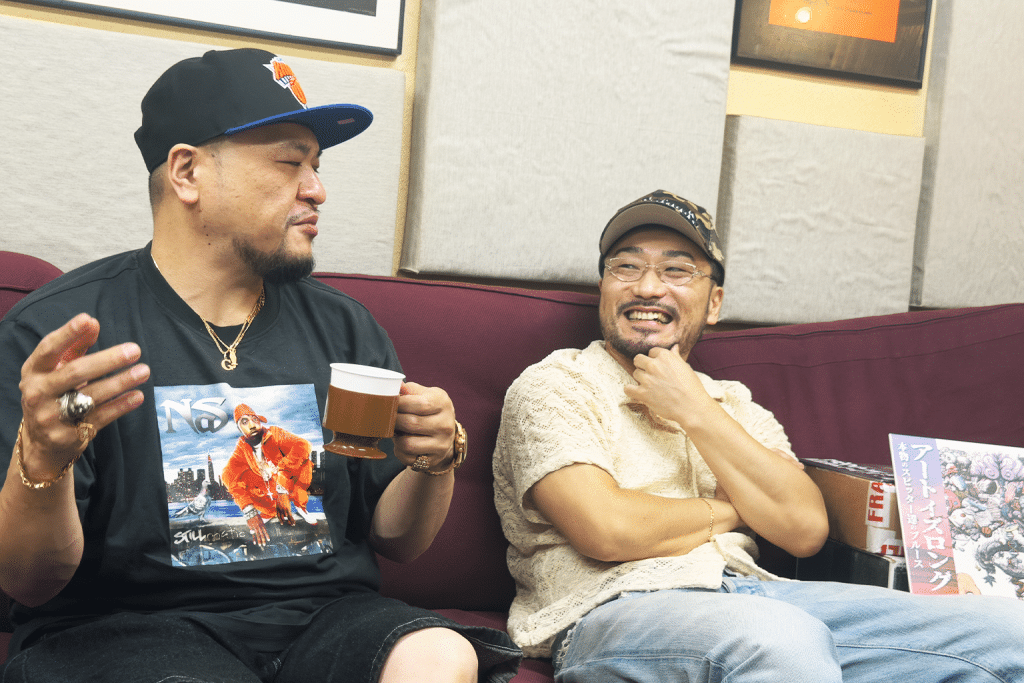
MEGA-G is a formidable MC who made his name nationwide as a member of JUSWANNA, one of the defining groups in Japan’s 2000s hip-hop scene.
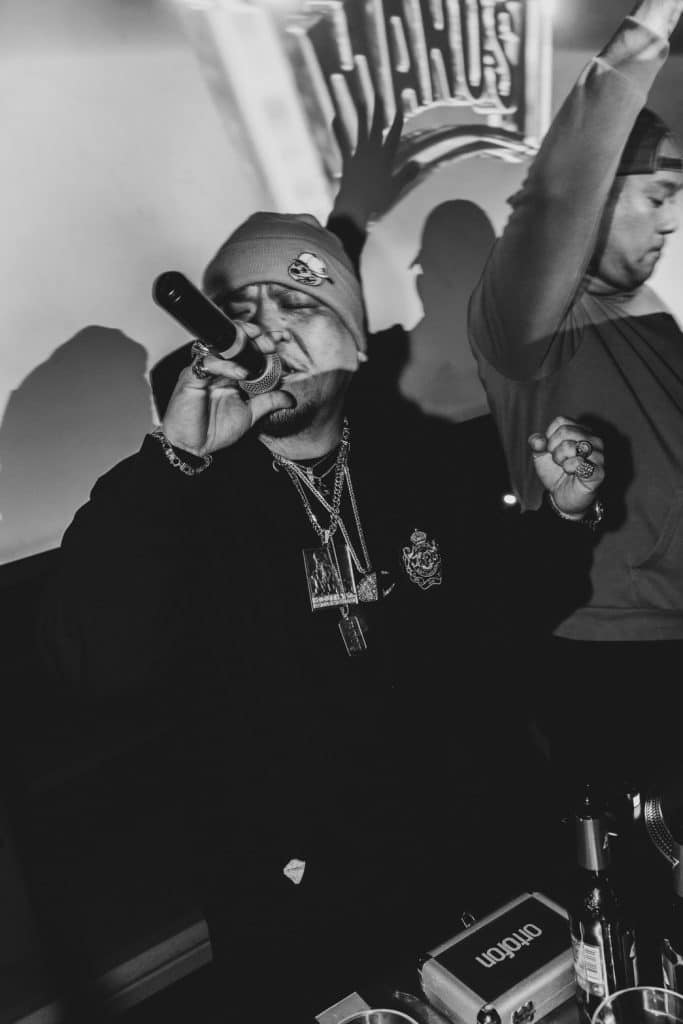
True to the “G” in his name, his rapping carries a Gian-like, overwhelming presence. With intricately constructed rhymes and a hard-edged style that never wavers, he has remained at the forefront of the scene for years.
Then there is Greedy on ILLBLOCK, an MC from the crew ILLBLOCK CORNER MUSIC who has consistently embodied authentic hip-hop.
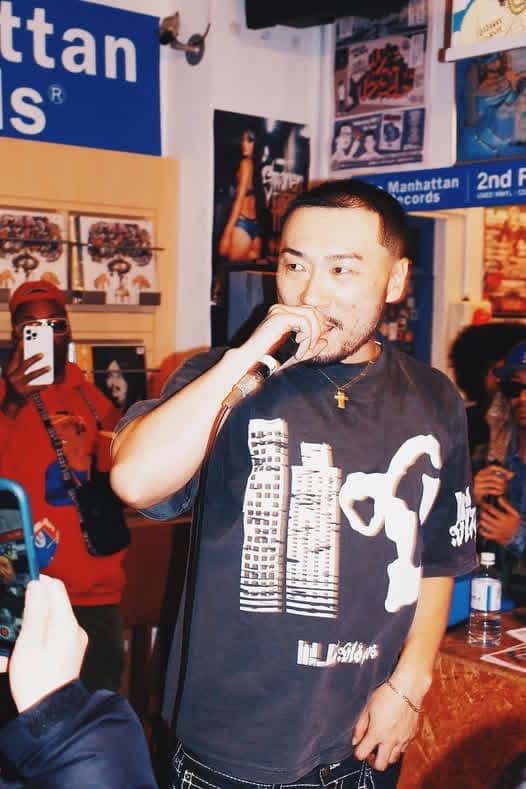
With a uniquely weathered voice, an artfully honed command of words, and a gift for landing rhymes beautifully, he is a “rapper’s rapper” held in high regard by many of his peers.
HIPHOPCs learned that these two of Japan’s most technically accomplished MCs had teamed up with H.A.D.E.S, a beatmaker who also belongs to ILLBLOCK CORNER MUSIC, to release a long-awaited new album.
So Sam—HIPHOPCs’ signature director, mascot, and a man deeply versed in the industry—went to meet them. He heard the full story, from what happened behind the scenes during production to their respect for one another and the ideas they poured into the record.
__________________________________
A collective that calls itself “underrated” sets out its definition of hip-hop
Sam
Thank you for joining us. Could you start by introducing yourselves?
Mega-G
I’m Mega-G. I was originally in a group called JUSWANNA. Since around 2010, I’ve been making music as a solo artist while running my own label, BOOT BANG ENTERTAINMENT.
Sam
Thank you. Greedy, you’re next.
Greedy
I’m Greedy on ILLBLOCK, with ILLBLOCK CORNER MUSIC on the label LOCOMOTIVATE. The eccentric talent born in Yokote, Akita—Greedy on ILLBLOCK. Good to meet you.
Mega-G
I like that you said it yourself. [Laughs]
Sam
First, I’d like to hear what your childhoods were like. Mega-G, where are you from?
Mega-G
I’m from Ota Ward in Tokyo.
Sam
Ota Ward. What was your childhood like, and how did you discover music?
Mega-G
Well, I basically grew up in a home where my parents wouldn’t buy me game consoles or things like that. So I listened to a ton of music on the radio from an early age. I may have spent more time around music because of that.
Then, when I started junior high, I made quite a few skater friends. When I went to their hangout, everybody was listening to punk, hip-hop, melodic hardcore, and that kind of music. Of all of it, I thought hip-hop was the coolest.
That’s more or less how I came to love it.
Sam
So hip-hop was your first choice right from the beginning.
Mega-G
At first, I listened to reggae alongside it too.
Sam
Did they play reggae on the radio?
Mega-G
They played it more often than you might expect back then, on the radio and television.
Diana King’s “Shy Guy” was a hit, and you would see Diana King on terrestrial television or even taking part in variety shows. Japan was prosperous then, so we often saw overseas artists.
https://youtu.be/
Sam
How about you, Greedy?
Greedy
I was a basketball kid from fourth grade onward.
One of ILLBLOCK’s original members got into hip-hop pretty early through his older brother. He brought over CDs by Shakkazombie and Buddha Brand, and in sixth grade I thought, “Hip-hop is incredible.”
I hadn’t been particularly interested in music until then, but when I found hip-hop, it was like, “This is it.”
Sam
I see. I ask everyone this: who was the first artist to influence you when you were young?
Mega-G
For me, it wasn’t hip-hop. It was The Blue Hearts.
Sam
Wow. So it was a Japanese artist.
Mega-G
I had loved The Blue Hearts since elementary school. Even as a kid, I thought the content of their lyrics was kind of mind-blowing. What they say is simple, but it resonates more deeply the older you get.
Sam
The Blue Hearts really are extraordinary. What about you, Greedy?
Greedy
The act that completely got me was Buddha Brand.
I was influenced by Nas and other overseas rap too, but it really was Japanese rap. The generation around SCARS was active when we were in high school, and it hit us hard. They were my starting point in Japanese rap.
Discovering music and the first recording sessions
Sam
After discovering music that way, what path brought you to where you are now? How did you find somewhere to record?
Mega-G
At the very beginning, when I was around my third year of junior high, we decided, “First, let’s make a demo tape.”
One of my classmates had an older brother who was a DJ. He played so loud you could hear it from the main road—he was the kind of senior whose volume supposedly drove every neighbor away.
He kept me there and told me, “Whatever you do, don’t listen to Japanese rap.”
Sam
Seriously? [Everyone laughs]
Mega-G
Seriously. He said, “You’re not allowed to listen to anything except MICROPHONE PAGER.”
PAGER alone was allowed, and otherwise he would only let me listen to foreign music. After listening endlessly, I said, “Biggie is amazing,” and he told me, “Come back when you can rap Biggie.”
I was like, “What?” I couldn’t even speak English. [Laughs] So I think the first thing I made was a Biggie cover.
Sam
Seriously? Again?
Mega-G
I made it purely by ear, even though I didn’t understand English. I used headphones as a microphone and made a demo tape through a mixer.
Sam
That’s an incredible story. How did you do it, Greedy?
Greedy
I started recording so early that we may have been the first people doing it in my hometown.
I was writing lyrics by my first year of high school. Looking back, I realize the environment around me was unusual. For rural Akita, there were a huge number of B-boys.
Sam
Only in that particular area?
Greedy
Not so much the area as the people around us. Members of what is now ILLBLOCK, and a rapper called SHY-P.O.P who had been in The Loyalty with T2K, moved from our hometown to Tokyo. I started coming to Tokyo often to follow him, and that became the path I took.
I wrote lyrics back home, but I couldn’t really call it a proper career. I moved to Tokyo at 18 and met Lostface in Udagawa—he’s now the resident DJ at BLOODY ANGLE. That was when I properly recorded a pre-production demo for the first time.
Sam
You were 18? That was early for the time.
Greedy
It was. Through those connections I met SHY-P.O.P in Udagawa and then T2K. I was fortunate in the people around me because I got to spend time early on with people who had already established a rapper’s lifestyle.
One wild senior’s bold—and reckless—actions
Sam
I see. Mega-G, you said earlier that the first thing you did was make a demo tape. What happened to that tape?
Mega-G
That troublesome senior abducted me in his car next.
Sam
There’s a lot of abduction and confinement in this story. [Laughs]
Mega-G
He took me to Shibuya, handed me duplicated tapes, and said, “We’re going to distribute these now.” Then he stormed into Manhattan Records and said, “Play this in the store right now.”
I was so embarrassed. I said, “Please stop. Why are you making me do something that feels like a punishment?”

Sam
Did they actually play it?
Mega-G
No. They looked at us as if to say, “What?” [Laughs] But we handed it to Zeebra and everyone around him, and people started remembering me whenever we met.
Sam
Did word then spread among the people who heard the tape, leading to invitations to perform?
Mega-G
It was more that I kept going to events as a fan. I would sneak backstage, freestyle in front of everybody, and get knocked around every time. [Laughs] They’d say, “You’re too damn loud.”
Sam
Was there anyone particularly memorable among the people who knocked you around—someone who made you think, “This guy is serious”? And when you say “knocked around,” do you mean physically?
Mega-G
Physically, not in a freestyle. They told me, “If you’re a rapper, freestyle,” and then, while I was freestyling, they’d say, “Enough already.” That shows you how much I freestyled.
I had this “Listen to me” energy. Sometimes I would get drunk and even go at Zeebra.
Sam
Oh, I see. That’s wild.
Greedy
That is wild. [Laughs]
Sam
How did you get from there to releasing music?
Mega-G
While I kept doing things like that and more people came to know me, I started seeing Zeebra’s younger brother, SPHERE OF INFLUENCE, at events more often. We began hanging out privately too.
Then he asked me to lay down a verse for his second album. Going in to record that was my first proper recording session. That would have been around 2003.
The beat was by D-Originoo, who had originally been in UBG—URBARIAN GYM—so it carries a lot of memories for me.
Sam
I was in fifth grade then. The way rappers emerged was completely different from today. Young artists now can make their own music and put it out themselves, but back then you had to build connections.
I imagine that even when people said, “Shut up,” as you freestyled backstage, some of them must have secretly thought, “He’s good.” That is probably why you started getting called in.
Mega-G
If you didn’t go that hard, I don’t think anyone would really notice you.
From what I saw, hip-hop in the ’90s gave me the strong impression that you could not reach a record company unless you belonged to a crew. There were big collectives such as Kaminari-Kazoku and UBG, or FG—Funky Grammar Unit—in KREVA’s case. They felt like gateways to record companies.
But the person who broke that model was SEEDA.
Sam
Really?
Mega-G
SEEDA wasn’t in any crew at all. He suddenly did a deal with P-VINE and released a solo record. He was only a year older than me, so it hit me hard: “You can do this solo.”
Sam
I see. Around when did you first release a work under your own name?
Mega-G
That was around 2004. DJ DOMMON, whom I always hung out with, was going to release a mixtape through a label called Libra Records. I was invited as one of the freestylers.
The people there were me, Messiah THE Fly, Kan, and ASHURA THE GHOST. There was also a rapper named Camel who later disappeared, and a guy from Kawasaki named YAS. We were all freestyling together.
Libra’s president was at the session. Since I was always recording tapes, I pitched myself: “I’m already making a solo project.” He said, “That sounds interesting.” That’s how I put it out.
Then, in 2006, we released JUSWANNA’s first EP.
Sam
How did you meet Messiah? Was that where you met him?
Mega-G
Messiah was basically a local friend through skateboarding. He was famous because he was almost pro-level at skating, so we often hung out.
The convenience store where he worked was open late. We would adjust the position of the security camera so it pointed away, write lyrics on receipts, and play around freestyling.
Sam
That’s fascinating. I could listen to these stories all day.
Witnessing the birth of Japanese rap firsthand
Sam
Greedy, how old were you when you released your first project, and what was it like?
Greedy
My first work under the current ILLBLOCK CORNER MUSIC name came out in 2010, when I was around 20.
There were originally five of us, but eventually we became three, and the three of us released our first mixtape.
It was the producer H.A.D.E.S, who made the beats for this album, one other rapper, and me. The three of us made it at Gunsmith’s studio in Itabashi.
Ryo—318—and Pera shot the video for us too.
Sam
That’s the video with what looked like a rooftop, right? I remember it clearly.
Greedy
Early in the morning, we all carried the gear up ladders onto the roof above the rooftop parking lot at K’s Denki. A woman in the neighboring apartment building watched us suspiciously. [Laughs]
Someone reported us and the police eventually arrived. Ryo said, “We were only filming something small,” and desperately protected the footage. In the end, everything was fine, and that’s how we got the video.
Sam
I see. So that was your first work. Where did you meet Ryo?
Greedy
It was at ELEVATION, the event at BET in Ikebukuro where I first met Sam too. I met Vito and Loota from Squash Squad there.
Right—I told them I was looking for somewhere to record, and they introduced me to Ryo.
Kohh—Yuki Chiba—was there then too, right?
Sam
He must have been. Wait, so Chiba was there before you?
Greedy
I think Kohh was already performing at ELEVATION when ILLBLOCK first got to take part.
Mega-G
Was that when “JUNJI TAKADA” was out?
Greedy
No, much, much earlier. Probably before he broke through.
Mega-G
Right. When Ryo introduced me to Kohh at his studio, I don’t think Kohh had released anything yet.
Sam
Seriously?
Mega-G
I think so.
Greedy
Looking back, that ELEVATION event really was something.
Mega-G
SIMON performed there too.
Greedy
That next wave—the younger generation—was starting to come out, and I was invited in that context too.
Sam
SIMON, ICE DYNAMITY, BES—they all came. A lot of the leading mainstream artists of the time were there. CHARI and TATSUKI too. That’s incredible.
JUSWANNA and MEGA-G’s solo career
Sam
I have a question for Mega-G.
When it was decided that JUSWANNA would release its first project, did it begin simply with the two of you saying, “Let’s rap and put something out”? Or was someone else planning the project?
Mega-G
JUSWANNA originally started as a two-person DJ team formed by DJ DOMMON and Camel Clutch. Messiah and I only joined in to freestyle, but before we knew it, it had become more like a crew.
Later, Camel left and DOMMON disappeared too. DJ MUTA joined afterward, and that became the final lineup.
Sam
That led to the release of JUSWANNA’s first album, BLACK BOX. Releasing an album was a major undertaking then. It seems as though there were many more steps than there are now.
What was difficult about it?
Mega-G
We were with Libra Records then, so we didn’t have to raise the production budget ourselves. What was difficult?
One example would be a recording session with Dev Large. He kept me in the booth for more than an hour and made me do around 25 takes. After all that, he said, “The very first take was the best.”
I was drenched in sweat and my voice was hoarse. At the time, I thought, “This is hard.” [Laughs]
Sam
That does sound brutal. Once you overcame those difficulties and released the album, did your life as an artist change?
Mega-G
It did. We released the album and toured all over the country. That was nearly 20 years ago now.
Even now, when I go somewhere, people tell me stories that begin, “Back then…” Or they say, “I listened to you in elementary school,” or “I listened to you in junior high.” It makes me feel old, but the fact that they have carried those memories all this time is truly the greatest reward an artist can have. It makes me happy.
Sam
Of course. Once this interview with Mega-G was confirmed, I listened to BLACK BOX again, and then Pierrot Style. I was incredibly happy when you agreed to the interview.
When listeners tell you, even after so many years, “I listened to your music,” how does that motivate you?
Mega-G
Absolutely. JUSWANNA went on hiatus in 2010, but I immediately released solo work. When I first went solo, I never wanted to perform JUSWANNA songs. I had my pride, and I wanted people to see who I was at that moment.
But over the past few years, I’ve deliberately started performing JUSWANNA songs again. I came to think it was a little unprofessional not to give the people asking for something what they wanted.
Sam
I want to hear those songs live too.
There were naturally changes when you went solo. What, specifically, was different from working in a group?
Mega-G
First, with two MCs, the other person helps you in a live setting as a kind of side MC. Once I was alone, I had to write raps I could perform completely by myself. That was a major change.
In a group, you create points where you think, “I can rest a little here.” Once everything had to work through me alone, the fine details changed—the placement of words, where I breathed, and so on.
Sam
I see. Which do you prefer?
Mega-G
I’ve been solo longer now, so I’m used to that. But when I return to a two-MC setup, like on this album, it brings back memories.
Sam
That makes sense. When Chiba—Yuki Chiba—was working solo, he basically kept me beside him. I didn’t sing; I was simply there as a side MC in case anything happened.
Did you ever use a side MC like that?
Mega-G
No. Looking back, though, I wish I had kept one with me all along—someone like Spliff Star is to Busta Rhymes, a super-hype man. I think that could have made the shows more entertaining.
I ask younger artists, “Can’t you do something like this?” But they don’t seem very interested. They seem to have all they can handle with themselves.
Sam
I had plenty of fun even when I was only the side MC.
Mega-G
I think there could be people who specialize in it professionally.
How the album came together
Sam
How did you and Mega-G meet, Greedy?
Mega-G
Around this period. But T2K was definitely the connection.
Greedy
During my career working with ILLBLOCK, T2K became like an older brother to me.
He kept inviting me to perform. T2K and I first released an album called Nostalzip in 2021, and I think he introduced me to MEGA around that time. Of course, I had known who MEGA was for years, but he was such an OG that approaching him was difficult.
But through T2K, we realized that we shared a love of hip-hop and got along in conversation. We started talking often, and that is how it developed.

Sam
How did that develop into making an album?
Greedy
In 2024, I released an EP called Bad Meets Evil with a beatmaker named ATSUKI. That was when MEGA and I first made a track together, “Stealth.”
https://music.apple.com/
https://open.spotify.com/
After that, I was invited onto a project by the record-digging collective ILLVloods. We also worked together on two tracks for it, “New Day” and “Truth Spitter’s Blues.” This album grew out of that sequence of events.
https://music.apple.com/
https://open.spotify.com/
Sam
Your album together is called The Most Undarated Peoples. When did the project begin?
https://music.apple.com/jp/album/the-most-undarated-peoples/6791174980
H.A.D.E.S
[H.A.D.E.S joins the conversation.] Wasn’t it around the time ILLVloods wrapped up?
Greedy
Yes, that sounds right. So it was probably late 2024 or early 2025.
I made a track over a H.A.D.E.S beat around the end of 2024 and sent it to MEGA, saying, “I tried making this.” That became “Walk on Fire,” the song for which we released a video this time. Once that was complete, everything moved quickly.
https://youtu.be/
Sam
I see. H.A.D.E.S, I want to ask you something. As the producer of this album by Greedy and Mega-G, what concept did you bring to it?
H.A.D.E.S
Because it was MEGA and Greedy, the overall concept was to make the album while imagining the sound of the 2000s and that era.
Sam
Was there anything especially memorable about making the album?
H.A.D.E.S
There was. Apart from this album, I think MEGA was probably making his own album at the same time.
Despite working on both simultaneously, he brought in incredibly precise lyrics. We would meet about once a week, and he had a verse ready every time, along with hook ideas. He delivered all of it with remarkable precision, one after another. I got to experience his prowess firsthand.
Sam
I see. I want to ask all three of you: is there a particular song that stands out?

H.A.D.E.S
The tenth track is called “Voice of the Heroes,” featuring Sugiuradubb from Nagoya.
Sam
Why that one?
H.A.D.E.S
It has a feel unlike anything I had made before. I had rarely brought in a singer for a chorus. The subject is also distinctive: the song progresses while referencing music by people from the Japanese rap world who have passed away.
H.A.D.E.S
We scattered references to Dev Large, MAKI, KOSUMI, Nishid, and others throughout it.
Sam
I see. “Voice of the Heroes.” Is that your pick too, Greedy?
Greedy
Well, it’s Sugiuradubb’s talk box. You don’t hear it very often in hip-hop now, and I had never made a song like this either.
Sam
Some people reading this may not know what a talk box is. Could you explain it?
Greedy
A talk box—it’s the thing Takashi Sakai from The Mammy puts in his mouth. I suppose it’s like an analog Auto-Tune.
https://youtube.com/
Sam
Oh, that. I’m not sure whether this is the right way to describe it, but it’s the technique you often heard on old West Coast beats. That thing. I get it.
[Listening to the song.] Ah, here it is.
Greedy
This chorus is incredible.
Sam
It is. The album was released on July 23. The Most Underrated Peoples—in other words, “the most underrated people.”
Who exactly is “underrated”?
Mega-G
The three of us.

Sam
No way. Absolutely not. [Laughs] There is no way you aren’t recognized. But that is how you see yourselves, right?
Mega-G
When you place us within the current hip-hop scene, I think so.
Greedy
It means we want more people to pay attention.
Sam
Absolutely. The album was released on the 23rd. Are there any commemorative shows?
Mega-G
On the 26th, the two of us are performing together right away at SALOON in Daikanyama.
Sam
So you’ll be taking the album out onstage.
Mega-G
I hope we can take it on the road.
Sam
Is there anything else you would like to say about the album?
Greedy
I’d like people to listen to the lyrics.
What they want younger rappers to know
Sam
This is something I personally wanted to ask: how do you get that good at rapping?
For example, I’ve heard stories about Eminem constantly reading the dictionary. Do you have anything like that, Mega-G?
Mega-G
I still write rhymes down on paper, and lately I have personally been studying rhythm too. I think you improve when you pay attention to where words land and to rhythm, and when you have an inquisitive mind.
If you are interested in something, the deeper you explore it, the better you become.
Sam
That makes sense. Is it because you have been doing this for around 25 years as an artist?
Mega-G
It has been around 20 years since I started properly releasing music, and around 30 years since I started rapping.
Sam
If there is anything you think about today’s young rappers, I would love for you to tell them. There are things only someone like Mega-G can communicate.
Mega-G
You mean the people making music? Hmm.
Sam
I have probably been involved in the industry since I was around 18, which makes it nearly 20 years. I’ve had the opportunity to meet many people in the industry, but I feel Mega-G’s experience is completely different.
Mega-G
It is.
Sam
It felt as though there were more intimidating older guys around in the past.
As your earlier story showed, this was an era when it was difficult to make everything from zero to 100 yourself. People made projects together, asking many others for help along the way.
But young artists now can handle everything themselves, from making the beat to distributing a song. That means they lose outside connections. This may sound harsh, but honestly, there are some who make me think, “They don’t know basic courtesy, and they’re cocky.” What do you think about that?
Mega-G
Well, they certainly can be cocky. [Laughs]
Sam
Calling them cocky is just my opinion. [Laughs] Did feelings like that make their way into this album?
Mega-G
Rather than saying they are in the album, I think the younger generation is playing a different sport altogether. If what I’m doing is the pen game, they seem to be using entirely different software. So they don’t bother me.
Sam
As if they are a different genre?
Mega-G
A genre. I see them as people playing a different game from mine. I don’t mind; I watch with interest. If there is one thing I could say, though…
There are a lot of people whose recordings are fantastic but whose live performances are terrible. I think they should practice performing. And I think they should work with a regular live DJ. There is a combination you build together.
Sam
I understand that. During a show, you can simply make eye contact and know, “He’s about to do that.” It may not quite be teamwork, but the DJ might bring in an effect at the right moment. That kind of combination does exist.
Mega-G
I think pursuing that level of quality would make things even better.
Sam
Artists should value their DJs more. Absolutely. Do you have anything to add, Greedy? You have been doing this for a long time too.
Greedy
As Mega said earlier, curiosity and the desire to explore are truly important. I think they are ultimately essential.
Sam
I heard the album earlier, and I genuinely want everyone to listen to it.
Everyone will have their own tastes, but it is packed with the fundamentals of hip-hop. It is simply “rap,” in the fullest sense. It struck me as an album from which today’s younger artists could learn a great deal.
Greedy
While we were making it, Mega would bring his verses in early every time. I would think, “Damn,” and work desperately on mine. I feel as though I sharpened my skills in the process.
Mega-G
There were also times when I heard Greedy’s lyrics and rewrote mine in response.
Sam
Really? Greedy, that must make you happy. [Laughs]
Greedy
It genuinely inspired me.
EXTRA: Questions
Sam
I really hope it hits with a bang.
Changing direction completely, I sometimes ask younger people I meet at clubs, “What would you like to ask an artist? What do you want to know?” I got a few questions, so let me put them to you.
Do you think it is possible to be both commercially successful and cool?
Mega-G
I think you can achieve both if you maintain control over your own quality. But I don’t think you can if you leave that control to a label.
Sam
That is a profound answer. Is there a hip-hop value you still refuse to compromise?
Greedy
A hip-hop value I still refuse to compromise? It has to be respect: respect for what the pioneers built.
Sam
Is there a rapper who made you think, “I refuse to lose to this person”? Mega-G, I expect you might name a huge OG.
MEGA-G
Someone I refuse to lose to? Among older rappers, MACCHO from OZROSAURUS had an enormous influence on me.
Among younger rappers—though they are only about a year younger—MONJU and the people around them. I feel as though they have sensibilities close to mine. Our musical tastes are probably similar, and I think some of what we seek is alike, so I really like them.
Among people my age, I would also say Anarchy.
Sam
You and Kenta—Anarchy’s real name—are the same age?
MEGA-G
Yes. Kenta and I are the same age. When I see how far he has gone, it does make me feel frustrated.
Sam
I see.
MEGA-G
But once, at an event in Okinawa organized by SILVERBUCK, Kenta was on the same bill.
I was standing beside BUCK and said, “It frustrates me that we’re the same age.” He told me, “You have your own position.” After that, I stopped worrying about it so much.
What’s next
Sam
Releasing this album brings one story to a close. What would you like to do next, or what are you planning?
Mega-G
First, I hope the three of us can play shows in several places.


Mega-G
I’ve also started making another solo project that I hope to release in a different form. More than anything, I want to keep moving and continue putting music out.
Sam
Finally, could you share a message with the fans reading this interview?
Mega-G
This is what I believe hip-hop is. If you want, come join us in this pen game.
Greedy
We packed a great deal into this album. I poured my drive and power into it. You’ll understand when you hear it, so please listen.
Sam
Thank you. Thank you both for speaking with us today.
__________________________________
Hip-hop continues to evolve, changing shape with each era.
Speaking about this album, director Sam said it is “packed with the fundamentals of hip-hop” and is something “the younger generation in particular should hear.” Behind those words lies an essence of hip-hop that will not disappear, no matter how times change.
The way music is made, the way it reaches an audience, and the places where rap stars emerge have all changed dramatically over the past 20 years. Yet some universal values remain, regardless of how the environment and the scene evolve.
They are love for hip-hop, respect for the pioneers, and the resolve to decide what you will say in your own words and how much of your life you are prepared to pour into that expression.
The work MEGA-G and Greedy on ILLBLOCK present here contains more than the technique and experience they have honed over many years. It carries the time the two artists have lived through.
This is not a record made to look back at the past. It is an album they are presenting to today’s listeners as hip-hop in the present tense.
They have taken what they inherited from their predecessors, transformed it into their own form with profound respect, and passed it to the next generation. That attitude may be precisely why hip-hop culture has endured for more than 30 years and continues to evolve today.
Not to earn recognition, but to remain true to the hip-hop they believe in.
Their pen game is far from over.
Social Media and Music Links
Social Media and Related Links
- MEGA-G: Instagram (@official_bootbang) / X (@Boot_Bang_Ent)
- Greedy on ILLBLOCK: Instagram (@greedy_on_illblock) / X (@Greedy_ILLBLOCK)
- H.A.D.E.S on ILLBLOCK: X (@hades_ILLBLOCK)
- LOCOMOTIVATE: Instagram (@locomotivate_jp) / Official Shop