BENIZAKURA Interview: “Rap Is Just So Much Fun” — BACK TO THE HIPHOP with DJ KAJI
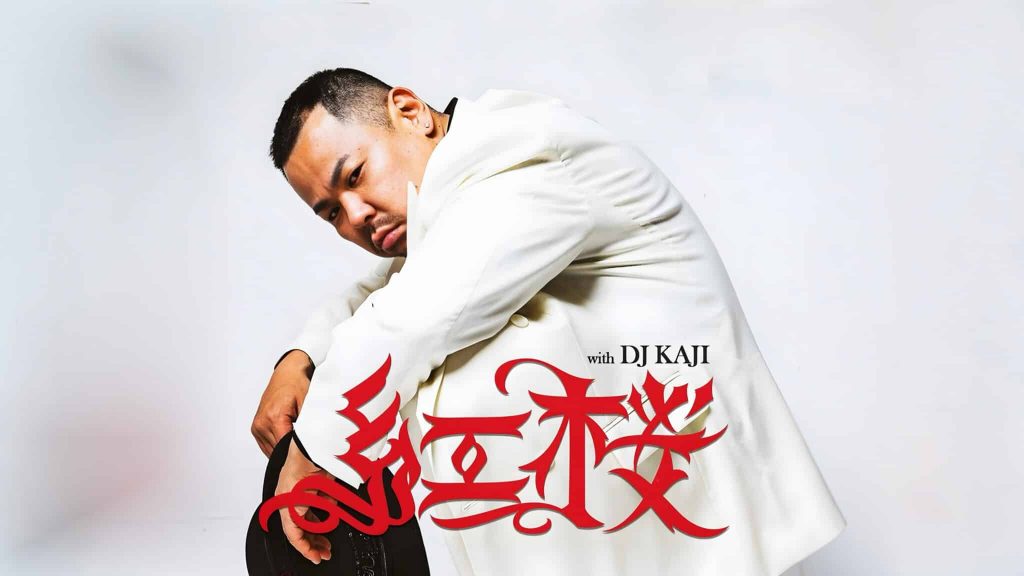
BENIZAKURA (紅桜) released his new album BACK TO THE HIPHOP through PartyGunPaul on August 3, 2026. From roughly 30 songs already in progress, he selected eight rap tracks and one skit, shaping them into a nine-track record that runs about 30 minutes.
Work on the album began as soon as BENIZAKURA was released from prison. DJ KAJI remembers recording as if they were gathering fragments of lyrics scattered through everyday life. HIPHOPCs spoke with both artists about why they chose to focus on rap, the partnership they have maintained since 2019, and where this record is meant to take them next.
Interview and article: HIPHOPCs Editorial Team / Images courtesy of BENIZAKURA
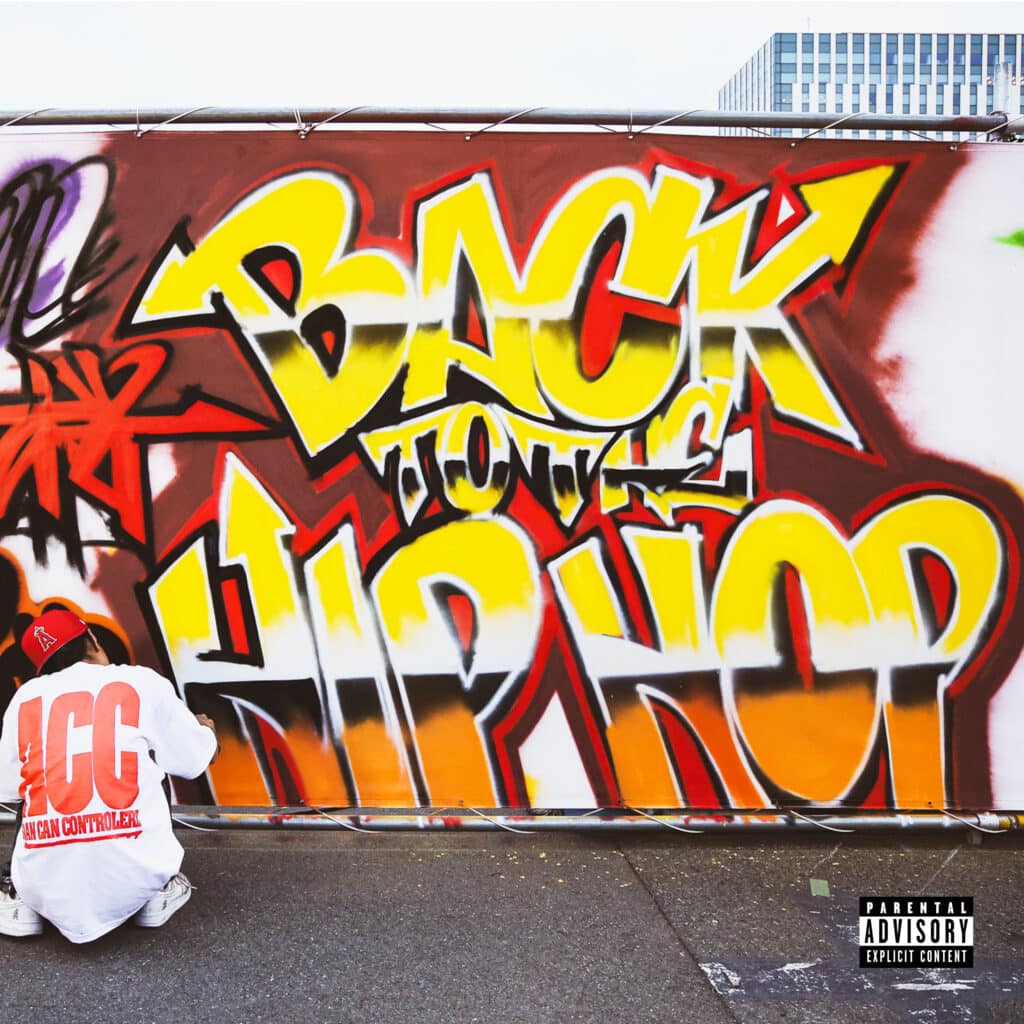
What Is BACK TO THE HIPHOP?
- Artist: BENIZAKURA, a rapper from Tsuyama, Okayama
- Release: August 3, 2026, via PartyGunPaul
- Format: Nine tracks, about 30 minutes; eight rap songs and one skit
- Production: DJ KAJI (credited as DJKAJI) appears as producer or co-producer on tracks 3–9; TAIKA produces track 1, dj honda track 2, Solid Slide a.k.a T2K co-produces track 3, and NAGMATIC shares production on track 5
- Theme: What BENIZAKURA calls a return to the roots—choosing rap again after also making melodic, sung material
“Rap Is Just So Much Fun”—Choosing Rap After Exploring Melody
HIPHOPCs: What did you want to put into this album?
BENIZAKURA: Just like the title says, the album is about going back to the roots. I have released melodic songs as well as rap, but making this record reminded me all over again: rap is just so much fun.
“Rap is just so much fun.”
BENIZAKURA
「やっぱりラップおもしれー」
His experience making sung material gives that answer its weight. BENIZAKURA can sing; that is precisely why choosing rap alone carries meaning. Rediscovering that feeling became the standard by which he decided how to shape roughly 30 songs into one record.
Selecting the Rap Tracks From Roughly 30 Songs
HIPHOPCs: What set the album in motion, and what mattered most to you while making it?
BENIZAKURA: I had already made around 30 songs without worrying about whether they would end up on an album. For this release, we packaged the tracks that were all rap. I am not sure about hip-hop today, but I felt there were not many records that were both simple and truly hip, so I deliberately kept this one focused on rap.
The defining point is not simply that 30 songs existed. It is the editorial choice to pull out the rap tracks and make them stand together. BENIZAKURA also qualifies his view—he does not claim to speak for the entire scene. Instead, he answers what he felt was missing by presenting a tightly focused rap record. Asked which song expresses that intention most clearly, he points to “BACK IN THE HIPHOP.”
“BACK IN THE HIPHOP”—Putting the Focus Back on Culture
HIPHOPCs: Which song on the album is your favorite, and why?
BENIZAKURA: “BACK IN THE HIPHOP.” It is the song that most directly carries the album’s theme. There is nothing wrong with using hip-hop to make some money, but the culture has even more to it—that is the part I think is dope, and that is what I focused on. I think more people might start going back to the roots from here.
The album is called BACK TO THE HIPHOP; BENIZAKURA identifies “BACK IN THE HIPHOP” as its thematic center. He does not reject commercial success. He allows that making money through hip-hop is fine, then shifts the emphasis back toward culture. Rap is the chosen form, and culture is where he places the value. The distinction makes the album’s priorities clear.
Why BENIZAKURA Keeps Getting Chosen
While BENIZAKURA has chosen rap and culture again for himself, other artists have long recognized something singular in his expression.
In the second installment of HIPHOPCs’ two-part interview with dj honda (in Japanese), honda described BENIZAKURA as having a style unlike anyone else’s and said that sense of originality and possibility made him want to work together. Their relationship dates back to the 2019 joint album dark side; on this record, dj honda produces “SHINE.”
HIPHOPCs has also followed Cz TIGER’s work across languages. In an English-language interview, he discussed the Atlanta relationships behind his career. In a later Japanese-language interview, he explained that the guests on his second album, FOR WHATEVER, were chosen not by age, hometown, trends, or numbers, but because they were Japanese artists who had influenced him and whom he genuinely considered dope. He also described making music with “real people” as central to his approach. BENIZAKURA was one of those guests, appearing on “ONE WEEK BLUES feat. BENIZAKURA.”
In 2026, Nagoya veteran G.CUE also invited BENIZAKURA onto “HOMIE,” from the album Yokiotokiku (article in Japanese). A producer with a global career, a contemporary connecting Japan and the United States, and a veteran of Nagoya’s 052 scene have each chosen BENIZAKURA for different reasons.
His career helps bring that distinctiveness into focus. BENIZAKURA came out of battle rap, winning the UMB Okayama championship in 2011, 2013, and 2015, but since his 2014 self-titled debut album he has moved between rapping and singing. That range has allowed him to answer collaborators across genres and generations. On BACK TO THE HIPHOP, he deliberately narrows that range and chooses rap alone.
As those outside judgments accumulated, what was happening within his closest working relationship? DJ KAJI, who has continued working with BENIZAKURA since 2019, explains how this album took shape.
Recording Began After His Release—Gathering “Pieces of Lyrics”
HIPHOPCs: When work on this album began in earnest, what kind of place was BENIZAKURA in from your perspective?
DJ KAJI: Work on it started as soon as he was released. BENIZAKURA’s music is not so much something you manufacture as something that emerges from everyday life. We recorded by gathering scattered pieces of lyrics and fitting them together.
His music is not simply “made”; it emerges from daily life. Behind those roughly 30 songs was a steady process of picking up scattered words and shaping them, one track at a time.
A Relationship Unchanged Since 2019—“How Do We Keep His Name Alive?”
HIPHOPCs: How has your musical relationship changed from “HIP 2 DA GAME” in 2019 to this album?
DJ KAJI: BENIZAKURA was incarcerated in 2019, but throughout that time I kept moving with one thing in mind: how to keep his name alive. Where we are now is an extension of that. The relationship between the two of us has not changed at all.
“The relationship between the two of us has not changed at all.”
DJ KAJI
「2人の関係性はずっと変わってないですね!」
Their partnership is visible in more than the making of this album. While BENIZAKURA was incarcerated, DJ KAJI continued making decisions with the question of how to keep his name from disappearing. He sustained that work from the outside while the artist himself was absent.
Track four is “HIP 2 DA GAME,” the same title as their 2019 song. On an album built around returning to the roots, it sits near the center of the sequence, immediately before the skit. DJ KAJI’s concise statement—that nothing between them has changed—connects 2019 and the present through the tracklist itself.
DJ KAJI’s Role Goes Beyond the Credits
DJ KAJI, who belongs to PartyGunPaul alongside BENIZAKURA, carries the largest share of the production. The official release credits list him—under the styling DJKAJI—as producer or co-producer on every track from 3 through 9. He shares “BACK IN THE HIPHOP” with Solid Slide a.k.a T2K and “SKIT” with NAGMATIC; the remaining five are credited to him alone. But the role he describes extends beyond what appears in the credits.
Basically, I was there for the recording sessions, and I have been involved in nearly every stage of almost every song we have made. On this record, we valued that initial impulse and tried to embody the hip-hop we have always loved.
We paid close attention to the sound, joined forces with producers we trust, and had I-DeA bring everything together at the end. Even the way the record was made feels deeply hip-hop.
—DJ KAJI
The rest of those credits sharpens the picture. TAIKA produced “BORN FROM THE UNDERGROUND,” which GATTEM G JONES recorded and mixed before I-DeA mastered it. dj honda handled the production, recording, mixing, and mastering of “SHINE.” I-DeA mixed and mastered tracks 3–5 and 7–9, and mixed track 6. Guest artists include VOCA Luciano, DON KABACHI, YAMATO, HKR, 4PRIDE, SONIC, and YAS. Materials supplied for the album describe them as artists from the local scene. Who participates, and how they work together, is part of the record’s identity.
Taken together, their answers locate the album’s “roots” in three places: rap, culture, and the process of deciding whom to create with and how. Returning to the roots does not mean retreating to one moment in the past. It means refocusing on the conditions that have always mattered to them.
Not Proof That He Is Back, but the Start of What Comes Next
How does DJ KAJI understand BENIZAKURA’s renewed focus on rap?
HIPHOPCs: Is this an album meant to show that BENIZAKURA has returned, or is it an album that begins what comes next?
DJ KAJI: Rather than an album that proves he is back, it is about pausing at the starting point—planting our feet on the ground, and beginning what comes next.
“Rather than an album that proves he is back, it is about pausing at the starting point—planting our feet on the ground, and beginning what comes next.”
DJ KAJI
「戻ってきたことを示すというより、一旦原点。地に足ついて、ここから先を始めるアルバムです!」
The album turns its attention back toward rap, culture, and the way the music is made. That is not a destination; it is the act of checking the ground before moving forward. BACK TO THE HIPHOP is not an attempt to reenact an old formula. It is a record made so that BENIZAKURA—after expanding into melodic songs—can begin the next stage with the people and working environment he has now.
HIPHOPCs: Finally, what would you like to say to the listeners?
DJ KAJI: BENIZAKURA is at his best live. Come see the two of us perform in person.
BACK TO THE HIPHOP is out now. DJ KAJI calls the live stage BENIZAKURA’s truest form. The next question is how these nine tracks will take shape in the room.
BACK TO THE HIPHOP: Album Information

- Artist: BENIZAKURA
- Title: BACK TO THE HIPHOP
- Release date: August 3, 2026
- Label: PartyGunPaul
- Format: Nine tracks / approximately 30 minutes
- Listen to the album
Tracklist
- BORN FROM THE UNDERGROUND
Produced by TAIKA - SHINE
Produced by dj honda - BACK IN THE HIPHOP
Co-produced by Solid Slide a.k.a T2K & DJKAJI - HIP 2 DA GAME
Produced by DJKAJI - SKIT
Produced by NAGMATIC & DJKAJI - Microphone Controller (feat. VOCA Luciano)
Produced by DJKAJI - GAINEN
Produced by DJKAJI - SHOSHINSHOMEI (feat. VOCA Luciano)
Produced by DJKAJI - DON TO IKO (feat. DON KABACHI, YAMATO, HKR, 4PRIDE, VOCA Luciano, SONIC, YAS & DJKAJI)
Produced by DJKAJI
Mixing / Mastering: track 1 mixed by GATTEM G JONES and mastered by I-DeA; track 2 mixed and mastered by dj honda; tracks 3–5 and 7–9 mixed and mastered by I-DeA; track 6 mixed by I-DeA
Artwork: Kito (ACC) / Photo: MASAKI SAITO (O.C Photo Studio)
BENIZAKURA: Profile
BENIZAKURA is a rapper from Tsuyama, Okayama. He won the UMB Okayama championship in 2011, 2013, and 2015, then released his first full-length album, BENIZAKURA, in 2014. His ability to move between rap and singing has made him a distinctive presence in Japanese hip-hop. He also performs as part of The Taiman Cheese with J-REXXX and producer 774.
This article is based on written interview responses provided to HIPHOPCs by BENIZAKURA and DJ KAJI, along with album materials supplied by PartyGunPaul. The responses were translated from Japanese and lightly edited for punctuation without changing their meaning. Images courtesy of BENIZAKURA.
- BENIZAKURA on Instagram: @benizakura_official
- PartyGunPaul on Instagram: @partygunpaul_official
- PartyGunPaul on YouTube: PartyGunPaul okayama
- PartyGunPaul official website: partygunpaul.com
- BACK TO THE HIPHOP: Streaming links