HIPHOPCs Exclusive Interview: Nyture and Kazuki Ito on ADC, Adachi, and the Creative Roots Behind “Who?”
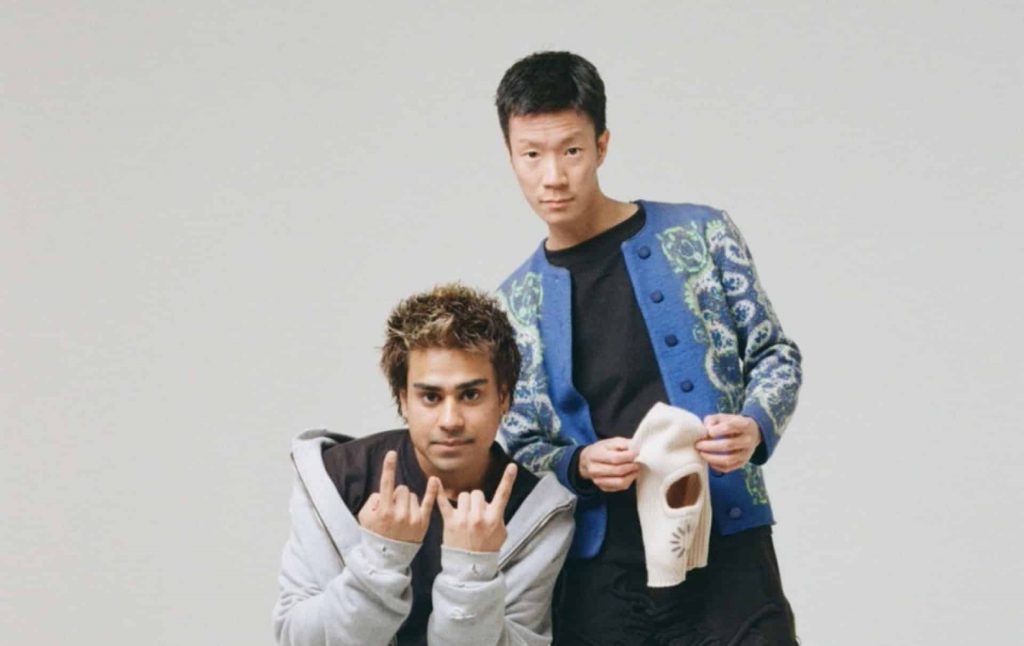
Adachi, Tokyo’s northernmost ward.
Bordering Saitama and framed by rivers on all sides, Adachi has long carried a reputation as one of Tokyo’s rougher neighborhoods. Over the years, the local government has tried to reshape that image through redevelopment, public campaigns, new universities, and large commercial complexes. The busiest areas feel livelier now than they once did.
But step just a little away from the main streets, and the glossy image of “Tokyo” begins to thin out. Children’s voices and school chimes drift from somewhere nearby. Bicycles pass with a metallic squeak. What appears is not the Tokyo of postcards, but a town built around someone’s everyday life. Even if you have never been there before, it carries a strange kind of nostalgia.
That town brought two artists, Nyture and Kazuki Ito, back to the same place.
Based in Adachi — or “ADC,” as the local shorthand goes in their circle — Nyture began moving seriously with his 2021 first album, PLAYGROUND MIXTAPE. The project drew attention with appearances from Showy and a rap style built around an addictive, off-center delivery.

In 2025, he released the collaborative albums Makenai and Makenai Ura with Ivy of the much-discussed crew Spider Web. Harmm, also from Spider Web, and Suginami-born Jumadiba appeared on the projects, where Nyture delivered catchy, relaxed raps over beats with a faintly nostalgic texture.
If I had to describe Nyture’s rap in terms of texture, the phrase that feels most accurate is this: it is both solid and liquid. The hard, angular quality of Japanese remains, yet there is also a smoothness that almost feels like English to the touch. His freestyle exists somewhere in that balance. That elusive sensation may be exactly why his music pulls people in.
Kazuki Ito, also from Adachi and formerly known as IK, is a filmmaker, picture-book author, graphic designer, and a rare creator whose methods refuse to stay inside one lane.

The list of artists he has worked with is almost too long to summarize: Nyture, of course, but also MONYPETZJNKMN, Ralph, LEX, OZworld, Showy, and many others. The names alone make clear how much trust he has earned inside the scene.
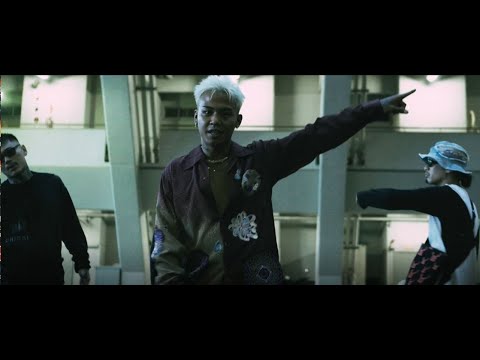
It should also not be forgotten that Kazuki’s visuals helped carry the name Yuki Chiba to a wider audience. If you have watched videos for tracks such as “Heart Emoji,” “Chain ga Utau,” “Shobai Hanjo,” or “Omotee,” you have likely seen the credit “Kazuki Ito” beside images that turned songs into iconic pieces of content.

Nyture and Kazuki Ito. Sound and vision. Two artists working through different senses. How did they meet, and how did their bond deepen? What does Adachi mean to them? What lies at the root of their creativity?

With YTG Sam, HIPHOPCs visited Kazuki Ito’s family home and spoke to the two of them in the living room where so much of their shared atmosphere began.
Nyture & Kazuki Ito: Two Artists Spreading ADC With a Strange, Perfect Balance
Lucie: Let’s begin. Could you each introduce yourselves again?
Kazuki: Sure. I’m Kazuki Ito.
Lucie: Thank you. You used to work under the name IK, right?
Kazuki: Yeah, I was IK before. Now I work as Kazuki Ito.
Lucie: And…
Kazuki: And this guy is ****, Nyture’s real name.
Nyture: Stop talking already.
Sam: Wait, that’s your name?
Lucie: You can tell just by watching that the two of you are close. Could you explain your relationship?
Kazuki: We’re friends. Until third grade we were both in after-school care, so we didn’t really hang out. We weren’t that close yet. From fourth grade, we started getting close.
Lucie: What brought you together?
Kazuki: His place was about five or six houses down from here. It’s a different apartment now, but there used to be this really rugged apartment building, like something out of a Takeshi Kitano film. Most of this street is detached houses, so that one building had a completely different atmosphere.
Lucie: So it was simply because you lived so close. You’re both from Adachi. What kind of place is this?
Nyture: What kind of place? It’s a good place.
Lucie: Good in what way?
Nyture: It’s Tokyo, but it feels like Saitama. That helps. It’s basically Saitama, but you can still say you’re from Tokyo.
Meeting the Kid Who Could Disrupt a Whole Classroom
Lucie: What were you both like as children? Nyture, some profiles say you had a hard childhood, but there aren’t many details. Whatever you can talk about, I’d like to hear.
Nyture: Did I say that somewhere? I don’t remember. It wasn’t that hard. I have friends who had much rougher childhoods. Maybe it looked hard from Kazuki’s point of view.
Lucie: How do you remember yourself as a kid?
Nyture: In school, I was standing on top of desks. I wasn’t exactly the type to sit still and face things properly.
Kazuki: In third grade, this guy basically broke his class. Even by September or October, his class still had not finished the lessons from April. It was chaos.
Nyture: If I started messing around, it spread to everyone else.
Kazuki: At school, he was like that, so at first I honestly thought, “I don’t really want to deal with him.” But he lived so close. I would see him passing in front of my house. After we became close, he would come here, eat breakfast with me, and he became “the funny guy” in my mind.
Nyture: That’s all I am. Funny.
Kazuki’s Sense of Beauty Was Built Through a Fragile Childhood
Lucie: Kazuki, your childhood has hardly been talked about. What kind of boy were you?
Kazuki: I was pretty unusual.
Lucie: You direct music videos, draw artwork, design packages, and work across so many forms. Were you always interested in drawing and design?
Kazuki: I was always drawing. That picture over there is from when I was in eighth grade.
Nyture: From my point of view, he was really the guy who was always drawing.
Kazuki: When we were cleaning the house earlier, old drawings came out. Some of these are probably from elementary school. What I do has not really changed that much. I’m making a robot right now, too.
Sam: You can already see Kazuki’s feeling in those drawings.
Nyture: The world was already there.
Kazuki: One major influence was the picture-book artist Mitsumasa Anno. I was always drawing, partly because I was physically weak. When I was one, I nearly died from a rare liver disease. During treatment I caught another virus, and I was hospitalized a lot. I also had many allergies: eggs, wheat, milk. In kindergarten, my meals were always different from everyone else’s. Looking back, because my body was weak, I spent all that time drawing.
The Living Room Where Their First Culture Happened
Lucie: Both of you are now connected to hip-hop. What music were you listening to back then?
Nyture: Back then, it wasn’t really hip-hop. I listened to whatever was popular, stuff the older girls around us were listening to. I have an older brother, so that was part of it.
Kazuki: My parents liked The Beatles and Queen, and they had King Giddra CDs, so I had chances to hear all kinds of music. I was really into Kiyoshiro Imawano.
Nyture: My mom listened to Michael Jackson and old R&B. I think the first hip-hop for me was in middle school, through Eminem and AK-69 that my older brother and his friends were playing.
Kazuki: He is the reason I started listening to hip-hop. Around here, my house was the only one with a computer. Everyone gathered here and we watched videos on YouTube when YouTube was still really early.
Lucie: Back when YouTube still had star ratings.
Kazuki: Exactly. We were watching hip-hop videos then, and I thought rap was cool. I became a head instantly, around seventh grade.
A Chance Reunion and the Words “Why Don’t You Try Rapping?”
Lucie: Nyture once said Kazuki suddenly told him, “I’m going to shoot music videos now.” That is a pretty wild thing to hear out of nowhere.
Nyture: We went to different middle schools, but since we lived close, we still hung out sometimes. Then in high school I started drifting a little, and we stopped seeing each other. For three years we didn’t meet at all.
Kazuki: In high school I had left the neighborhood too.
Nyture: The first time we met again was when I was working construction and Kazuki was in college. We were at an izakaya in Takenotsuka, each drinking with different friends. By then he had started making videos and artwork and going to clubs. In the flow of conversation he said, “Why don’t you try rapping?”
Lucie: That one line is where it started?
Nyture: Pretty much.
Kazuki: I was sure of it at the time. Rap was becoming popular, but I did not feel hip-hop itself was popular yet. I felt the guys from my neighborhood had better eyes, even if they did not rap. When I saw him again, he had eyes that said he had seen a lot. I thought he absolutely should rap.
Nyture: When Kazuki, someone who had known me since way back, said that, I thought, “True.” And for some reason I thought, “I definitely won’t lose.”
How ADC Pointed Them Toward Making Things
Lucie: Kazuki, how did you enter the world of video?
Kazuki: My parent was a newspaper reporter, so at first I was thinking about journalism, television, and broadcasting. I studied politics and economics at university. I think I was trying to become serious, to become respectable, and to get a solid job. I had a mindset of needing to leave this neighborhood, almost like Good Will Hunting.
Kazuki: But gradually, I started feeling that I didn’t see much possibility there. It stopped being fun. I decided to do something I liked for a while. I began going to clubs, and I had always wanted to try video, so naturally I started shooting music videos. Then I told him.
Lucie: So the person who sings and the person who shoots the videos were born at the same time.
Kazuki: I think that could only happen because of Adachi. If I had not grown up here, given my family and background, I probably would never have crossed into hip-hop. My family is more the type that would aim for scholars or researchers. But my mother let anyone into this house, almost like she was running a private daycare. Guys who were not exactly serious gathered here. That is why I am still connected to hip-hop now. Everyone used to come in through that balcony.
Nyture: Even now I sometimes come in from there.
The Nostalgic, Everyday Style of “4some”
Lucie: Your projects have a looseness and a mood that feel very particular. There is also this word “4some” around you. Is that an Adachi word? Is it an ADC word?
Nyture: “4some” is something we say a lot.
Lucie: You also run events under that name, right?
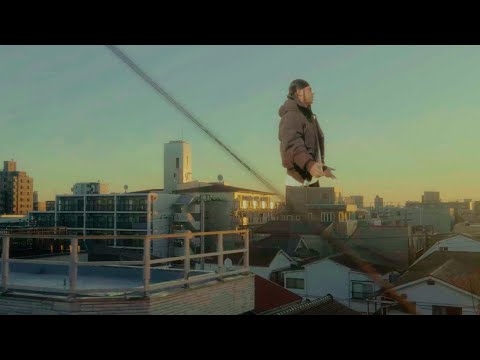
Kazuki: It started from an event called OSAM that I held when I was around 20 or 21.

Nyture: My first live performance was at Kazuki’s OSAM.
Kazuki: The name comes from Osamu Tezuka.
Lucie: That makes sense. A lot of the beats have a nostalgic feeling, almost like the mood of Tokiwa-so. The collaboration with Jumadiba on “Hakanai” felt almost too perfect.

Nyture: I just personally like that kind of feeling. Sometimes I like newer-sounding things too. It depends on my mood, but I like things that feel a little old.
Turning Negativity and Catchphrases Into Songs
Lucie: Even though there are aspects of your life that sound difficult from the outside, your lyrics are not pulled down by your background. There are not many negative words. Why is that?
Nyture: I just turn the way I talk every day into songs. I do not write lyrics down.
Lucie: You don’t write?
Nyture: I don’t. If I do not make my catchphrases into songs, they never end.
Kazuki: Nyture has never really been negative, even as a kid. He was just energetic. Always energetic.
Nyture: I’m human, so negativity does appear. I have to let it out somewhere. Maybe music is my calling. It lets me end that negativity without causing too much trouble for anyone else.
Oji and Adachi: Understanding the Similarity in Style
Lucie: Your style is really original. What part of your own uniqueness are you aware of?
Nyture: I might not really understand it myself.
Kazuki: I don’t think he thinks about it that much. He is the type who goes as he is without labeling anything, and before he knows it, it becomes original.
Sam: My feeling is that Nyture is close to Chiba. People like that do not break music down into tiny categories. They understand it as sound. It feels less like “I rap” and more like “I do music.” A musician who happens to rap.
Nyture: I think that is definitely there. So it is Chiba’s fault.
Kazuki: One hundred percent.
Kazuki: In places like Shibuya or Roppongi, there are so many people that you start trying to define yourself in relation to everyone else. But because he has Adachi, he can remain as he is. His name means being natural. I think he is trying not to forget that feeling.
The Evolution of Kazuki Ito
Lucie: What works have influenced your video-making? Anime, films, anything.
Kazuki: Mitsumasa Anno, the picture-book artist I mentioned, is one. Recently I was digging through my memories, wondering why I draw so much. My mother told me, “You used to watch Wallace and Gromit all the time.” I had not thought about it for 20 years. It was buried deep in my memory. But when I watched it again, I remembered every movement, every sound, every color. I realized, “This is where my roots were.”
Kazuki: As I became more honest and traced things back, my roots at this point are Mitsumasa Anno and Wallace and Gromit. There may be something even deeper, though.
Lucie: Did growing up in Adachi affect your video work?
Kazuki: I think so. If I had grown up in Bunkyo Ward, my life would probably have been completely different. In middle school everyone started going off track, and I was one of the first to stop going to school. During that time I listened to music constantly and faced the darker parts of my mind. I received anger, rebelliousness, and the kind of force connected to hip-hop. It is not only anger, but without that mindset I think I would have lost. That is why I can do this work now.
“References Kill the Image”: Kazuki’s Unbound Way of Shooting
Lucie: How do you usually make a music video?
Kazuki: After I met Ko, Yuki Chiba, I started shooting under the name Kazuki Ito. When I was IK, there were times when I prepared more carefully and tried to shoot properly. I still do that sometimes.
Kazuki: For the video “Who?”, I went to New York with Ko. I carried a shoulder-rig cinema camera and a Pocket Cinema Camera from morning to night, following him around and rolling whenever something interesting happened.

Kazuki: I have a video friend in New York, Yuma Shishido, who is friends with Naomi Watanabe. I said, “I’m here with Ko. Wouldn’t it be interesting if he met Naomi?” So we connected them that day. They met for the first time, ate Chinese food, went outside to smoke, and Ko started playing a song he had recorded the day before. I rolled the camera. Ko started rapping, then Naomi started rapping too. That first meeting became the video for “Who?”
Lucie: That is amazing. The real moment became the work.
Kazuki: “Shobai Hanjo” was fun too. We shot it during the Akabane Baka Festival. They told us we had only 15 minutes. So I called everyone I wanted to prosper, friends who were cameramen and people I cared about, and said, “This song is called ‘Shobai Hanjo,’ and I want all of you to prosper, so please come shoot.” We carried the mikoshi together and shot everything fast.
Lucie: I imagined music videos as something with schedules, references, and detailed planning.
Kazuki: Recently I don’t really do that. I started thinking references kill the image. I want to draw the image myself and shape what comes to mind. It is an irregular method compared with the video industry. Automated schedules and attaching references stopped being interesting. It felt like following a formula. I started feeling, “Was this the road I wanted to take?” So I stepped away for a bit.
Kazuki: I kept drawing, and after I started thinking about animation and picture books, I met KOHH. Things changed after that. Now I am writing picture books. It finally feels like I am standing at the entrance of what I really want to do.
Kazuki: One turning point was a video for Yaffle. He is a producer who worked with Fujii Kaze. I made a three-and-a-half-minute animation for him. The process was so much fun that I thought, “This is better.” My feelings, prayers, and everything I had accumulated could be reflected in the work.

Break time.
Sam: Sitting by the balcony, this place is nice.
Kazuki: It is the best spot. When this house was built, they said they wanted wide windows.
Nyture: I broke that window a few times.
Kazuki: You did. You also hit dishes with a ball. You stood on the GameCube.
Nyture: Did I?
Kazuki: We remember. The victims remember. The culprit never does. Please put that in the article.
ADC, the Strongest Crew Dropping Bombs Whenever It Wants
Lucie: Nyture, where does Adachi stand in the current scene?
Nyture: The strongest. The strongest crew.
Lucie: I really feel that. I see you as a rapper who shows things through sound. In Japan, many listeners prefer rap that shows skill very clearly. What is difficult about showing atmosphere and sound instead?
Nyture: I don’t know.
Sam: Personally, what I like about Nyture is the sense of ease in his songs. Maybe it comes from his personality. The word choice, the way he sings, the mood when he performs. It might be something you can only feel.
Lucie: ADC has been gaining presence. How do you want to spread it from here?
Nyture: For now, I just want everyone in Adachi to know us. I will keep releasing singles here and there. An album is mostly done, but I might throw all of it away. Basically, I want to move by my mood, while sometimes listening to the people around me.
Lucie: The song with Tim Pepperoni was crazy too.
Lucie: Your producers are strong too. rxl, Pulp K, people like that.
Nyture: Even Pulp K started because Kazuki said here, “Why don’t you make beats?”
Lucie: That was Kazuki too?
Kazuki: That was me.
Lucie: Everything starts here.
Kazuki: We will keep moving together, while he keeps ditching plans to watch NBA with me.
Lucie: And what is next for you, Kazuki?
Kazuki: For now, I am writing picture books. Like these.


Kazuki: In June, I am opening a picture-book exhibition. It opens on the 13th and runs until the 21st.

Lucie: And Nyture will suddenly start moving.
Nyture: I think I will suddenly make a move.
Kazuki: I handle most of his visuals, so everything should come out right.
Nyture: Since my career started, he has basically done my videos. Even when timing did not work and we had someone else shoot, I still had him check everything in the end.
Kazuki: He makes me check them. But I can’t allow a bad video to sit on his music.
Nyture: He gets angrier than I do.
Lucie: That is a good team. Thank you both for the interview.
After the Interview
Nyture follows each passing emotion and shapes everything through feeling. Kazuki Ito observes himself from the outside, breaks himself down, and keeps searching for his mission. Put into words, they appear to be completely different types.
But watching them sit side by side on the sofa, looking back on the past while casually nodding along to each other, they looked exactly like what they are: close friends. They do not need many words. Silence is not awkward. Imagining that their childhood looked much like this, I could not help feeling a certain nostalgia.
It is strange and moving that a path toward the world has opened from this ordinary living room. Much respect to Etsuko, Kazuki’s mother, who opened that room to everyone.
They will probably not change. Their methods are different, but each will keep moving honestly. When their schedules line up, they will spend time together, watch the NBA, or plan to watch it and then not show up. Without anyone noticing at first, they will keep making noise in the world.
