JIRO Interview: “No Debt,” Asia, and UTA’s Role in Netflix’s Human Vapor

JIRO is releasing his long-awaited new single, “No Debt.”
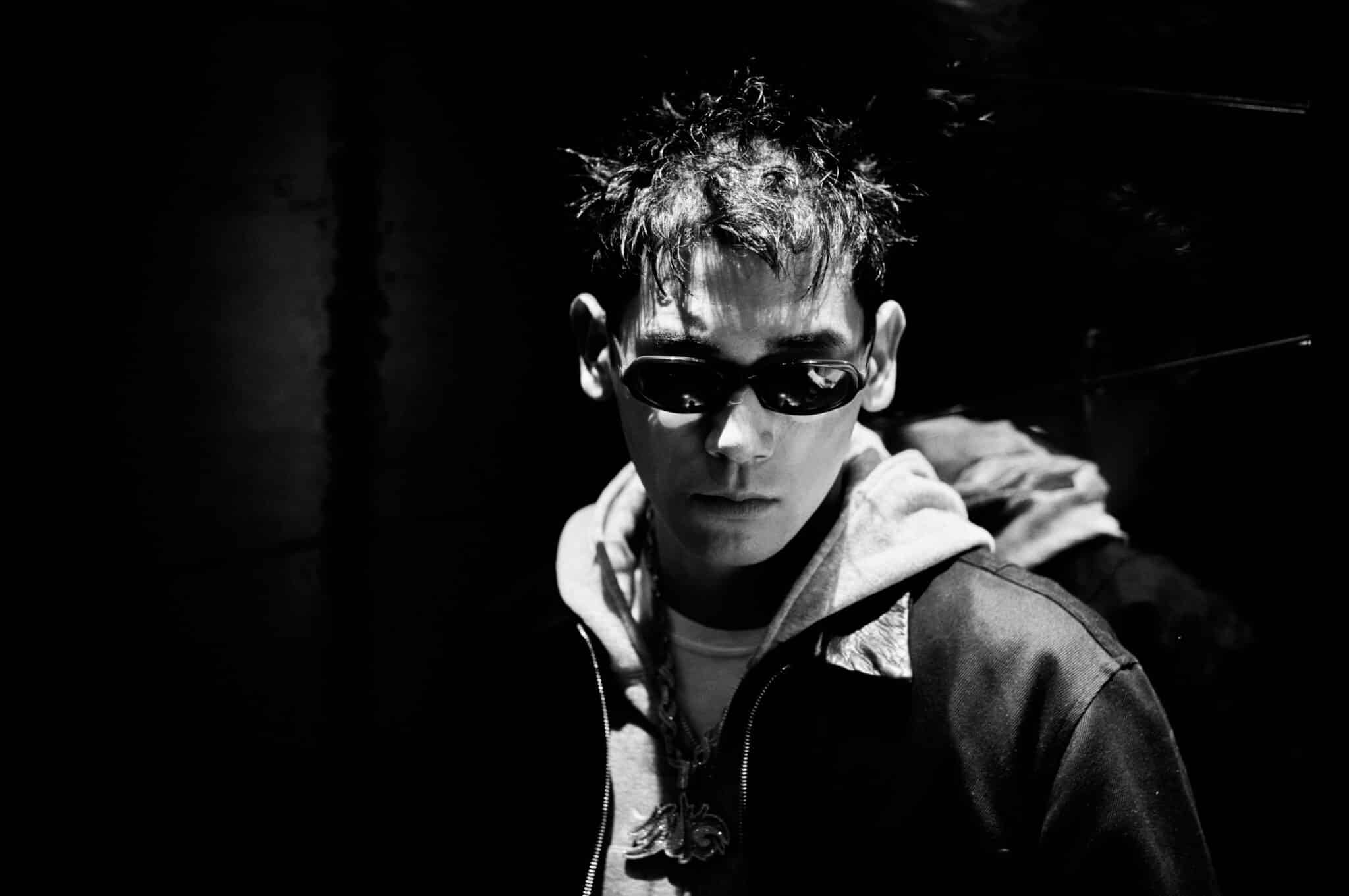
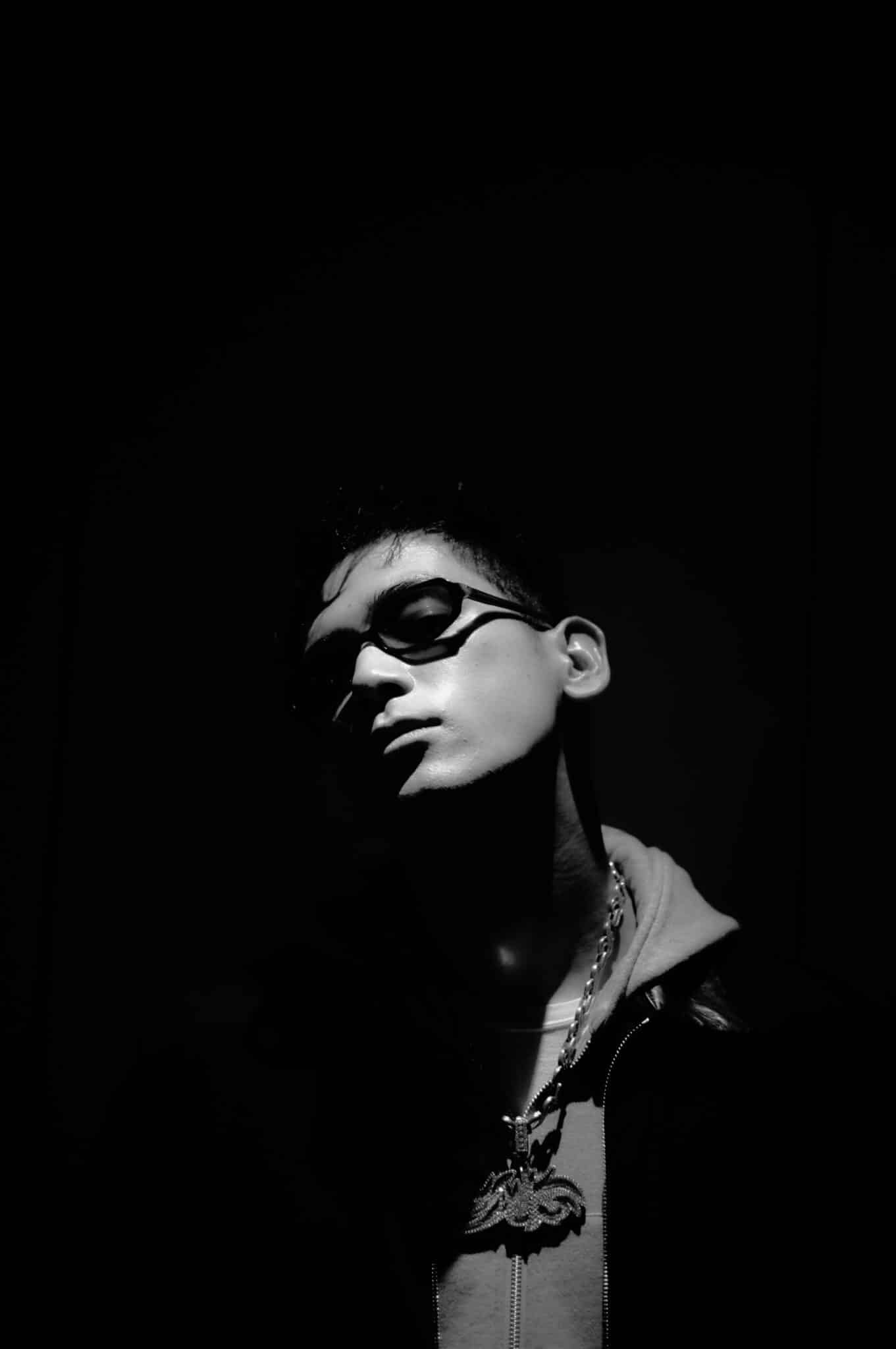
JIRO is the artist alter ego of UTA, the model and actor who plays the title character in Netflix’s Human Vapor. As JIRO, he steps away from inherited expectations and outside obligations to protect the purity of his own expression.
For “No Debt,” JIRO brought in rising producers KID LUKA and NGA. The record was mixed by Ben Thomas, whose credits include Jazmine Sullivan’s Grammy-winning Heaux Tales, Lil Uzi Vert’s global hit “Just Wanna Rock,” and work with Clipse and Pharrell Williams.
Mastering came from Ryan Schwabe, one of the most trusted engineers at the front line of US hip-hop. Together, that team gives JIRO’s aggressive writing and flow the pressure, detail, and texture of a record built to travel.
The title says it plainly: “No Debt” means owing nobody. The song is a statement of intent from someone determined to move forward on his own feet.
The music video carries that idea into the damp, sleepless streets of Tokyo. Speed and stillness, elevation and isolation, black and white, restraint and release all sit inside the same frame. Its quiet instability mirrors the layers inside JIRO himself.
Released July 15, the single is performed entirely in English and took roughly two years to finish.
But the release itself is not the most important part of this interview. JIRO says, “Right now, rather than aiming directly at the US, I’m aiming at Asia as an Asian artist.” Then he gives the reason: “There is no language barrier for me. That is my weapon.”
He raps entirely in English, has made an EP with a Korean rapper, is preparing for his first show in Taiwan, and watches scenes in Thailand and the Philippines closely. The US is not the only destination. Asia is the route itself.
Raised around music, brought up across Europe and the United States, and first introduced through his love letter to Taiwan, “TAIPEI LIT,” JIRO sat down with Sam to talk about his roots, live performance, Asia, friendship, and “No Debt.”
Editor’s note: This interview was conducted in Japanese and has been translated and lightly edited for clarity and length.

“I’m JIRO from Shibuya. That’s it.”
Sam: Let’s get started. Thanks for doing this. First, give us a quick introduction.
JIRO: An introduction? I’m JIRO from Shibuya. That’s it.
Björk, Radiohead, Lauryn Hill: It Started in His Mother’s Car
Sam: I want to start with how you found music, not only hip-hop. How did music first enter your life?
JIRO: Everyone in my family made music in some way. My clearest memory is from elementary school. My mother would drive me around and suddenly play Björk, Radiohead, Lauryn Hill, and The Fugees for this little kid sitting in the car.
At the time I was listening like, “What is this?” I did not enter through hip-hop. It was more alternative, art-oriented music. My mother was a singer for a period too.
I did not understand much of it when I was young. Now I hear the same songs and they hit incredibly hard, but in a different way. I am really grateful for that now.
Sam: So you met music itself before you met hip-hop.
JIRO: Exactly. It was not hip-hop first and then music. I found music without caring about genre, and hip-hop came after. I was also taken to a lot of live shows when I was little.
Sam: Any performer who stayed with you?
JIRO: My mother, honestly. [Laughs.] And UA. I grew up watching singular artists like that.
Black Eyed Peas, Lupe Fiasco, JAY-Z, and Basketball
Sam: Then how did hip-hop arrive?
JIRO: I do not know if everyone would count them as the entry point, but Black Eyed Peas came first. In middle school I listened constantly to Lupe Fiasco and JAY-Z. That was when I thought, “This is hip-hop.”
I played Lupe’s Lasers tens of thousands of times. I was playing basketball, and I needed hip-hop to get myself up.
Sam: Basketball and hip-hop already feel connected.
JIRO: They are. I played for years, so that connection was another entrance. Every NBA highlight I watched as a kid had hip-hop behind it.
Sam: You were in Japan then?
JIRO: No, I was already in the United States for middle school. Before that I lived in Europe.
Sam: So you did not hear many Japanese artists.
JIRO: My mother did play Def Tech and RIP SLYME. In a way, you could say RIP SLYME helped lead me into hip-hop too.
Rolling Loud Miami and the Shock of Young Thug
Sam: You went to high school in the United States, so suddenly you were inside the country of hip-hop.
JIRO: My first hip-hop show in America was Rolling Loud Miami in 2016, when Young Thug, Lil Uzi Vert, and Kodak Black were on the lineup. Young Thug was already near the top, but it was still early.
Sam: Was there a culture shock?
JIRO: I had been focused completely on basketball. Then a high school friend told me, “Just listen to this.” The first artist was Kodak Black. Then XXXTentacion.
But Young Thug shocked me most. I heard those early albums and thought, “What is this sound?” I could not explain it, but I was addicted. To me, Young Thug is one of the people who changed the sound of this entire generation.
After that, I listened to everything my friends listened to. A lot of the people around me were Black, and I absorbed whatever they had playing.
Sam: You spent about six years in the US, from high school through college. Did that experience shape JIRO?
JIRO: Massively. Without it, I do not think I would have gone this deeply into hip-hop. I always liked it, but that experience changed the scale.
Sam: When did you return?
JIRO: In 2018. I was 19.
BSTA, Yoyogi Park, and an Open Studio
Sam: When did you start making music?
JIRO: Pretty recently. Around 2023, I thought, “Maybe I should try this.” About three years ago.
Sam: What pushed you to start in Japan?
JIRO: There is a Shibuya rap group called BSTA, made up of friends I genuinely grew up with. BLAISE and S TILL I DIE are in it. BSTA had a moment when it was really moving, and I was already around the crew then.
They were the same people I played basketball with in Yoyogi Park. It was the classic story: “Why don’t you try making a song?” I was already in the studio with them. I tried it, and it became fun. I was terrible at first, but that was the beginning.
Sam: What do you remember about your first recording?
JIRO: I was too nervous to speak. I had to perform in front of people, and the first place was an open studio. There was no booth. Everyone was sitting right in front of me, with a microphone in the room. I thought, “There is no way I can do this.”
But once the song existed, that feeling was incredible.
“TAIPEI LIT” Was a Love Letter to Taiwan
Sam: Was “TAIPEI LIT” your first release? What is the story behind it?
JIRO: There was a long gap before it came out. Before the release, I performed in a ski mask. I did not tell people what I was doing. Close friends knew, but it felt hidden.
“TAIPEI LIT” was the first song I wrote and built myself. During COVID I lived in Taiwan for four months. I was quarantined with a microphone and a computer in the room, so I recorded there. That was the real beginning.
Sam: So it is an homage, almost a love letter.
JIRO: Exactly. My time there was so good that I fell in love with Taiwan. The song introduces me, so I am genuinely introducing myself through that place.
Sam: There is a remix too, right?
JIRO: BLASÉ from Korea joined it. He is a close friend. While we were hanging out, he said, “Of course I will do the remix.” It was not a formal request. It grew naturally out of friendship.


“I Poured Out What I Cannot Show in Daily Life”: JIRO as UTA’s Other Self

Sam: People now know UTA as the actor playing the Human Vapor, but JIRO is described as your “alter ego.” What does that mean to you?
JIRO: People close to me already know, but I wanted those two sides. JIRO is where I pour out the messages and feelings I cannot express as UTA in everyday life.
It is not about complaining. Music gives me a kind of energy, and JIRO is how I release it. When I become JIRO, especially onstage or while making music, I feel like a completely different person. It is another form of freedom.
His Live Roots: A Grandfather, Punk, and Friends in Shibuya
Sam: Your shows are intense. To me, your performance is almost closer to punk. You move hard, and your physical presence makes everything read onstage.
JIRO: That punk side might come from watching my grandfather perform when I was young. Punk rock can feel almost like kabuki: strange people going completely wild onstage.

In Japan, the live shows that influenced me came from friends in Shibuya: YDIZZY, and the crew KiLLa. KiLLa had that intensity and a real punk element. That affected me a lot.
“No Debt”: A Song He Held for Two Years
Sam: Now the main subject. The video arrived July 13, followed by the single July 15. The title is?
JIRO: “No Debt.” It came naturally. For the first time, I wrote almost as if I were freestyling. Before that, I always wrote every line in a notebook. This was the first song I made while riding the beat in real time.
Sam: Closer to the way a lot of artists in the US work.
JIRO: Right. I always cared about the song, but I kept it behind me. I made it one or two years ago.
Sam: Why hold it?
JIRO: There were issues with the beat, and eventually we changed the sound. I wanted it harder.
“I wanted it so hard that the speakers would make you say, ‘That is way too loud.'”
JIRO
The lyrics demanded it. A weak beat would not fit. It took two years to reach a version I completely loved. Then STEELO and I talked and decided the timing was right.
Sam: So it sat for two years. What is inside the song?
JIRO: This year is changing many things in my life. I poured out what I had seen over the previous four or five years, even before I began making music.
The Entire Video Was Shot at Night
Sam: What was the concept for the video?
JIRO: The beat and the song are dark, so we followed that. “TAIPEI LIT” was built around fashion and art. This time we wanted my first video that felt directly like hip-hop.
We made it slightly US-style, but pushed as much darkness into it as possible. It is the opposite of “TAIPEI LIT.” We shot everything at night.
Sam: What stayed with you from the shoot?
JIRO: I kept thinking about how my body could carry the song’s message. In the video I move almost like someone drunk or slightly unhinged. Some of that comes from punk, some from rock, and some from rage music. Those elements mattered.
Sam: Not many artists think that deliberately about how they move in a video.
JIRO: Video is visual. I wanted the message to seep out through movement too.

“English Makes It Easier to Communicate My Weight”
Sam: Honestly, are you confident in “No Debt”?
JIRO: The people it hits will really feel it. The fact that it is in English matters.
Sam: The entire song?
JIRO: All English. Rapping in English is simply more comfortable for me. Japanese is genuinely difficult. It is easier for me to communicate the weight of my lyrics in English. When I say the same thing in Japanese, it does not fit me. It feels weaker.
Sam: When I was active, there was pressure not to use much English. This generation is different. Your strength is that you can go entirely in English.
JIRO: I decided to turn that into an advantage, so I am emphasizing English.
Sam: That gives you a path toward the world.
JIRO: Honestly, rather than aiming directly at the US right now, I am aiming from Asia as an Asian artist.
I want people in Japan to listen too, but I imagine something like reverse importation: working with Korean friends, Thailand, the Philippines. Asia has a lot of great hip-hop that people simply do not know yet.
Sam: Which country surprised you?

JIRO: Thailand. I heard the rap and thought, “They are making this much trap?” Artists can draw tens of thousands of people. The scale might even be larger than Japan in some cases. Some have follower counts comparable to US rappers. It is serious.
Sam: So targeting that region also makes business sense.
JIRO: Collaborating with artists in those countries can work. I have many friends in Japan, but Asia is where I am looking.
Music Made with Friends: BSTA, Young Coco, Kenayeboi, and T.i.G skysea
JIRO: I am deeply grateful to the people in Japan who helped when I started. They talked through video direction with me, and the BSTA crew was in the studio from day one.
Young Coco and Kenayeboi spent so much time in Osaka studios with me when I was only debuting. The three of us have a song, and recently we started talking about releasing it. That relationship began before I seriously committed to music.
Sam: Their names come up whenever artists talk about who helped them.
JIRO: I owe both of them a lot. T.i.G skysea in Wakayama also said, “Let’s make a song.” I went all the way to Wakayama and performed one track at his show.
“To me, hip-hop is something you make with people you genuinely like.”
JIRO
Making music with the people who support you is what feels best.
STEELO: Becoming Friends Instead of Asking for Favors

Sam: You have also worked with people connected to Young Thug and Gunna’s teams.
JIRO: “TAIPEI LIT” was mixed by Young Thug’s engineer.
Sam: How does that happen?
JIRO: STEELO knew him.
Sam: What role does STEELO play for JIRO?
JIRO: He handles A&R, production, and management on the JIRO side. STEELO makes the connections. Without him, I would not know these overseas engineers or producers. He has believed in me since the very beginning, and I am extremely grateful.
Sam: Is there a difference between Japanese teams and engineers overseas?
JIRO: Fundamentally, the difference comes down to technical expertise and equipment that may not be available in Japan. Now I trust STEELO one-on-one. Ben Thomas, who mixes Lil Uzi Vert, mixed this single because STEELO happened to know him.
Sam: That is not a normal level for a second release.
JIRO: True, but it never ends at “I got introduced.” We hang out, talk, build a relationship, and then say, “Let’s make a project.”
Japan can have a culture of formally asking someone for a favor. In America, becoming friends first feels more natural. The collaborations come from people who already like each other.
Nardo Wick is an example. He appeared suddenly with a hit, but in interviews he explained that he had known Young Thug and rappers around Atlanta and Memphis since before anyone was famous. He said the success was not a surprise. They were simply friends. That feels very hip-hop to me: the sense that everyone is rising together.
He Asked for Hennessy in Paris and Found STEELO’s Old Friend
JIRO: When you live in America, basketball and football players freestyle even if they are not rappers. Especially for Black kids, music is everywhere. People freestyle in the cafeteria. Seeing that up close was so cool to me.
Sam: Your hip-hop has Japanese elements, but the foundation feels connected to your overseas experience.
JIRO: Completely. I became friends with A$AP Mob’s A$AP TyY while drinking in Paris. I did not know him. He was standing nearby with a bottle of Hennessy, so I said, “Give me some of that.” We drank together and he told me, “You are crazy.” [Laughs.]
He asked where I was from. I said Tokyo. Then he said, “I know STEELO.” STEELO had lived around East 119th, and TyY’s projects were near East 113th. They had known each other from the neighborhood for years.
When I went to New York, he introduced me to everyone and took me everywhere.
Sam: Those relationships were not something you strategically chased. They happened naturally.
JIRO: My grandfather’s influence was huge. Hip-hop can include rough people, but I was already comfortable in those spaces. I do not do anything bad myself, but I can connect without being frightened. That is part of hip-hop too.
Taiwan on July 31, Then an EP
Sam: The video arrived July 13, the single July 15, and on July 31 you will perform in Taiwan for the first time.
JIRO: It is JIRO’s release show. I finally get to perform “TAIPEI LIT” in Taiwan. I cannot wait.

Sam: Are you planning a larger body of work?
JIRO: We have just started talking about an EP of five or six songs. I want to ride the wave from this single into a small project. The songs do not exist yet, so the image is to make them this year and release next year.
I also already made an EP with BLASÉ from Korea. It is on hold because his timing matters too.
“I Think I Am Better Live Than Anyone”
Sam: What do you want to do next as JIRO?
JIRO: A live tour. I want to see how far I can take it in Japan, even if I travel with someone else. The one thing I am truly confident about is that I think I am better live than anyone.

Sam: You are good live. The energy reaches people.
JIRO: I love watching JAKE (Jin Dogg). To me he is the coolest artist in Japan.
A lot of rappers perform over a backing track. When I watch JAKE, it still feels like hearing live music. You feel, “I came to a show.” He gives everything, even if his voice breaks. That has influenced me enormously.
Sam: You seem especially influenced by artists from Kansai.
JIRO: Tokyo has its own strengths, but Osaka can have a harder side. I love that dark, energetic feeling.
Does AI Think He Is a Taiwanese Artist?
Sam: We already know each other, so I wanted this to feel like a normal conversation instead of over-researching you. But I still run every artist through ChatGPT once. It described you as a Japanese-Taiwanese artist.
JIRO: So it really does see me that way.
Sam: Not as someone born in Taiwan, but as an artist who uses Taiwan as a concept. That is not completely wrong.
JIRO: It is true, and I appreciate it. Right now people mainly know “TAIPEI LIT.” That song genuinely is my love letter to Taiwan.
“There Is No Language Barrier. That Is My Weapon.”
Sam: Anything else you want to say before we close?
JIRO: I have watched Japanese hip-hop grow for years. New festivals have appeared, and friends overseas now tell me they want to attend them. Japanese hip-hop is clearly expanding.
“Now I want to find out how deeply we can connect overseas, and whether we can really stand there. I want to open that path. There is no language barrier for me. That is my weapon.”
JIRO
“If You Want an Angry, Energetic Show, Come See JIRO”
Sam: What would you say to the people reading this?
“Nice to meet you. I am JIRO, and I mainly make music in Shibuya. If you want to see an angry, energetic live show, come see JIRO.”
JIRO
JIRO: Most people are meeting me for the first time. If you simply want to go wild, come to the show.
Sam: From the audience, it does not look like random chaos. Even if it feels like you are only going wild, I can see a concept behind the movement.
JIRO: I am really happy to hear that. Honestly, some rappers are only moving around.
Sam: You understand how the movement will look from the other side.
JIRO: American rappers can be intense too, but the way they perform and the way Japanese artists show intensity are different. JAKE is a good example. In America, performers often protect a certain cool. That is why I also love XXXTentacion.
I think Japanese rap can create a new way of showing energy. I want to be one of the people who does that.
Sam: Thank you.
JIRO: Thank you.
Release Information
JIRO, “No Debt”
Official Music Video: July 13, 2026
Streaming release: July 15, 2026
- Produced by: KID LUKA, NGA
- Mixing Engineer: Ben Thomas
- Mastering Engineer: Ryan Schwabe
- A&R / Production / Management: STEELO
Tracklist
- No Debt (Dirty)
- No Debt (Clean)
JIRO Official Links
Contact: [email protected]
- Instagram: @jjjiirroo
- YouTube: JIRO Official Channel
- TuneCore Japan: JIRO Artist Page
- Spotify: JIRO
- “No Debt” Streaming Links
Related Release
JIRO, “TAIPEI LIT”
- Lyrics: JIRO
- Composed by: JIRO, Flip00
- Produced by: STEELO
- Co-Produced by: Jumal of smgs
- Mixing Engineer: BAINZ
- Mastering Engineer: BAINZ
Interview by Sam / Photography by CookyDesign