A Yokohama Monster Heads to LA: OZROSAURUS DJ SN-Z [Exclusive Interview]

Plenty of people call themselves DJs. But making a living solely as a DJ in Japan has never been easy.
Today, when juggling DJing with another job is the norm, it is exceedingly rare to find someone who has remained active since the dawn of Japanese hip-hop.
Fewer still have made a name for themselves in both Japan and the United States and built an entire career on DJing alone.
One such heavyweight of Japan’s DJ world recently relocated to Los Angeles.
After hearing the news from DJ Couz, whom we previously interviewed (Japanese), the writer immediately reached out to the legend himself.
His name is DJ SN-Z.
Now a member of OZROSAURUS, he is one of the “monsters of Hama”—Yokohama—who have driven Japan’s hip-hop scene forward for decades.
Speaking with him, however, left a slightly different impression from what we had imagined.
Carefully choosing every word, he spoke in a voice so calm and easy on the ear that we could not help asking, mid-interview, “Why don’t you rap?”
He has stood at the forefront of the scene since the formative years of Japanese hip-hop, with no shortage of name recognition or popularity. Even so, his manner remains unfailingly humble.
He engaged sincerely even with the writer’s most casual questions, sometimes pausing to think before carefully putting his thoughts into words.
In this interview, DJ SN-Z discusses why he moved to Los Angeles, the differences between DJ culture in Japan and the United States, and a career spanning more than 30 years alongside hip-hop.
The Origins of DJ SN-Z
SEI: Let’s get straight into the interview. You’ve been in the industry for more than 30 years and are known worldwide as an open-format DJ and producer.
SEI: But could you briefly introduce yourself for readers and viewers who are still new to hip-hop?
SN-Z: My name is DJ SN-Z. I’m from Yokohama. In Japan, I DJ for a group called OZROSAURUS. I also play regular club sets and things like that.
SEI: What first got you hooked on hip-hop?
SN-Z: It started when I went to a club in Yokohama back then. DJs like Ta-Shi—who is still active and playing clubs today—were performing, and seeing that made me think, “I want to DJ.”
SEI: If you don’t mind, could I ask about your family background and what your home life was like? Was yours the kind of household where people listened to a lot of Western music?
SN-Z: No, not at all. I think we were probably a family that didn’t listen to much music. Hmm, although maybe we listened to Bobby Brown. Janet, too. Michael.
SEI: Your parents did? Or your siblings?
SN-Z: No, I don’t have any siblings. Maybe my mom… probably. But I don’t think my family was particularly interested in music itself.
SEI: So you didn’t grow up listening to music or taking lessons? You never went to piano classes or anything?
SN-Z: No, nothing like that. Not at all, not at all. But I started going to clubs in my teens—or rather, when I was in high school.
Skateboarding was popular when I was in junior high, too, I think. Street culture in general was big at the time, including dance. So going to that club may have been the real starting point.
SEI: I see.
SN-Z: Of course, when I first thought I wanted to DJ, I didn’t even understand what a DJ actually was. And obviously, nobody would let me get on the decks the way they might now.
I was the type who went to the club, experienced it firsthand, and got completely blown away.
SEI: Were there any songs that really fired you up at the club, or any artists who made a particular impression on you?
SN-Z: What were they playing back then? Things like Naughty by Nature’s “O.P.P.,” A Tribe Called Quest, and Ice Cube. Would that have been just after the start of the ’90s?
I was around my second year of high school.
It was right around the transition from new jack swing to hip-hop. They played quite a lot of new jack swing in Yokohama, too.
Back then, plenty of American servicemen would come in from Yokosuka and the military bases.
SN-Z: The Yokohama club at the time was called “Glam Slam.”
SEI: Ah, “Glam Slam.”
SN-Z: “Glam Slam” was essentially where “Bay Hall” is now. There was also “Circus.”
SEI: “Circus”! That takes me back.
SN-Z: Yeah. That was the scene. After graduating from high school, I went to New York. I had already started DJing by then.
But I had this vague idea that if I was going to be a DJ, I should do it overseas rather than in Japan.
And that probably meant New York. So that’s where I went.
SEI: You began your career as a DJ in Japan in 1992, then moved to New York in the mid-1990s and settled in Harlem.
Editor’s note: Public profiles differ on whether the move took place in 1994 or 1995, so this edition uses “the mid-1990s.”
SEI: So New York really was the place for you.
Learning the Craft in New York
SN-Z: It was New York, yeah. The reason was that I was influenced by the artists of the time. New York artists were really making waves back then, right?
That made me want to do it in New York, the birthplace of hip-hop.
I was already listening to Wu-Tang while I was still in Japan, of course. Nas, too. Biggie was just emerging around then as well.
SEI: Right, right, right, right.
SN-Z: Maybe it was simply because I naturally listened to more artists from that side. From the West, I listened to 2Pac, Snoop, and Dre.
Personally, though, I preferred New York artists like Nas and Kool G Rap. That cool feeling, you know?
LA music had more clearly defined melodies. Or rather, G-FUNK was dominant and had a strong melodic foundation. That may have made it easier for Japanese listeners to connect with.
SEI: It certainly is easy to listen to.
SN-Z: New York felt more… how should I put it? I felt hip-hop in it.
It might sound strange to say the West was more musical. But the chord progressions may have been more fully developed. East, West, North, and South—every American city has its own distinctive sound.
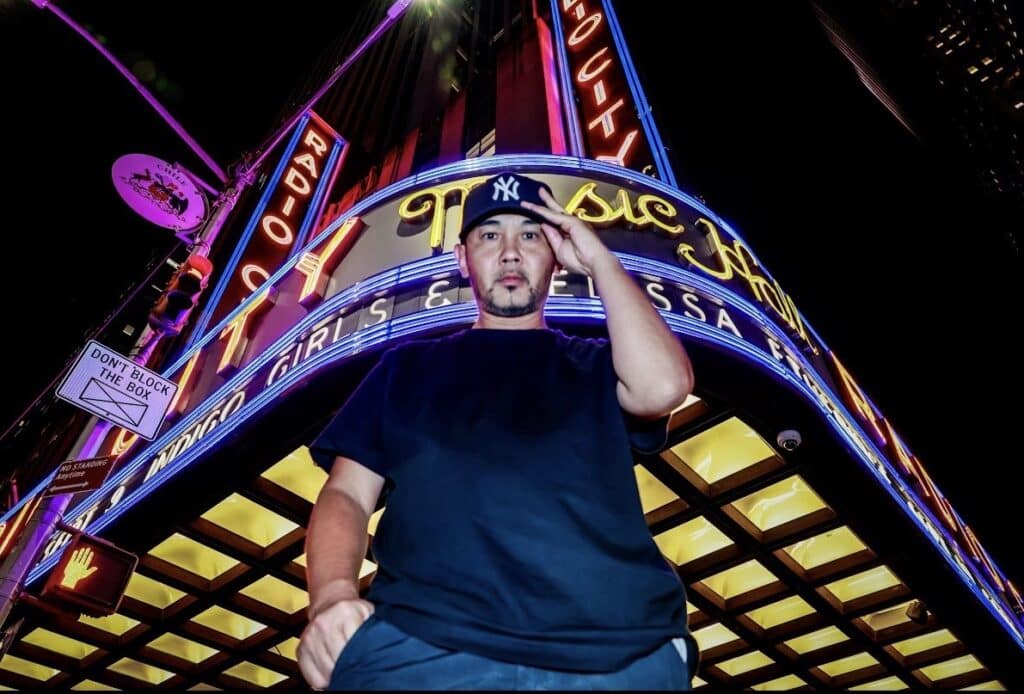
The Origins of His Name and Tag
SEI: Oh! That analysis definitely comes from a DJ’s perspective. By the way, “sneeze,” as in SN-Z, means sneezing, right?
SEI: I personally love the way the name sounds, but where did it come from?
SN-Z: Yeah, that’s where it came from. When I was around 18, I had trouble with my nose.
SEI: And what do you call the phrase at the beginning of a track—a producer tag? Like DJ Khaled saying “We the Best!” or Mustard saying “Mustard on the beat, ho!”
SEI: Yours always says “Dragon Claw.” Where did that come from?
SN-Z: There’s an artist named Mad Lion…
SEI: The reggae artist?
SN-Z: Right. This was in the early 2000s, after I had gone to the States, when I was working as Mad Lion’s tour DJ. He gave me the name then. I thought it sounded cool.
SEI: I see! I had imagined it might have come from the name of a Pokémon attack, but now it makes sense.
SN-Z: There’s also the fact that I was born in the Year of the Dragon.
SEI: Wait, Mad Lion knew about the Chinese zodiac?
SN-Z: He’s extremely knowledgeable, so he knows quite a lot about things like that.
People who have achieved a certain level of success are often a little different, aren’t they? They’re intelligent and sharp.
SEI: That’s true. You can tell as soon as you speak with them. Returning to New York, you spent about ten years there, until around 2004.
SEI: Were there any particular hardships, or times when you found yourself in danger? Fights and brawls are fairly common in American clubs, aren’t they?
SN-Z: Fortunately, I was never personally held at gunpoint or robbed. But fights and shootings at clubs happened all the time, and friends around me had money and chains stolen, too.
I’m glad I managed to survive those ten years [laughs]. More than the hardships, though, what I remember most is how much fun I had.
SEI: Wow! So you actually enjoyed it!
SN-Z: Everything I did was fun. I have so many memories.
But in America, the more money you have, the more completely different worlds open up to you, right? I didn’t have money back then, but I still had a great time.
For me, hardship was more like, “I have finals, so I need to study.” Because I was doing what I loved, even the difficult parts didn’t really feel difficult…
SEI: I see, I see.
SN-Z: It was a hobby… or rather, it was a hobby but also a business, and a business but also a hobby. The best thing is when those two connect—and if you can make money from it, even better.
SEI: Absolutely.
SN-Z: I’ve also been fortunate with the people around me. I think there’s a part of me that naturally meets the people I need, precisely when I need them.
SEI: That makes sense. In this industry, things often spread through personal connections, and people introduce you to work.
SEI: But I think that also comes down to who you are as a person, SN-Z.
Why He Entered DJ Battles
SEI: My next question is about DJ battles. I understand that you placed highly in the DMC Chicago regional qualifier and competed in numerous other battles.
SEI: What made you want to enter them?
SN-Z: The results are easy to understand, aren’t they?
SEI: They are, but… don’t the results ever get you down?
SN-Z: Of course they do. I get completely discouraged. The result comes back directly to you.
SEI: I thought so.
SN-Z: It began when I saw scratching and thought it looked cool. But after going to New York, my whole understanding of DJing changed considerably.
At first, I didn’t understand the difference between a club DJ and a battle DJ. I thought being a DJ primarily meant being able to scratch and juggle.
SEI: Right, right, right.
SN-Z: But once I got there and saw the reality, the whole concept was completely different. It was like, you don’t actually need to scratch.
Even without it, you can set a club off. You get people dancing and singing, then keep slamming into the next track.
Seeing DJs like that completely blew me away. Ultimately, I realized that what matters for a DJ is delivering results.
And if I wanted a result I could see immediately, I figured that meant entering a competition. Maybe I wanted something tangible to show for being a DJ.
SEI: Would you recommend DJ battles to people who have just started, or to DJs who are currently active?
SN-Z: I personally liked scratching and juggling, so I’d recommend it if that’s what someone feels drawn to.
SEI: But battles definitely produce clear results, don’t they?
SEI: They also give you a title and add prestige to your name as a DJ.
SN-Z: That’s true. Maybe that was part of it, too. Fundamentally, though, I did it because I thought it was cool. I think that was the biggest reason.
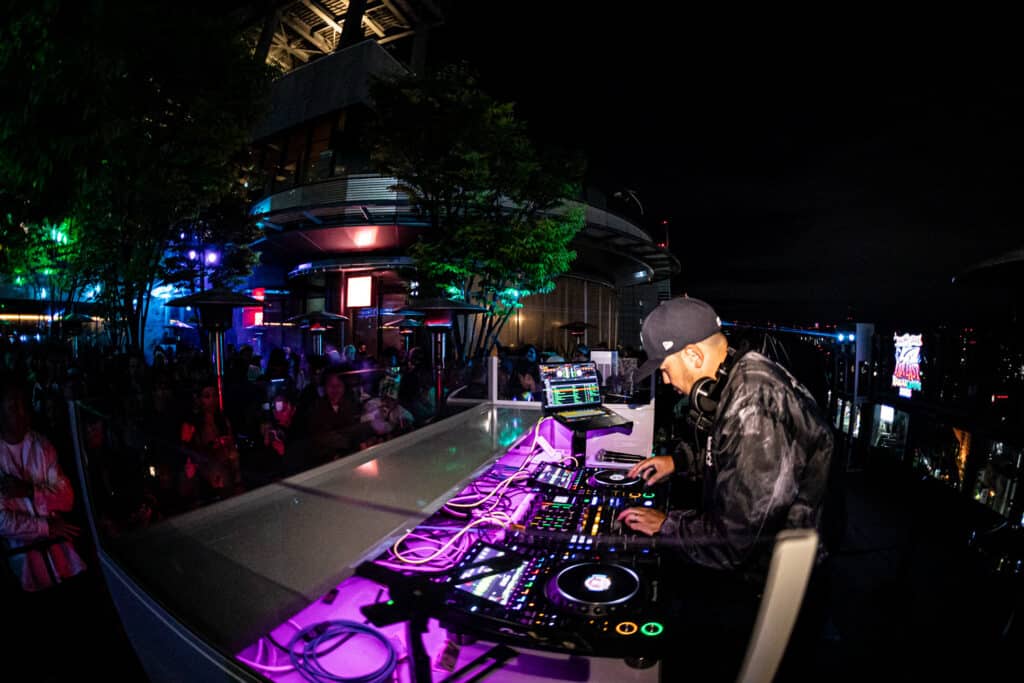
Where He Stands Now as a Veteran DJ
SN-Z: There are all kinds of DJs now. But back then, I had that youthful “I’m the best” kind of mentality.
I might listen briefly to someone. But even if there were good elements, there were also parts I didn’t want influencing me.
It was a youth thing. You can unconsciously absorb someone else’s style, right? So I barely listened to other DJs at the time.
Maybe only now am I able to really listen to them properly. In fact, I make a point of listening to everything now. I love music regardless of genre.
SEI: I see.
SEI: Were there any DJs from your battle era who particularly stood out to you, or whom you aspired to be like?
SN-Z: If we’re talking about someone who could scratch and also rock a club, then of course, DJ Jazzy Jeff.
SEI: Jazzy Jeff! For mainstream American audiences, he’s so strongly associated with Will Smith and “The Fresh Prince” that the image of him as a DJ can get overlooked. But he really is exceptional, then.
SN-Z: He’s incredible. More recently, DJ EASE is amazing, too. DJ Puffy and DJ VICE are both great as well. Everyone is so skilled. The standard across the board is high!
On His OZROSAURUS Partner MACCHO
SEI: You returned to Japan in 2005 and were reportedly tapped to support OZROSAURUS.
SEI: Could you tell us how you met MACCHO, how ROMERO SP came together, and what led to you joining OZRO?
SN-Z: I was living in New York at the time, and there was an older Japanese guy there who was also from Yokohama. We used to hang out a lot.
He returned to Japan before I did, and apparently became MACCHO’s manager.
SN-Z: Then I came back, too. I met up with him soon after returning, and he said something like, “I’m managing MACCHO now. Let’s go hang out!”
SEI: Hang out? Wow.
SN-Z: It turned out MACCHO had gone to the same high school as me. Oh, and LA-based DJ 2high (Japanese) went there, too. Buso High School in Yokohama.
SEI: That high school produced quite a lineup.
SN-Z: MACCHO dropped out after only a month or two, though. By the time I returned to Japan, OZRO’s previous DJ had already left.
So I started DJing for them… and that’s where it all began.
SEI: I see. I’m sure you get asked this all the time, but MACCHO remains a fairly mysterious figure.
SEI: What kind of person is he from your perspective, SN-Z?
SN-Z: He’s incredibly disciplined. I mean, of course, that goes without saying—he’s always striving for perfection. Yeah, he’s a perfectionist. But he’s also hilarious.
SEI: Hilarious? That’s hard to imagine…
SN-Z: He’s a seriously funny guy. I think pretty much everyone who’s met him would say that. And he’s an incredibly cool man, too.
SEI: Really? Even from another man’s perspective?
SN-Z: Yeah. And he’s great at rapping.
SEI: He really is an exceptional rapper.
I recently wrote about MACCHO’s rapping (Japanese) in an article, and the way he uses pauses is incredible.
SN-Z: The way he rhymes, too.
SEI: Exactly. His rhyming is unbelievably skillful, and when you add his voice and flow, it all becomes a work of art.
SN-Z: It definitely sounds cool. If you use English, it’s easy to make something sound cool.
But even if the English makes it sound cool, the substance can still be thin. And there are plenty of people like that, right? Maybe that still resonates with younger listeners today.
But we had that in our generation too—the writer and the members of OZRO are from the same generation. So I can’t make a blanket judgment.
Still, being able to achieve that level of quality in Japanese is incredible. That includes his sense of rhythm and everything else.
SEI: The flow, the way he packs words into each line, the spacing—it’s all part of it. He is art.
SN-Z: He’s a genius, and he works incredibly hard.
SEI: There’s something I realized after becoming a hip-hop writer.
Without even noticing it, I was always looking at one thing. Whether a rapper was putting their own life into their music, rather than posturing or trying too hard to look cool.
The beat matters, of course, but I’m the kind of person who’s deeply moved by how someone lives and by what their lyrics say.
And I think MACCHO has so many devoted fans because the way he lives comes through in everything—his lyrics, voice, flow, timing, breathing.
His entire philosophy is in there.
(SEI launches into an impassioned speech as the ever-gracious SN-Z smiles and nods.)
SN-Z: There’s nothing lightweight about it. I know what you mean.
SEI: Sorry, I got a little carried away there 💦 Is there anything you’re particularly conscious of when performing live with MACCHO?
SN-Z: I perform while anticipating what he might say or do next.
Of course, we go in with a live set prepared. But I’m always thinking about the DJ’s sense of timing, the space between songs, and exactly when to make each move.
And I make sure the equipment doesn’t stop. I want to avoid trouble.
SEI: This might be a completely out-of-the-blue question, but do you ever rap yourself?
SN-Z: Me⁉ No, I don’t. Rapping is hard (laughs).
SEI: You have such a great voice that it feels like a waste…
(As a DJ, SN-Z apparently does not usually take on MC duties, but his natural speaking voice is deep, calm, and very pleasant to listen to.)
Sorry (laughs). Let’s move on to the next question. I read that you officially joined OZROSAURUS after releasing your 2011 mix CD 『HARD PACK』.
Have you also been involved in producing tracks for OZRO?
SN-Z: Let me think—probably tracks from the third album. The third album, 『Rhyme&Blues』, and the fourth, 『Hysterical』.
Things like 『All My People -It’s OS III』 and the remix of 『ON AND ON (ROMERO SP Remix)』. GUNHEAD basically handles OZRO’s music production.
What DJ SN-Z Keeps in Mind as a DJ
SEI: Is there anything you consciously focus on or always keep in mind as a DJ?
SN-Z: Hmm, practice, maybe? I practice every day. Listening to music is a given, of course. And personally, I want to play in all kinds of settings—not just hip-hop.
SEI: Do you listen to music outside hip-hop as well?
SN-Z: I listen to everything. I genuinely enjoy it all.
Working as the Break DJ on Freestyle Dungeon
SEI: I definitely want to hear why and how you came to LA later in the interview. Let’s move on to the next question.
SEI: From 2015, you spent two years as the break DJ on Freestyle Dungeon, and later became a regular DJ on ABEMA TV’s ABEMA MIX. How did you get involved?
SN-Z: At the time, OZRO was signed to Zibu-san’s—Zeebra’s—label 『Grand Master』, and the offer came through that office. They asked me something like, “Would you be interested in being the break DJ?”
At first, they said it would be over in about three months, but I think it ended up running for around two years.
SEI: What are you thinking about when you’re working as a break DJ?
SN-Z: If the DJ makes a mistake, the whole thing falls apart. So during my part, all I thought about was not losing track of the set structure. Whether it was every 16 bars or every eight bars.
If I started listening to the other person’s lyrics, I’d get drawn in and start following them. It’s the same with live shows.
Even if the equipment breaks, it’s still my responsibility. It all comes down to how thoroughly I’ve prepared.
The Artist He Respects Most: MACCHO
SEI: That’s a huge responsibility… Around this point, I’d like to ask who your GOAT is—the artist you respect most.
SEI: It could be a rapper, DJ, singer, anyone.
SN-Z: My friend. Uh… MACCHO.
SEI: Oh, MACCHO?
SN-Z: MACCHO.
SEI: Hey! MACCHO, are you reading this?
SEI: Is your reason for choosing MACCHO the same as what you mentioned earlier—his discipline and everything?
SN-Z: Of course I like him as an artist, and I like him as a friend too.
Yeah, that’s it. I mean, just listen to that rapping.
SEI: That rapping says it all.
SN-Z: There are so many DJs I deeply respect.
But fundamentally, I respect everyone—each person I meet. Everyone has something I don’t.
SEI: You’re already a veteran DJ and an OG in this scene, but you’re remarkably humble.
SEI: By the way, is MACCHO coming to LA? Maybe an OZROSAURUS US debut?
SN-Z: It would be amazing if people in America became interested enough to dig into Japanese-language music and think, “Damn, this guy is incredible.”
People here naturally judge artists through things like flow and melody alone.
But if they understood more of what the lyrics were actually saying, I think it would hit them hard.
Hmm… If Japanese were this country’s second language, MACCHO might be a multimillionaire by now.
SEI: True. But I think that barrier has gotten lower. Look at K-pop and how many Korean artists are coming over here now.
SEI: And on YouTube, you can easily pull up translated lyrics in real time.
We didn’t have that in the past. If you couldn’t understand what someone was saying, you had to read the lyric booklet that came with the CD and translate it yourself.
Now that you no longer have to do that, I think the barrier to entry has come down.
SN-Z: Asian artists really are making remarkable strides—in entertainment and in sports. It’s definitely much easier than it used to be.
SEI: Please, we’d love to see OZROSAURUS perform in America!
SEI: Moving on, are there any tracks you would recommend to HIPHOPCs readers?
SN-Z: OZROSAURUS’s 『BJブルース』 and 『2years』, Don Toliver’s 『E85』, and Yung Miami’s 『Spend Dat』.


DJ SN-Z’s Philosophy: Choosing Happiness and Building a Deep Musical Arsenal
SEI: Next, please share anything you always keep in mind as a DJ and artist—whether it’s a personal motto or your own philosophy.
SN-Z: Hmm, that’s difficult. (He pauses to think.) It would be fine if I were mentally tough, but I’m not that tough. So I don’t want to get hit with unnecessary problems or drama.
Getting caught up in things I don’t need and wasting time thinking about them feels pointless. I’d rather move toward what’s enjoyable.
I want to go where I’ll be happy, so I always try to choose happiness.
SEI: Ah, I see.
SN-Z: I think the more options a DJ has in their arsenal, the better. Setting technical skill aside, track selection is 100 percent about the depth of that arsenal.
And reading the atmosphere in the room.
The perfect DJ would satisfy every single person in a crowd of 100… but that’s not how it works. Still, it’s probably possible to get close. Yeah, it’s possible.
SEI: I see. Thank you.
SEI: I think readers who have dabbled in DJing will want to know what equipment you use. Could you tell us?
SN-Z: The equipment I use is just a standard two-channel mixer—a Pioneer mixer. And I brought CDJs over here to America.
Back in Japan, I have turntables too.
SEI: You didn’t bring your turntables with you?
SN-Z: No. It’s the same in Japan, but almost every club here uses CDJs. This is a good opportunity, and it means I can practice more.
SEI: So you’re not planning to compete on turntables?
SN-Z: Right. I’m using a laptop.

Why He Chose LA as His Base: Working Toward a Las Vegas Residency
SEI: Thank you. I’d like to ask about your current work, ongoing projects, future plans, and vision.
SEI: Earlier, you said you came to LA to experience a broader range of music. Was that the reason you chose LA instead of New York?
SN-Z: Well, part of it is that I’ve already lived in New York once. For now, I was able to get a three-year visa.
SEI: Oh! I see!
SN-Z: So I want to secure a residency in Vegas within those three years. If I only wanted to play hip-hop, I would have gone to New York.
When I lived in New York, I visited LA a few times, but LA’s unhurried, laid-back environment didn’t suit me back then.
New York is always moving at a frantic pace. People are constantly pushing one another.
So many people are determined to rise to the top.
SEI: That was when you were living there in the ’90s and 2000s, right?
SN-Z: Yeah. Then I came to LA again last year. Maybe it’s because I’m older now? Or because time has passed?
Either way, the weather is great, and I thought LA might be a good fit after all.
The club scenes in both Tokyo and LA have changed. I started DJing at clubs with champagne and bottle service.
When I thought about taking that path as far as I could, a residency in Las Vegas became the goal.
SEI: I see. So will you mainly be active in the US over the next three years?
SN-Z: Yeah. But of course, OZRO has live shows, so I’ll return to Japan whenever we perform.
SEI: Is there anything in particular you want to challenge yourself to do in America?
SN-Z: Not really. It’s the same as Japan in that sense. If anything, I want to do something fresher and more interesting here.
You need that authentic energy from the culture’s home ground. And when you play at clubs, the immediate reaction you get from the crowd is completely different from Japan.
SEI: When did you come to America—or rather, to LA?
SN-Z: A little over a month ago. (The interview took place in mid-June.) It was April. My visa was only approved on April 14.
OZROSAURUS Projects
SEI: And you moved to LA before April was even over? That was fast!
SEI: You mentioned returning to Japan for OZRO shows. What kinds of projects are you planning or currently working on?
SN-Z: It’s mainly live shows, but MACCHO and GUNHEAD are working on music.
Advice for HIPHOPCs Readers
SEI: Let’s move on to the final question.
SEI: Do you have any advice for our readers and for young people in Japan who want to become DJs or artists working around the world like you?
SN-Z: It can be anything. Of course, you need money to live, but I think you should do what you love. If you’re fulfilled at heart, I think you can live anywhere.
SEI: Mm-hmm.
SN-Z: Wherever you are, keep moving in the same direction. Of course, you still need enough money to support yourself.
Sometimes you’re working and think, “This is exhausting,” right?
SEI: Yes. Absolutely.
SN-Z: But if the other parts of your life are fulfilling, your heart will be richer. That’s why I think you should do what you love. You only get one life.
SEI: I couldn’t agree more.
SN-Z: I’m pretty stubborn. So once I decide I want to do something, I’ll probably find a way to get there no matter what. Whether I go right or left, even if it means taking the long way around.
I have a goal, and I believe I’ll reach it.
And I think who you meet along the way is crucial. Ultimately, whether you make it down that path comes down to finding the Right Person.
When you’re young, it’s fine to associate with all kinds of people.
But if you want to go straight toward your goal without taking unnecessary detours, you need to think about how you move. Who you meet, who you hang out with, and who you do business with. That might be the key.
It’s different if it’s just a hobby. But if you’re going to make money from it, that matters.
SEI: But how can you tell who the Right Person is?
SEI: Maybe this is just my own bias, but I get the sense that there are plenty of shady people in the industry.
SN-Z: To judge that, you have to talk to people. So you need at least a basic ability to communicate.
Around here, about 90 percent of people will tell you amazing things. Everyone talks a good game, right?
SEI: That’s true. They really do.
SN-Z: But only about 0.1 percent of them actually follow up. So someone who does follow up might be the real Right Person.
Yeah. And maybe, to receive that kind of genuine feedback, you have to become the real deal yourself.
They say birds of a feather flock together, right? I think good DJs attract other good DJs. So part of it may be whether you can recognize that.
SEI: Good DJs attract other good DJs. That’s absolutely true.
SEI: Thank you so much for taking the time out of your busy schedule for such an in-depth interview!
After the Interview
DJ SN-Z has remained at the forefront of Japan’s DJ scene for more than 30 years.
Yet despite being a veteran with a wealth of experience behind him, that is not what came through most. What came through in his words was a remarkable humility and an inexhaustible curiosity.
What kept surfacing was his desire to keep doing things that excite him.
“I want to move toward what makes me happy.” “You only get one life, so you should do what you love.”
Those simple words carry the weight of someone who has continued taking on new challenges across eras.
The importance of meeting the Right Person is one lesson. So is the need to recognize those who will give you genuine feedback.
Together, they carry a message that resonates far beyond the music industry.
Now based in Los Angeles, DJ SN-Z continues to take on the world.
A new goal of securing a resident DJ position in Las Vegas awaits, alongside his ongoing work with OZROSAURUS. So do encounters with music he has yet to discover. His journey shows no sign of stopping.
We look forward to the moment he delivers his next wave of vibes to the world.


DJ SN-Z Links
Instagram @djsnz
Continue Exploring HIPHOPCs
- Kawasaki and Yokohama Rap Atlas — why Kanagawa has no single center
- DJ2high interview, Part 1 — Japan and the West Coast
- DJ2high interview, Part 2 — career, loss and Los Angeles
- More HIPHOPCs exclusive interviews in English
- Read the original Japanese interview (Japanese)
Editorial note: Original interview and Japanese article by Sei. This English edition was translated and edited by HIPHOPCs. Artist answers reflect the original interview date. Release credits and the linked official destinations were checked on August 19, 2026.