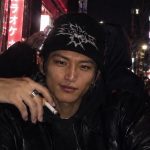
SEDY NEZZ Interview: Kyoto Roots, RABAARBA and Choosing to Live Now

English translation of the original HIPHOPCs Japanese-language interview. Originally published in Japanese on December 8, 2025. Ages, plans and references to the present reflect the original interview, not a new interview conducted for this translation. The introduction, afterword and repeated phrasing have been condensed for this English edition.
SEDY NEZZ’s phrasing, pauses and sense of menace already felt unmistakably her own. In this interview, she talks about growing up in Kyoto, finding her voice through anger, making RABAARBA and her decision to leave Japan.

Introductions and Roots
Cook: Thanks for joining us. What led you to pick up a microphone as SEDY NEZZ? Could you tell us about the environment you grew up in and the first time you started putting your words out there?
SEDY NEZZ: My dad loved hip-hop and R&B from the ’90s. From the time I was little, American Black music was always around me, at home or in the car. I’d sing along over the original songs. I still do it without realizing. I’ve loved singing since back then.
The very first time I recorded, I used the microphone on my iPhone earphones.
I was a student, and I desperately wanted to rap and make a song, but I couldn’t come up with lyrics. Looking back, I could have rapped about that feeling. But even then, I couldn’t write a letter or anything unless I felt something. [Laughs]
Then time passed. When I was 20, I had a huge fight with my best friend and was really angry. Back then I mostly listened to instrumentals. On the way home, the beat coming through my earphones happened to be Gramatik’s “Friday.” Before I knew it, my hands, mouth and brain were moving on their own, and the lyrics were finished.
If that sound hadn’t been there at that moment, I don’t think the SEDY NEZZ switch would have flipped. Out of all the emotions, I chose words of anger. That feels like me, though. [Laughs]
Cook: That’s hip-hop!
SEDY NEZZ: When I played the song for childhood friends, their first reaction was, “A diss track? That’s lame. You’re a girl—what are you doing?” [Laughs] That flipped the switch all the way. I became certain: I wasn’t going to lose.
Japan is an island country, and my hometown is Kyoto. Male chauvinism was something I’d struggled with since childhood.
Why can’t I hang out with boys because I’m a girl?
Why can’t I do this or that because I’m a girl?
I was even told that about skateboarding. Seriously: WHAT THE F***?
My family was open-minded, so all the “because you’re a girl” and “because you’re a boy” in the world outside always puzzled me.
Now I sometimes wonder whether it was part of the process of becoming a woman rather than discrimination, but none of that meant anything to me. Even now, I hope male chauvinism disappears.
While I was writing lyrics nonstop, slipping those feelings into my words, I met a group of music-obsessed people in Osaka. Someone was making beats, someone was constantly starting rap battles, someone was quietly writing lyrics. Someone played ukulele, someone played guitar, someone drummed, someone endlessly explained their recommendations and played them for us again and again, and someone was dancing. Every night after work, I traveled from Kyoto to that packed one-room apartment.
Looking back, I wonder how the police never came. But I remember it being so much fun. That was our first hangout, and the first place I put my voice through a microphone.
When everyone heard the first song I recorded, they praised it like crazy. I was so happy. We promised each other we’d keep doing what we wanted and see how far we could go.
Their presence gave me confidence. I bought my own microphone and made songs nonstop. Those days were so much fun, and nothing could replace them. I was happy to have found something I could be so absorbed in. The work I completed then became my first EP, 跳馬 / Jajauma.
Cook: Those memories don’t fade. Lifelong friends matter, and sometimes you reconnect by chance. Is there a record you put particular effort into?
RABAARBA: The Album Released in Spring 2025
SEDY NEZZ: All of them. I’ve never cut corners on a record. Each one has its own meaning and story.
The latest, RABAARBA, which came out in spring 2025, is fresh in my memory. Before, I had made all the tracks with the same producer, but this time I put together an album with a different producer on every song. Some tracks had only been played live for years while I kept asking myself, “Now? No, not yet.”
Of course I want people to hear the lyrics, but I honestly think the beat selection this time is inspired. I was thinking about a fusion of classic and current hip-hop, with lo-fi, jazz-funk and soul-like samples, and mostly mid-tempo beats. Rather than flashiness, I focused on space: decorating the beat with a mellow flow without smothering it. Across the album, I want you to feel the unspoken communication and shared worlds between me and each producer.
The title RABAARBA is completely made up. Its starting point was rhubarb—daiō in Japanese. Its roots are also used in traditional medicine, while its leaves are poisonous: a slightly edgy medicinal plant with a natural roughness that, to me, speaks for my vocal inflections and record sampling.
It also brings in the murmur of a crowd and the alternative name “general”: nature, wildness, something a little peculiar, and the complexity of being both sweet and sour. Its flower meaning is “advice.” Then there are the four A’s in my misspelling: hip-hop’s four elements; the Japanese term shimoku (四目), about looking closely at things to grasp their essence; and, on the spiritual side, the stability associated with angel number four.
The question I set out for this album was “What is most important to you?” The record also ties that back to the idea that the answers should all be inside your own heart. I felt it all came together, including its human imperfections. My tendency to overthink finally paid off. [Laughs]
I listen to all kinds of music, not only hip-hop, so I hope you can feel the groove running through my whole body in this record.
I’d also love people to watch the video for “Messiah,” which I put out from the album in December. Over DJ LEX’s weighty beat built on Japanese samples, we aimed for a Japanese psychological-horror feel. My friend IBJ handled the direction, editing, interior design and costumes. I’m proudly calling it an amazing piece of work. Seriously. [Laughs]
Just listen to RABAARBA all the way through once.
Editor’s note on the production credits: The published Japanese interview says the album has a different producer on every song. The official release credits list SBK on “Limiter,” “TINK” and “MONKMODE,” and DJ Mastamind on both “FREEKSHOW” and “京の七口.” The statement above is retained as published; the credits do not support a different producer for every track.
The First Spark and Her Musical Roots
Cook: Who first influenced you as a rapper? Was there a song that made you think, “I have to rap”? How do you still carry that into your style?
SEDY NEZZ: The first album I got obsessed with was TLC’s CrazySexyCool. A crew of three women: T-Boz and Left Eye’s rap parts and Chilli’s singing. I was in elementary school and completely in love with them. I listened endlessly and really tried to dress like them. [Laughs]
Then I discovered Lauryn Hill. She could rap and sing entirely in her own style, all by herself. She was beautiful, too, and an incredible actor. I thought she was a goddess.
Cook: I see.
SEDY NEZZ: From there, I started digging into all kinds of hip-hop myself and found the video for LIN QUE’s “Let It Fall.” The visuals, the boom bap, the style, that unwavering, tight rap—she stayed herself, unfazed by the male homies around her. It was a real shock. I’ve admired everything about her ever since. She was the initial spark.
Of course I love US rap, but among Japanese artists I love Messiah the Fly, BRON-K and B.D. The beats, words, style—everything about them inspires me. My grandmother also got me into Japanese records and kayōkyoku from childhood. The beats can be incredible right from the intro. I think that’s exactly where my expressive vocal inflections come from. Maki Asakawa is my favorite: the warmth of love inside loneliness, sadness and melancholy. The ultimate grown woman. That world-weary feeling—everything about it is cool. She and her music are the best in Japan.
Encountering US Culture
Cook: Where did the urge to take off for the US come from? Tell us about the first US rap you encountered, or a song that completely blew you away.
SEDY NEZZ: I’d always asked myself: if I haven’t experienced the music, streets, culture, language and history I’ve admired since childhood firsthand, what am I talking about when I say rap, hip-hop or Black culture?
“When in Rome, do as the Romans do.”
The Japanese expression for that is beautiful. I really think it’s true. Wherever I go, I’ll still be Japanese, and I want to value that identity.
Old Japanese customs and ways of thinking, the invisible feelings and the senses—I think those are things I need to preserve as a Japanese person. Just as their culture moved me, I want to convey my own words as I am. Language, music I don’t know yet, other people’s sensibilities: there are too many things you can’t understand without going, trying and seeing with your own eyes.
That’s why I decided to go out into the world.
—
“SEDY NEZZ Is SEDY NEZZ”
Cook: Which US artists’ blood do you feel runs through SEDY NEZZ? If you had to name someone, who would it be?
SEDY NEZZ: I’m not channeling anybody. I’m me. I don’t feel I have to sing songs about love, liking someone or hating someone. SEDY NEZZ is SEDY NEZZ. I’m always confronting myself, and I watch people closely. Music is what I live for. I want to share the beats I choose in a particular emotional moment, and the images the words bring up. If people in similar circumstances or with similar sensibilities listen, that’s everything I could want.
Why Leave Japan When She Was Happy There?
Cook: That’s strong. While working out of Japan, was there ever a moment when you felt, “I can’t reach people here”? With listeners, or the scene?
SEDY NEZZ: Not at all. Like I said, I’m Japanese. That doesn’t change, and I love Japan. I had no complaints. If anything, it was incredibly fun, and I was happy. Lots of people even asked whether leaving Japan now would be a waste.
But I’m a glutton for punishment, and I wanted to see things I hadn’t seen yet. I want to go now, so it has to be now. My focus is the present, not the past or future. I wanted to go looking for possibilities and parts of myself I haven’t found. That’s all. It’s like “Yo ga Aketara”—when the night gives way to morning.
Cook: Once you’re abroad, what do you want to do first? It could be someone you want to meet or a city whose atmosphere you want to experience.
SEDY NEZZ: New York. There are so many producers and rappers I want to go and meet, no matter what.
Finally, What Comes Next for SEDY NEZZ?
Cook: If your name reaches the heart of the US scene someday, what kind of MC would you want the world to remember you as? What would you want to have rapped about?
SEDY NEZZ: “I’m SEDY NEZZ,” I guess. [Laughs] I’m not doing this for an abstract goal like becoming famous, so I don’t really know. How can I put it? It’s more like, “Isn’t this sound incredible?” You know a sound that sends a shiver through your whole body the first time it hits your eardrums? I want to treasure that feeling, and sharing it would be amazing. Then a chef cooks that sound, and I add my voice as the finishing touch. Isn’t that enough to make you happy?
I love the underground because it doesn’t waver. I don’t want to be an idol or live in the spotlight.
Sharing what you genuinely love with people who have the same sensibility, without lies or compromise—I love the groove born there. It makes me feel alive right now.
I think every day is a lesson.
I’m drawn to quiet people who stay true to their convictions and don’t say much. Inside, I want to be like that, too. I owe a lot to others.
LOVE MY LIFE. Truly.
Cook: That’s powerful. Thank you!
After the Interview
What stayed with me was how plainly SEDY NEZZ explained her decision. She said she had been happy in Japan and had no complaints. She wanted to go now because there were still people, music and possibilities she wanted to encounter for herself.
Asked whose influence ran through her, she answered, “I’m me.” She did not strike me as someone chasing trends. At HIPHOPCs, we want to keep following her music.
Streaming / TuneCore
SEDY NEZZ on TuneCore Japan
YouTube
SEDY NEZZ’s YouTube channel
Instagram
@sedynezz
Related reading
For another perspective on Kyoto and New York, read R-Naby on Brooklyn, open mics and making a life in music.
Following SEDY NEZZ’s discussion of TLC, explore DJ2high’s memories of Lisa “Left Eye” Lopes.

In Their Words: Japanese and English
SEDY NEZZ
今行きたいから今しかない
I want to go now, so it has to be now.
SEDY NEZZ
私は私や。
I’m me.