Dee Quirks Interview | One MC, One Dancer and Two Beatmakers on episode. I
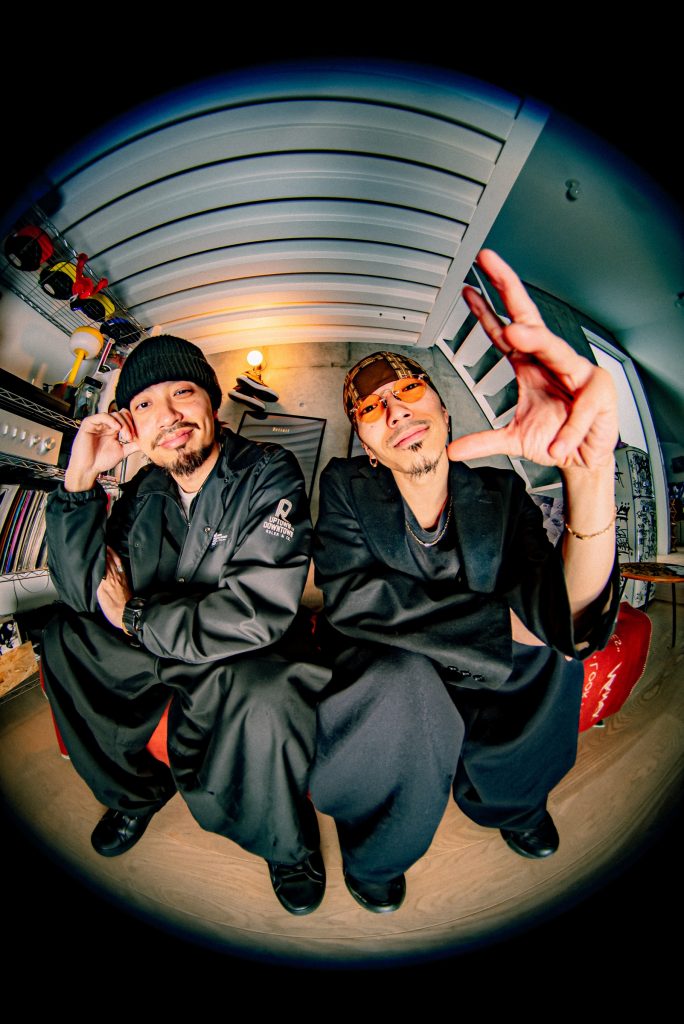
One MC, one dancer. Both make beats.
Dee Quirks brings together rapper Vue du monde and dancer SEIYA, who makes beats under the name CVLoops. Live, they move between rapping, dancing and performing beats on the SP-404 within a single set. They released their debut album, episode. I, digitally on September 9, 2026.
How does a dancer’s feel for a sound that makes you want to move come through in the beats? “Honestly, I don’t really make beats to be easy to dance to,” SEIYA says. He starts by making something he finds interesting to listen to, though he sometimes makes tracks more deliberately geared toward dancing.
The name of the lead track, “Daranisuke” (陀羅尼助), came after the track itself. The live sets are largely improvised. SEIYA says one show in Nagano gave them a moment they now plan to hit every time.
We sent ten questions in writing, and both artists answered separately. SEIYA refers to Vue du monde as “ヴディさん” in his replies. For the Japanese edition, we corrected typos, restored dropped characters and tidied punctuation and line breaks. We supplied missing words after checking them. The press release calls the album’s third track “破り被り,” SEIYA writes “破れ被れ,” and Vue du monde writes “破れ被り.” Each source’s spelling is preserved where it appears. Apple Music US lists the track as “Yaburikaburi.”
Interview by Rei Kamiya (HIPHOPCs). The interview was conducted in writing. The answers were received on November 9, 2026.
This is the full English translation of the Japanese HIPHOPCs interview, first published on November 13, 2026.
How did Dee Quirks get together?
Rei: How did you meet, and what made you want to work together as Dee Quirks? Was there a moment that pushed you to start the group?
SEIYA: Someone younger I used to work with came to see me do a late-night solo set. Vue was booked as a guest performer that night, too. It turned out he and my friend were both from Kanazawa. They hit it off and started meeting up now and then…
Some time passed. When I took on the music for Valuence INFINITIES, the team I’m with now, Vue and I worked on it together. That was the first time we worked together. We started working together more after that, and around February 2026, Vue asked me about forming a group. That’s how we ended up doing it.
Vue du monde: I started contributing to the music SEIYA made as CVLoops, and he invited me to his year-end event. I’d wanted to start a duo with a beatmaker. I thought a group with a dancer would be interesting because nobody had done it before, so I asked him.
How do the MC and the dancer share the stage?
Rei: Dee Quirks is one MC and one dancer, and you both make beats. Could you take one track from episode. I and walk us through who brought the first idea and how the beat and the rap went back and forth until the track came together?
The conversation shifted from making a track to how the two share the stage.
SEIYA: I dance on about five tracks in a live set. On “破れ被れ,” we move around together, do the same steps and act bits out. We hadn’t got that down in the early shows on the tour. The more shows we did, the more comfortable we got around each other, and little by little it started to feel natural. I’d try a move in the studio and Vue would go, “Oh, that’s good!” I think that’s how we settled on the steps.
Vue du monde: Since it’s one MC and one dancer, I wanted us both out front, like we were in a session together. As we made the songs, we decided which ones would work for that kind of back-and-forth. The lead track, “Daranisuke,” came together late in the process and I think it pulled the album together.
Does a dancer make beats that are easy to dance to?
Rei: SEIYA, how does a dancer’s feel for the sounds that make you want to move affect the beats you make as CVLoops? And when you rap on those beats, Vue du monde, how do you decide where the words go and where to leave space?
SEIYA: Honestly, I don’t really make beats to be easy to dance to… I mix different sounds together and start by trying to make something interesting to listen to. I think what I enjoy is finding out on the spot what happens when I bring my dancing into whatever I’ve made.
One thing I can say for sure is that making music changed the way I hear it. That’s made a huge difference to my dancing. And I know I said I don’t set out to make things easy to dance to, but every now and then I do make something that goes all the way in that direction. [Laughs]
Vue du monde: I make beats as a rapper, so I usually leave room for the rap without even thinking about it. I feel closer to what I’d call a trackmaker than a beatmaker. With SEIYA’s beats, you can hear his sense of rhythm, how much sound he puts in, and the flow he brings as a dancer. To my ears he naturally makes sounds that make you want to move. So for this project I gave more thought to writing raps that would get people moving and dancing than to getting a message across, which is different from what I do solo.

What story begins with episode. I?
Rei: Why did you name your debut album episode. I? Across its ten tracks, what did you want to capture about Dee Quirks on your first album?
SEIYA: It’s really simple. This is where our story starts. I wanted to show the first episode of that story, so that’s what I called it. Though if we put out another album, I doubt we’ll call it episode.2… [Laughs]
Vue du monde: Yeah, the next one might not be episode.2! [Laughs] There are twelve tracks on the CD. I made the album hoping something new might start with it, a new movement.
Why was “TATATATA” the first single?
Rei: What made you choose “TATATATA” as the first single? What made you think this was the track to introduce Dee Quirks?
SEIYA: We talked a lot while making the album about which track ought to lead. “spit bars,” the opener, was the first track I gave Vue after we decided to make an album. We both felt it had my sound, so putting it out first was an option. But when Vue sent back the demo for “TATATATA,” I heard how addictive it was. We knew right away it had to be that one. The “quirk” in our name means a distinctive or unusual trait. That made “TATATATA” a perfect fit.
Vue du monde: “spit bars,” the first track we made, really sounded like Dee Quirks. But there was something addictive about “TATATATA.” It had that immediate impact, too, so we went with it.
Where did the title “Daranisuke” come from?
Rei: What gave you the idea for the lead track, “Daranisuke” (陀羅尼助)? What’s behind the title, and what did you want to show in the music video?
Vue du monde: The title came later. SEIYA heard the word ‘Daranisuke’ in my lyrics, liked it and made it the title. I wrote the lyrics with a session in mind, drawing on the gigs and dance events we play and what our lives are usually like. It’s got a “let’s go hard and have some fun” feel. ‘Daranisuke’ came later, but I think it makes an impact as a title! [Laughs]
SEIYA: Like Vue said, the title came later. I’d sampled an old track and I really liked what I’d made, so I couldn’t wait to hear the demo with his voice on it for the first time. I remember getting excited because it felt like the track had been given a soul. The word ‘Daranisuke’ in the lyrics made such an impression on me that we decided on the title right away.
The music video puts it together with another track from the album, “Higher.” I think the retro feel of the video brought out the track even more.

Which tracks carry your musical roots?
Rei: The release notes describe a hip-hop album with elements of jazz, house and soul. Which tracks best show where each of you comes from musically, and how did those influences find their way into the music?
SEIYA: Dilla’s been my number one since I started making beats. With “TATATATA,” I feel like I got some of what I hear in Dilla, one of my roots, into something of my own. I’d never say it sounds the same as his work or even close. I just remember my head nodding to it as I made it in a way that reminded me a little of Dilla.
For the four-on-the-floor track “破れ被れ,” I wanted a little rush without going all the way to a frenzy. I think it sounds slightly off-kilter, which is also how I dance. Maybe I managed to get the way I usually express myself straight into the music.
Vue du monde: I’m mainly into boom bap, ’90s hip-hop and jazzy hip-hop, and that’s what I tend to make. “Daranisuke” is probably the closest to how I usually express myself. “TATATATA” and “破れ被り” are a bit different from what I normally do. We got to make something interesting in a different way, and I think it came from our two approaches to music meeting.
What do the instrumentals do on the album?
Rei: The album includes instrumental tracks “Light Step,” “Higher” and “Weaky.” What did you want them to do alongside the tracks with rap? What were you thinking about when you decided on the sequence?
SEIYA: Vue set the basic order. As we were making the album, being a dancer, I wanted other dancers to move to it and to feel a connection with it. So I started bringing in what you might call heavier sounds. When a DJ at a battle or an event slips one of my tracks into a set, it makes me happy, the way you feel when you hear through the grapevine that somebody said something nice about you. [Laughs]
So if I catch a DJ I don’t know particularly well playing one of my tracks, I’m ridiculously happy about it. [Laughs]
Vue du monde: I like making albums, so I paid attention to the sequence and how it all felt in balance from start to finish.
I was thinking about the live set, too, where sometimes I’d be out front and sometimes SEIYA would take over. I was like, ‘We absolutely have to make instrumentals!’ I wanted to make the kind of tracks that would go off when SEIYA danced to them. [Laughs]
How much of the live set is planned?
Rei: With the SP-404, your live sets move between rapping, dancing and playing beats. How much do you decide in advance about the shape of the set and who does what? What do you leave to the moment? Can you remember a time when things went differently from the plan and something fun came out of it?
SEIYA: The flow shifts a bit with the set list, but the SP parts while I’m dancing or Vue is rapping are all improvised. Our first show was in Nagano. I got a dancer friend who’d just been watching to come and dance. The way they hit the moment cracked up everyone in the room. That one bit became something we set up to hit every time. It’s become part of the fun for us. [Laughs]
Vue du monde: We do get in sync on things like the choreography for the hook of “Daranisuke.” Most of it is improvised on the spot. A live show is a living thing. I think going with what’s happening in the room feels more like us. [Laughs]
What’s the response been, and what would you like to try next?
Rei: Looking back from the release of episode. I to now, has any response from listeners or people at your shows stood out? What would you like to try as Dee Quirks next, and where would you like to take it?
SEIYA: I get the sense that a lot of people have responded well to the release and the way we do the live show, which makes me really happy. The numbers still haven’t grown much, and we aren’t reaching some of the places we want to reach. There’s plenty to work on. We haven’t decided what’s next, but I want to keep playing shows, keep exploring the sounds only we can make and get them out there.
Vue du monde: We get a lot of good feedback on the new live format. Looking at the numbers, we’ve still got a long way to go, and I feel like I need to do better on my end. I hope people get to know us little by little and that we can give them something even more interesting and completely our own.
Release information

Dee Quirks, episode. I (digital release September 9, 2026)
Debut album by Vue du monde and SEIYA (CVLoops), featuring the advance singles “TATATATA” and “Fly High.” The lead track is “Daranisuke” (陀羅尼助).
Release credit: Nat Monk records.
Streaming services / “Daranisuke” and “Higher” music video
Track listings (spellings follow the press release)
Digital edition (10 tracks): 1. spit bars / 2. TATATATA / 3. 破り被り / 4. 陀羅尼助 / 5. Light Step (instrumental) / 6. donuts / 7. Fly High / 8. Higher (instrumental) / 9. Weaky (instrumental) / 10. Blessing in disguise.
CD edition (12 tracks): 1. spit bars / 2. TATATATA / 3. 破り被り / 4. Switch (instrumental) / 5. 陀羅尼助 / 6. Light Step (instrumental) / 7. donuts / 8. Fly High / 9. Higher (instrumental) / 10. Weaky (instrumental) / 11. Groove Roots / 12. Blessing in disguise.
CD and tour
The press release said that the CD would go on sale at Tower Records Shibuya on October 7, 2026, and would also be sold at tour venues. The announced tour dates were August 15 at &GARAGE in Nagano, August 23 at SHIRAHAMA COFFEE STAND in Kagoshima, September 12 at ORD in Daikanyama, Tokyo, September 26 at editors cafe in Niigata, October 10 at Tower Records Shibuya in Tokyo, and November 28 at the 21st Century Museum of Contemporary Art, Kanazawa.
Title notes. Our release notes record “破れ被り” in the title confirmation and “破り被り” in the accompanying track list, the spelling in the press release above. They also record “duonuts” in digital release material. The press-release list, the official music video description and the current Apple Music listing use “donuts.”
Production credits. The BIG UP! release notes credit SEIYA with most of the beatmaking, with Vue du monde contributing to some tracks. In the official video credits, CVLoops made the beat for “Daranisuke,” Vue du monde rapped, and SEIYA danced. Vue du monde made the beat for “Higher,” with SEIYA dancing. The album credits list Vue du monde for mixdown, 8ronix for mastering and kodee for artwork.
Release sources. Apple Music US · Apple Music Japan · Tower Records Shibuya’s CD and in-store announcement.
Further reading
- MAIKI BOOGIE on bringing Southern dance culture to Japan (a dancer on how music and movement come together) · Japanese edition
- COMIC organizer JURA on building a future for the next generation of B-boys (on making a place to dance) · Japanese edition
- jza on building drums by ear for jzaturument (a beatmaker on putting drums together) · Japanese edition
- Rap Atlas guide to Niigata and Hokuriku (a map of rap in the region, including Vue du monde’s home prefecture of Ishikawa) · Japanese edition