REDDY Interview: TARANTINO, Running in Kochi and Yosuke Kubozuka

English edition of the HIPHOPCs interview first published in Japanese on October 14, 2026. Interview and original editorial text: Rei Kamiya. REDDY answered by email in Korean. This English edition translates the published Japanese text, including all 13 questions and answers and the afterword. The answers reflect the time of the original interview. Photographs supplied by REDDY.
“I’m a rapper, but I’m also a runner.”
Korean rapper REDDY (레디) says a marathon he entered in Kochi, Japan, in 2026 inspired him to bring house into his single “TARANTINO.” Released on October 6, 2026, the track reflects the changes that came with making running part of his everyday life.
In this exclusive HIPHOPCs interview, REDDY answers 13 questions about making music at home, the work that comes with independence, his next album and what he hopes to do in Japan. Rei Kamiya conducted the interview; all photographs were supplied by REDDY.
His connections with Japan already run through his music. He joined Ugly Duck and JJJ on “ASIA” and appeared on SKY-HI’s “I Think, I Sing, I Say feat. Reddy.” In 2023, he also appeared as a guest at the Tokyo show of SKY-HI’s BOSSDOM arena tour.
Running in Kochi and finding house: how a new routine led to the sound of “TARANTINO.”
Where the next album comes in: “TARANTINO” will not be on it, and REDDY says the album also spans different genres.
Japan and Yosuke Kubozuka: a childhood idol, and ambitions that extend to modeling.

A marathon in Kochi led to house on “TARANTINO”
Rei Kamiya: First, tell us about “TARANTINO.” The song has been described as the start of a new chapter. What feels most different from before?
Reddy: Ironically, although my circumstances have changed, the act of making music hasn’t changed much. If anything, I feel it has given me a reason to focus more on music.
Rei Kamiya: This time you’ve brought house rhythms and textures into a hip-hop foundation. What drew you toward that sound, and what were you conscious of while making it?
Reddy: I’m a rapper, but I’m also a runner. This year, I entered a marathon in Kochi, Japan. That was what made me think of bringing house into my music.
Rei Kamiya: What meaning or imagery did you put into the title “TARANTINO”? Was there an influence from the director Quentin Tarantino, or something you associated with him?
Reddy: I made this song with the idea of developing my own color. I’m also a fan of Tarantino as a director.
Rei Kamiya: There seems to be a thread from “RUN OUTTT” to “TARANTINO.” How are those two songs connected for you?
Reddy: In a broad sense, running has now become my lifestyle. I’d be happy if you thought of it as a small change in my lifestyle that has widened the range of my music a little.
Making music independently: the business and the visuals
Rei Kamiya: Since becoming independent, has the way you make music or get it out to people changed?
Reddy: Making music itself hasn’t changed much. I’ve always produced and recorded at home.
But there’s more business work now, such as distributing releases and handling different kinds of email correspondence that the company used to take care of.
Rei Kamiya: It feels as if you’re creating a whole world now, through sound and visuals as well as rap. How do you think about the relationship between music and visuals?
Reddy: Sometimes images come to mind while I’m making music, and sometimes they don’t. So I think looking at visuals while listening to music can help.
In the end, music is the core. But I think visuals can be a great help in feeling and experiencing that music more fully.
Changes in Korean hip-hop, and what comes next
Rei Kamiya: I think the Korean hip-hop scene has changed considerably over the past few years. How does the scene look to you now?
Reddy: Korean hip-hop has gone through a lot of changes in a short time. Some came through mass media, and others through the global pandemic.
And as K-pop has spread around the world, I think artists making hip-hop in Korea are affected by it, too—for better or worse.
Rei Kamiya: Having kept going for so long, is there anything you want to try again, or something you feel you can express differently now?
Reddy: Honestly, I’m not someone who dwells much on the past. Rather, I have a lot of thoughts about what I want to express from here, and I think I need to sort them out a little.
“TARANTINO” will not be on the next album
Rei Kamiya: You also have another full-length album planned. What place does “TARANTINO” have within it?
Reddy: “TARANTINO” won’t be included on the album, but I’d be happy if people took it as one expression of how my range as an artist has expanded.
The album I’ll release next is also a work made across different genres.
Rei Kamiya: Through the album’s sound or themes, do you also want to show a different side of yourself?
Reddy: Rather than making a big statement like “I’ve changed!”, I wanted to put the emotions I’ve been feeling lately into it naturally and matter-of-factly.
Working in Japan, and looking up to Yosuke Kubozuka
Rei Kamiya: We heard you want to bring your music to listeners in Japan, too. What impressions have Japanese hip-hop and artists made on you?
Reddy: I like Japanese culture and lifestyles, and sometimes I envy artists working in Japan.
Hip-hop is a Western culture, but I feel Japanese artists absorb it well, make it their own and put it out into the world.
Rei Kamiya: If you had the opportunity to perform or collaborate in Japan, what would you like to try? Is there an artist you’d like to work with?
Reddy: Working in Japan is something I’ve dreamed about for a long time. I’d like to try modeling as well as music.
When I was a kid, Yosuke Kubozuka was someone I looked up to.
Rei Kamiya: Finally, what would you like to say to people in Japan hearing “TARANTINO” for the first time?
Reddy: I’d be happy to have plenty of opportunities to meet everyone in Japan, too. I’ll keep bringing you more music. Thank you for supporting me even from far away.
Afterword: the influences and running days behind REDDY’s own color
The following is Rei Kamiya’s commentary, translated from the Japanese edition and based on the interview answers and the linked published sources.
An unexpected name: Yosuke Kubozuka
“When I was a kid, Yosuke Kubozuka was someone I looked up to.”
It was the answer that surprised me most. Asked about performing and collaborating in Japan, REDDY first said he wanted to try modeling as well as music. Kubozuka’s name came immediately afterward.
Alongside acting, Kubozuka has worked in reggae as 卍LINE (Manji Line). Through acting, music, clothes and words, he is someone whose personal style comes across before a genre label does.
We did not get as far as asking which of his works had inspired REDDY. Still, placed alongside his wish to try modeling, the answer suggests that Japan means more to him than a market for his songs. He sees it as a place that is home to a culture he has come to love. That closeness stayed with me.
For more on 卍LINE’s music, read HIPHOPCs’ interview with KIRA, who discusses KIRA’s collaboration with 卍LINE on “TERRY JANE”.
Respect for Tarantino, and a color of his own
Asked about the title, REDDY said he made the song with the idea of developing his own color. In the same answer, he said he was a fan of Tarantino. The director he likes and the artist he wants to become sit side by side.
One connection between film and hip-hop that comes to mind is Wu-Tang Clan’s RZA. In a Vanity Fair interview, RZA recalled working on the music for Kill Bill and learning about filmmaking from Tarantino while exchanging musical knowledge with him.
With REDDY, his answer about visuals offers a clue. “In the end, music is the core,” he said, before describing visuals as a way to help people feel and experience it more fully. The song carries a film director’s name, but music remains at the center of his explanation.
Yosuke Kubozuka and Quentin Tarantino work in different fields, yet each name immediately brings a distinctive world to mind. To me, the appearance of those two names and REDDY’s talk of his own color did not feel like separate subjects.
Running is part of the music story
Running was the experience most directly tied to making the song. REDDY named the marathon in Kochi as the reason he tried bringing house into his music. More than entering the race, it was the way running had become his lifestyle that suggested a quiet discipline.
Other rappers have spoken about connections between running and music. In his account in Men’s Journal, Eminem described taking up running during recovery from addiction and running before going to the studio. He also spoke about injuring himself by running too much. In a 2024 Men’s Health interview, Gunna explained how exercise clears his head and helps his breathing and endurance in the studio and onstage. He discussed the connection between fitness and music again in the magazine’s 2026 interview.
What makes REDDY’s answer particularly interesting is that his running routine gave him a specific reason to try house. A habit added to his life became an opening into a new rhythm.
Even after becoming independent, he still makes and records music at home. What has changed is the experience he brings back there. His description of a small lifestyle change widening his musical range felt more lived-in than a dramatic declaration of reinvention.
A clue to the next sound
I don’t want to file “TARANTINO” away as simply a song that leans toward house. There is his admiration for Yosuke Kubozuka, his respect for Tarantino and his experience of running in Japan. What sound will REDDY choose next? The clues seem to lie not only in the studio, but in what he loves and how he spends his days.
Interview, translation and photographs
Interview and original editorial text: Rei Kamiya (HIPHOPCs). Answers: REDDY. Photographs supplied by REDDY. English translation: HIPHOPCs editorial team.
The discussion of running, his recording setup, the next album and his hopes for working in Japan is based on REDDY’s own interview answers. The original email answers were in Korean; this edition was translated from the published Japanese version.
“TARANTINO”: release information and official audio
| Field | Details |
|---|---|
| Release | REDDY — “TARANTINO” |
| Release date | October 6, 2026 |
| Duration | 1 minute 56 seconds |
| Production | bass |
| Lyrics | Reddy |
| Mixing / mastering | FVBII |
Sources: OTOTOY’s release listing for the date and duration; Bugs’ album listing for the production credits.
Official audio: Listen to “TARANTINO” on Apple Music / Watch on REDDY’s official YouTube channel
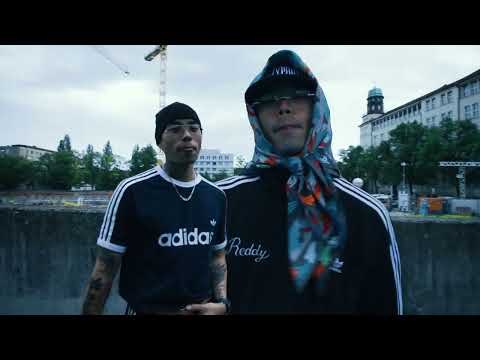
Related release: REDDY — “RUN OUTTT”
Released May 15, 2026, according to Apple Music’s listing. Listen to “RUN OUTTT” on Spotify.
REDDY: Instagram @keemhongwu / YouTube @keemhongwu
Read more: HIPHOPCs original interviews in English.