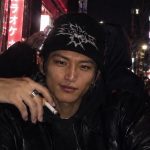
CzTIGER Interview: FOR WHATEVER, Atlanta’s Zone 3 and What “Real” Requires

Translation and timing note: This English edition was translated and edited from a HIPHOPCs interview published on July 8, 2026, before FOR WHATEVER was released. The album subsequently arrived on July 15, 2026. Repetition was shortened, but the interviewee’s meaning and first-person framing were preserved. Personal memories and relationship claims remain attributed to CzTIGER.
In the first half of HIPHOPCs’ conversation with CzTIGER, he discussed the relationships he had built with Jose Guapo, Skooly, Shad Da God, T.I., Young Dro, Young Thug, Bun B and Mike Jones. The second half asks what those overseas connections can return to Japan—and why Atlanta’s Zone 3 is more than a name in his music.
The conversation also enters difficult territory: a serious accident, the death of someone CzTIGER describes as a close companion, drug imagery in trap culture, and his criticism of the Japanese scene. Those passages are presented as his account, not as independently established claims about other people.
FOR WHATEVER and the artists he respects in Japan
Cook Oliver: Let us begin with the album. Its release had been confirmed when we spoke, correct?
CzTIGER: Yes. My second album, FOR WHATEVER, was set for release on July 15.
Cook Oliver: Congratulations. This feels like an important record for you.
CzTIGER: It is. I invited Japanese artists who influenced me, who I think are dope and who I respect. Just as I do when I am overseas, I wanted to show people in Japan, “I like what you do. I respect you.” My style is to make music with people I consider real—not to choose only by age, hometown, trends or numbers.
Cook Oliver: The guest list is substantial.
CzTIGER: AKLO, B.D., Benizakura, 13ELL, EMI MARIA, eyden, Illnana, Jin Dogg, KURO, LUNV LOYAL, MEGA-G, rirugiliyangugili and TAK-Z.
Going abroad does not mean I dislike Japan. I like people here and want to give something back. I do not think the answer is simply to sell overseas. There are artists in Japan whom I respect, so I wanted to make a Japanese album too.
Current status: TuneCore Japan’s official artist page lists FOR WHATEVER as a 29-track album released on July 15, 2026.
What Zone 3 means to CzTIGER
Cook Oliver: How should people understand Zone 3?
CzTIGER: Atlanta is a major city in Georgia, but the city is divided into areas. In the center, police divide it into Zones 1 through 6. From outside, it may all look like “Atlanta.” For people there, each zone feels different. Going to another zone can feel like going to another town.
The place where I have put myself is Zone 3. For me, that is the place closest to home.
Liking Atlanta does not mean I should represent all of Atlanta. As a Japanese person, it would be presumptuous—and impossible—to act as though I carry the whole city. I do not automatically like everyone just because they are from Atlanta. The place I can look after and accept responsibility for is limited. For me, that place is Zone 3.
It is not whether you can go, but who takes you
Cook Oliver: In Japan, people may reduce the whole experience to “I went to Atlanta.”
CzTIGER: It is completely different. In Zone 3, I feel that I have a place. Going elsewhere can feel like entering another town. It is not that I can never go. What matters is whose introduction I have and who I am moving with.
If I get that wrong, I can create trouble not only for myself but for my people. My freedom to move can become a burden on somebody else. The question is not simply whether you can go. It is how you go, who you go with, what you show and what you do not show.
Cook Oliver: That is very different from the version visible on social media.
CzTIGER: What I post is only a small part. Sometimes what you do not post matters more. I do not upload pictures in real time. I do not immediately reveal a location. I protect the safety of family and friends. To me, that is normal. That is what “real” means.
“Real” is not showing off
Cook Oliver: Your use of “real” sounds different from the way the word is often used online.
CzTIGER: To me, real is not about looking flashy. If a quick flex will cost you trust, it is better not to show it. If you are asking whether you will still be friends or family until death, then not uploading a picture immediately is obvious.
What I put in public is maybe one percent. It is the same with my family and people in Japan. You do not post because they treat you as family. You protect them because they matter.
Jose Guapo: “Not bro—family”
Cook Oliver: Your relationship with Jose Guapo goes back a long way. How did it begin?
CzTIGER: I met Jose Guapo in 2016, after I had formally signed as part of the XVL family for my work in America. The relationship deepened beyond the studio: he invited me home, and we began spending everyday time together. At first, I was drawn to the mixtapes around Guapo and Hoodrich. We stayed in contact, worked, and the relationship grew over roughly a decade.
When I saw Guapo again after some time apart, I was being careful and called him “bro.” He told me, “We are family, so let us talk more deeply. We are not just friends. I want you to understand that we are family. I like Taiga as the Japanese person he is. You are cool as you are.” We talked in his bedroom for seven hours.
After that, he introduced me to T.I. right away. He never acted as though I owed him for the introduction. He is a genuinely cool person.
Editorial framing: “Family,” “signed” and the description of the introduction are CzTIGER’s account. HIPHOPCs does not use them as independent proof of another artist’s position or endorsement.
Being accepted as Japanese—not pretending to be American
Cook Oliver: It must have mattered to hear that he liked you as a Japanese person.
CzTIGER: It did. I respect American culture, but that does not mean I pretend to be something else. I think people there see that I am not only copying fashion. I study, follow the proper lines and arrive as a Japanese person.
That is why I want to behave in a way that does not embarrass Japan. Going overseas does not mean I dislike my country. I like Japan. That is exactly why I want to conduct myself properly as a Japanese person.
The responsibility of using trap language and symbols
Cook Oliver: You are cautious about words, gestures and cultural symbols.
CzTIGER: Yes. Gang-related activity or gestures, clothing colors, hand signs, words and sounds such as “bow bow,” “skrrr,” “Let’s get it,” and even “trap”—I ask the people involved for permission before I use them.
I do not think I can use “trap” unless I can embody what the people there define it as. Many of these things were born in Atlanta. Imagine people from another country presenting a fake version of Japan’s national traditions or sushi. The people, country and region that created it might not feel good about that. I try to act with respect.
I can say that I have treated trap as more than a sound—as a way of life. I do not say that to act superior. Some words require real understanding before you can use them.
Editorial framing: The statement that permission was obtained is CzTIGER’s account. Permission in one relationship does not create universal permission for other speakers or settings.
Lean, imitation and a necessary health warning
Cook Oliver: Lean is another subject that can be misunderstood in Japan, and it may affect the way people see you.
CzTIGER: I think so. Many people treat Lean as though it is the same as every other dangerous drug. In my mind, they are different. But that does not mean I want to recommend anything. What I hate most is the idea of somebody drinking a fake product and dying.
It is not something everyone can easily obtain, and counterfeit products circulate. It would be tragic for young people to be put in danger. I may still mention it in lyrics, but I want to avoid showing too much online, where images can be stripped from context and remain forever. I hope informed people can explain the context to friends, so fewer people are harmed or pulled into something dangerous.
Health context: CzTIGER’s distinction above is his personal view, not medical guidance. “Lean” commonly refers to a drink made with prescription cough syrup containing codeine and promethazine. The U.S. Food and Drug Administration warns that this combination carries risks including addiction, misuse and life-threatening respiratory depression. Mixing it with alcohol or other central-nervous-system depressants can lead to coma or death. Counterfeit or unknown mixtures add further risk. HIPHOPCs does not encourage non-medical use.
The accident, the death of his partner and a change in listening
Cook Oliver: The accident and your partner’s death also shaped your relationship with Southern music and Lean culture, correct?
CzTIGER: Yes. I had almost been left paralyzed, and I was first prescribed medication because of the pain. My partner and I were in an accident. I woke in intensive care two days later, but my partner had died. My body was in terrible condition.
After the loss, I felt I needed to go to America immediately, even though I was still unsteady. My body did not move properly, and it was hard to find the will to live. But I wanted to listen to music, and I was in pain. The way I heard music changed. I dug deeper into Pimp C, DJ Screw and the culture around Lean.
Cook Oliver: So this was connected to pain in your life, not simply fashion.
CzTIGER: I believe so. It was not simply a matter of seeing something I liked and imitating it.
Editorial note: These events and medical details are presented as CzTIGER’s first-person recollection. HIPHOPCs has not independently reviewed medical, police or civil records relating to the accident.
Concern about Japanese hip-hop media and conflict
Cook Oliver: You also sound deeply concerned about Japanese hip-hop.
CzTIGER: I am. When beef is made to look entertaining, and media treats it as entertainment, the business can become one of profiting from another person’s failure. I think that is unhealthy.
I do not see HIPHOPCs as a publication that chases numbers with empty topics or conflict. It looks at the culture, which is why I chose to speak here. Cook Oliver can do things with writing that I cannot. If people work together like this, I think the scene can move in a better direction.
I want people who work hard to receive more. I have seen young rappers move in the wrong direction, become neither successful artists nor the outlaws they thought they were becoming, and only realize it around age thirty. I think that is too late. I want something to change before then.
“We waste the opportunity if we do not recognize and raise each other”
Cook Oliver: The Japanese scene can feel more interested in cutting people down than recognizing one another.
CzTIGER: It is a waste if we do not recognize each other and raise the level together. I have been in beef too. But rather than only doing things behind the scenes, answer through a song. Put it into the music.
Continuing to trade disses over small things, or relying on outside power to destroy each other, is different. Make music, hold the microphone and live a compelling life. Music can give anyone the possibility of changing their life.
“Why do people hate me?”
CzTIGER: Can I ask you a question? I have a lot of haters. Why do you think I get under people’s skin? I am genuinely curious.
I love music and hip-hop. I do not believe I have done something negative to the culture. But some people describe me negatively, saying I copy Black people or do not understand the culture. I believe I have tried to give back to Japan and make Japan visible. Why do people attack me? Put this in the article too.
Cook Oliver: Part of it may be the way earlier media reduced your image, or the aggressive impression people took from a particular period.
CzTIGER: That may be true. I was not inventing a character; I really was living aggressively then. But if people isolate only that moment, the image becomes very strong.
Cook Oliver: The context around Lean and Southern culture is also often collapsed into a single image of drugs or danger in Japan. People may judge the visual without understanding the background.
CzTIGER: Exactly. I am grateful when somebody looks closely. I do not usually tell flattering stories about myself, but there is a lot I can explain when somebody asks. Interviews like this matter to me.
“I want to bring more good news to Japan”
Cook Oliver: There are parts of you that people will not understand unless they are properly explained.
CzTIGER: I think I should let go of unnecessary sharpness, continue making good music and communicate who I really am. I want the next superstar to emerge—somebody truly recognized overseas. If people sometimes call me a starting point, I want to connect that opportunity to the next person.
T.I. understands me. Bun B understands me. If Japan only chases shallow rates and rankings, it will eventually run out. I want to bring more good news home. Maybe then more people will decide that small beef does not matter.
“People die someday. What can we do now?”
Cook Oliver: What keeps you moving now?
CzTIGER: People die someday. So what can we do now? That is the question.
Whatever happens, while I am alive I want to make the music I love. I want to rap what I truly want to say, what I want future generations to hear, and what has meaning. I believe that is my work.
Release and source links
FOR WHATEVER is now available through CzTIGER’s official distribution pages. Hear the record alongside the interview: as the work in which he places Japanese collaborators, Atlanta relationships, grief and responsibility in the same frame.
- CzTIGER on TuneCore Japan
- CzTIGER official website
- FDA safety context for promethazine-codeine products
- Read the earlier English HIPHOPCs interview with CzTIGER
- Place CzTIGER in the wider Osaka Rap Atlas
- More HIPHOPCs exclusive interviews in English
- More Japanese rap coverage in English
Interview: Cook Oliver / HIPHOPCs
Japanese-edition images: supplied by CzTIGER
English edition artwork: original HIPHOPCs editorial design