JURA Interview: “I Feel Like Breaking Saved Me” — COMIC and the Next Generation

This is the full English translation of HIPHOPCs’ Japanese interview, first published on November 2, 2026. Sam conducted the interview; Rei Kamiya wrote and structured the original article. Recollections and plans reflect that conversation. The November 8 event discussed below is now past; its details are retained as an archived announcement. Read the Japanese original.
Interview: Sam. Writing and structure: Rei Kamiya.
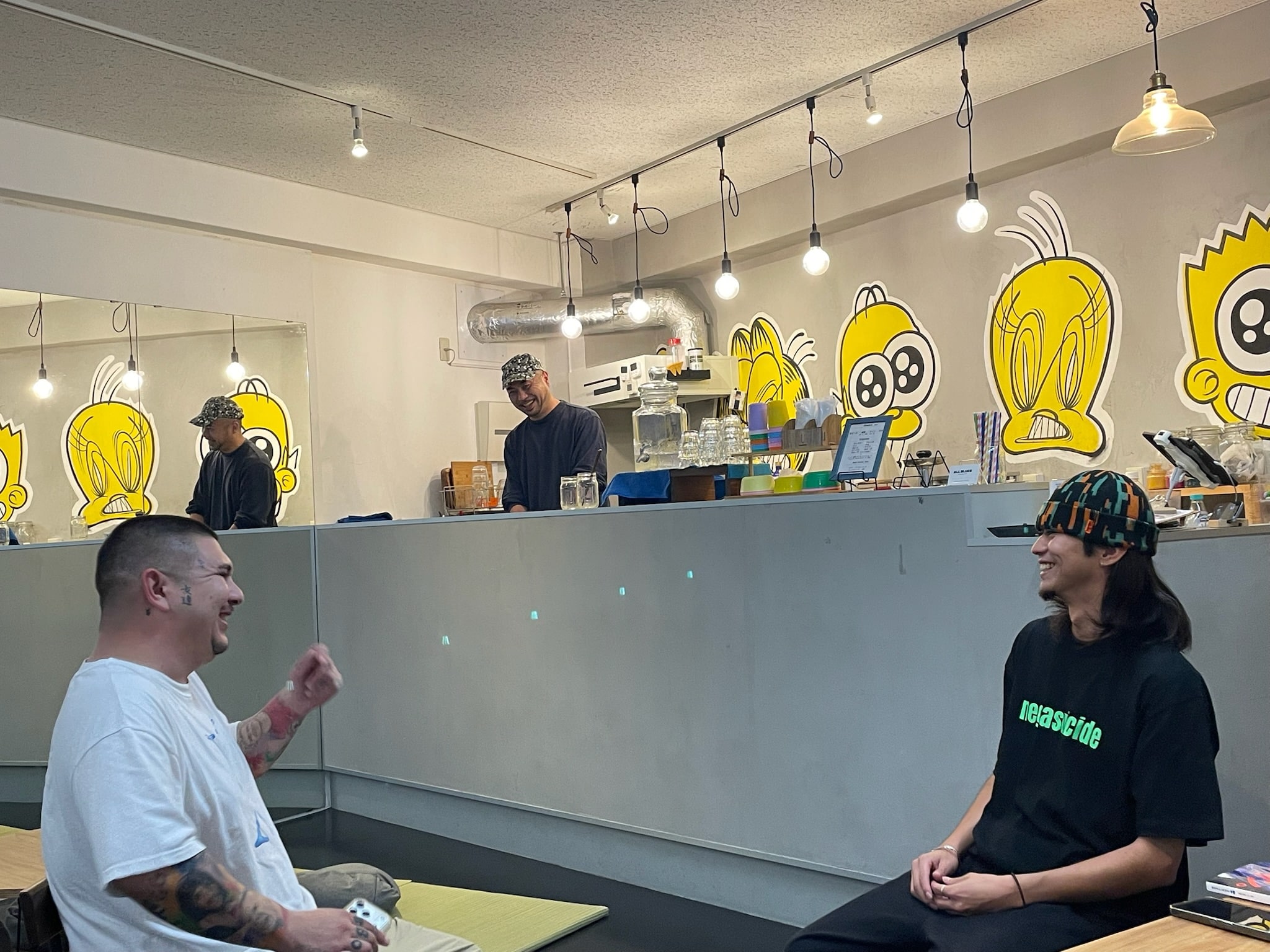
“I feel like breaking saved me.”
That is how JURA, who organizes the breaking event COMIC in Tokyo’s Kita-Senju, explained why he keeps it going. He admired dancers on television, practiced with friends and made it onto the main stage of a competition. The confidence and connections he found along the way have become a place where someone else can take a chance.
COMIC draws B-boys from outside Tokyo whose names are not yet known in the city, as well as dancers who have only just learned their first moves. They put something of themselves into the music and catch somebody’s eye. JURA wants to create those openings—ones that can last beyond a win or a loss.
DJing, MCing or rap, breaking, and graffiti writing are often described as hip-hop’s four elements. DJs connect records, MCs add words, B-boys and B-girls dance, and writers develop their own visual styles. COMIC’s story begins with breaking, then opens out into hip-hop as a whole.1
Ahead of COMIC EP6 vol.1 for U22, announced for November 8, 2026 at JUICE BAR ROCKET in Kita-Senju, HIPHOPCs’ Sam sat down with JURA. They were joined by VIKN, the rapper behind the venue. The conversation covered JURA’s introduction to dance, how COMIC began, and a B-boy’s idea of style—one that puts music and character first.26
A baseball kid finds another dream
Sam: Could you start by introducing yourself?
JURA: I’m JURA. I was born on February 9, 1999, and I’m from Ayase in Tokyo’s Adachi ward.
I’m with a group of friends from Edogawa called EDGW CYPHER.
Sam: How did you first get into music, particularly hip-hop?
JURA: For me, it started with breaking, with B-boying. From there, I began listening to hip-hop and all sorts of other genres.
Sam: So the dancing came before listening to hip-hop?
JURA: Yeah. I started when I was 15. Before that, I’d hardly had any contact with hip-hop.
I played baseball all through elementary and middle school. It was a pretty demanding environment, and I took it seriously, but I got injured. I was wondering what to do next when I found breaking.
Sam: What first made you interested in breaking?
JURA: Takashi Okamura. I saw a rerun of Mecha-Ike (めちゃ×2イケてるッ!) where he and Gori were dancing.
I thought it looked so cool. I tried going to a local dance studio, but they didn’t have breaking classes.
I was doing hip-hop and house dance. Then I met the B-boy who became my mentor, and I started learning properly in my first year of high school.
Sam: So it all began with Mecha-Ike.
JURA: Yeah. Seriously, Mecha-Ike was where it started. [Laughs]
His way in was simply seeing something on television and thinking it was cool. The music and the history came later. A boy who could no longer keep playing baseball had found another pleasure in using his body to express himself.
From dance to music: it all comes back to hip-hop
Sam: How did starting with dance lead you to an interest in hip-hop as a whole culture?
JURA: When you’re breaking, you come into contact with breakbeats. Then I started listening to music beyond breakbeats and thinking, “What is this? This is interesting.”
My mentor and VIKN also taught me about hip-hop history.
Sam: What exactly are breakbeats?
JURA: Originally, in New York, DJs used two turntables to connect the break sections in soul and funk records, and the people there danced to them.
The people dancing to that music came to be called B-boys, and MCs came into it too. That’s the history I was taught.
VIKN: Back then, you had the DJ, the dancers, and then the MC. Their roles in the culture were different from what they are now.
Sam: That’s quite different from the image people have of hip-hop today.
JURA: Exactly. That’s why I don’t want to stay shut away in a world that’s only for breakers.
I think the B-boy scene is still small compared with the market for rap. But if you go back to the roots, it’s all hip-hop, isn’t it?
So I wanted to appear as a B-boy in a hip-hop publication like HIPHOPCs, as well as in media that specialize in breaking.
Sam: You want to connect with hip-hop as a whole, beyond dance.
JURA: Yeah. I want us to connect more and build things up together.
JURA has also traveled to New York. Dancing led him to dig into the music, learn the history and visit the place it came from. Following what he loved took his interest beyond dance.
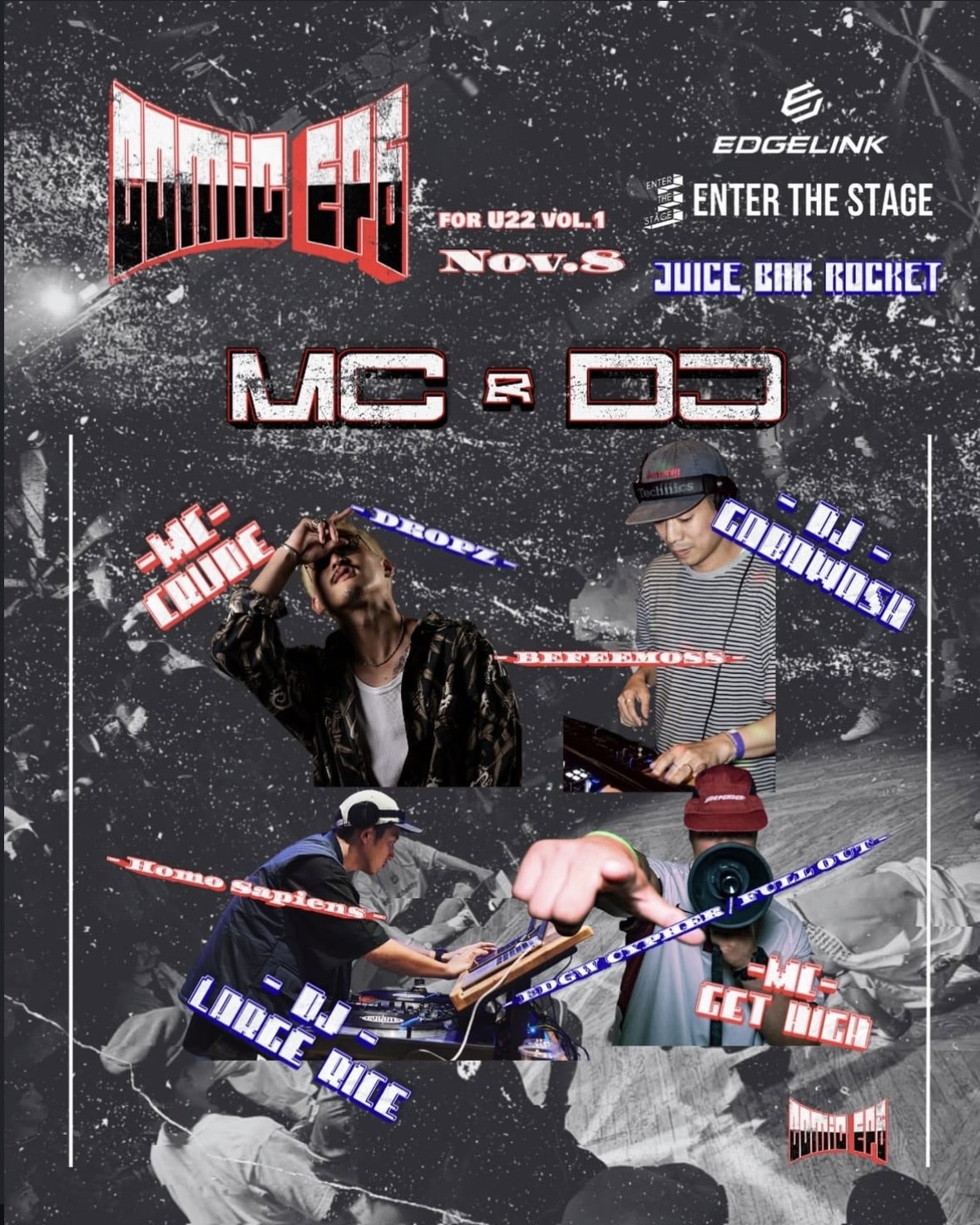
At COMIC, too, DJs choose the music, MCs hold the room together, and dancers express themselves within it. The November 8 announcement named GABAWASH and LARGE RICE as DJs, with CRUDE and GET HIGH as MCs. A B-boy’s stage is made by more than the dancers alone.2
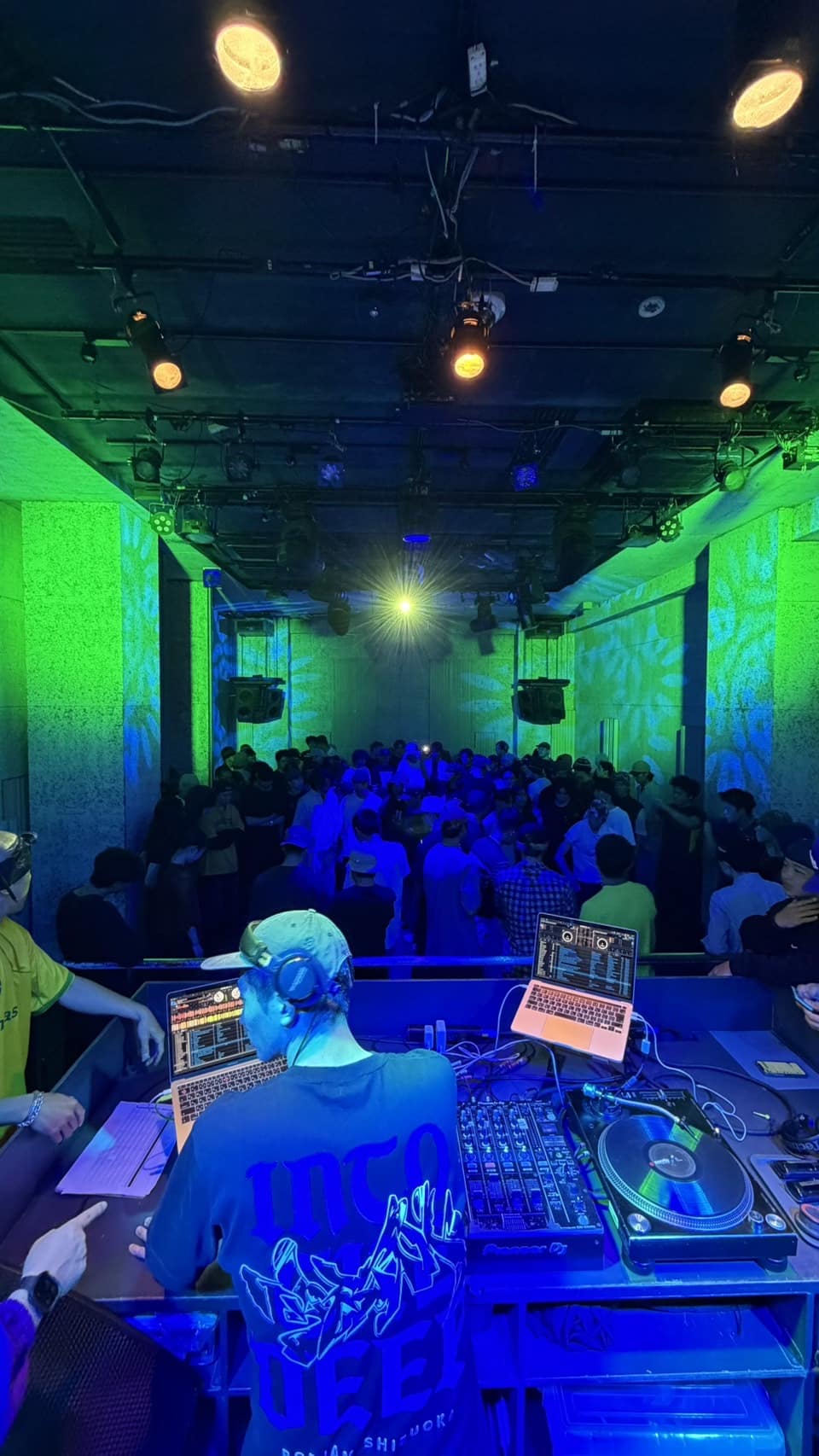
From 300 dancers to 16: what stayed with him after a loss
Sam: What goals did you have when you started out as a dancer?
JURA: Back then, everybody was aiming for B-BOY PARK.
Around 300 B-boys would come to the qualifiers, but only 16 could get into the main tournament.
There weren’t as many opportunities as there are now for B-boys from all over Japan to get together, so everyone worked toward it for a whole year.
After practicing with his friends in Edogawa, JURA says he made it into that main tournament too.
JURA: Back then, if even one person from Edogawa made it through, it was like they were a god. But that year, about three of us got through. [Laughs]
Sam: So there were three gods. [Laughs] How did the main tournament go?
JURA: I lost, but I felt this incredible exhilaration.
For the first time, I felt I had something to show for all the work I’d put in. I could actually feel it: “So this is what happens when you keep working at something.”
That taught me that the process of getting there matters, not just the result.
He did not win the championship. But getting himself to the place he and his friends had been working toward stayed with him. When JURA talks about COMIC, it becomes easier to understand why the time spent preparing and the connections that follow matter to him as much as winning or losing.
“I’d been waiting for someone like him”: VIKN on how COMIC began
Eventually, JURA also became someone who created a place for others to test themselves. That place was COMIC.
Sam: Was it difficult at the beginning?
JURA: Of course, all sorts of things happened. But my friends, the staff, everyone involved in the event—and VIKN, too—helped me.
Whenever someone gave me advice, I’d make the change straight away and keep moving. Looking back, I feel more that people helped me than that it was hard.
Sam: VIKN, what do you remember about the first COMIC?
VIKN: He’s from Adachi, and creating something together with people from the area was something I’d wanted to do for a long time.
So it was like, “I’ve been waiting for a young person like you.”
Right from the first one, he was putting on a battle that got around 100 entries from all over Japan. I was surprised: “Wait, this many people are coming?”
It didn’t feel like something that gradually came together. It already felt fairly complete from the start.
Sam: That’s impressive.
VIKN: I think he has a feel for creating something that gets people fired up—a battle that makes them want to go for the win.
And he gives it a real form. He makes what he’s imagined happen.
JURA keeps coming back to how much the people around him have helped. VIKN sees his ability to imagine a place that fires people up, then bring it into being. Behind the name of one organizer are relationships with local friends, older peers and staff.
What the name COMIC means
In a May 2026 interview with ENTER THE STAGE, JURA explained the name through the image of life as a manga, with every participant becoming the protagonist of their own story.3

philip arrives from Amagasaki: one dancer’s challenge brings others
Sam: Have any dancers become better known through COMIC?
JURA: Loads.
I wasn’t all that conscious of it myself, but some people came to COMIC, won or got their names known there, and then went on to do well in the open scene. Some go on to compete around the world.
They might be outside Tokyo and not yet known here, but they’re actually incredible. They come to COMIC, people notice them, and it keeps spreading.
I’m grateful that it’s become that kind of place.
Sam: A real proving ground.
JURA: Hearing you say that makes me really happy.
VIKN: When I meet B-boys elsewhere and ask, “Do you know COMIC?”, they all know it. They’ll say, “My friend competes there,” or, “I’ve been in it too.”
I think it’s really well known among B-boys.
Sam: If you had to name one participant who particularly stayed with you, who would it be?
JURA: philip.
Around COMIC’s second anniversary, he suddenly showed up from Amagasaki. We didn’t know him, and neither did the B-boys aged 22 and under in Tokyo.
Everyone was like, “Who is this guy?” Then he made it all the way to the final.
Sam: That would make an impression.
JURA: He didn’t win that time, but he was so fresh—something we hadn’t seen before.
Then I spoke to him and found he was a really cool person too.
It made me realize how much talent there must be all over Japan that we haven’t noticed yet.
Sam: Has he stayed involved with COMIC?
JURA: After philip came, his friends and younger dancers around him started coming too.
A flow developed, with people from Osaka, Amagasaki, Kyushu and other places coming to Tokyo to challenge themselves at COMIC.
I think philip helped create that atmosphere.
That first attempt led to a later championship. FINEPLAY’s event report records that philip finished runner-up in qualifier vol.2, entered the 2023 final as a wild card, and won the eight-dancer 7 TO SMOKE.4
philip’s win at the final
View COMIC’s official Instagram post
COMIC’s official Instagram post announcing philip’s 7 TO SMOKE win at COMIC THE FINAL. Source: @comic_for_bboy. View the post on Instagram.
For the 2026 final, philip was named as a judge. A dancer who came to test himself would now watch the next set of challengers. The expansion JURA describes can be traced through the event’s history.3
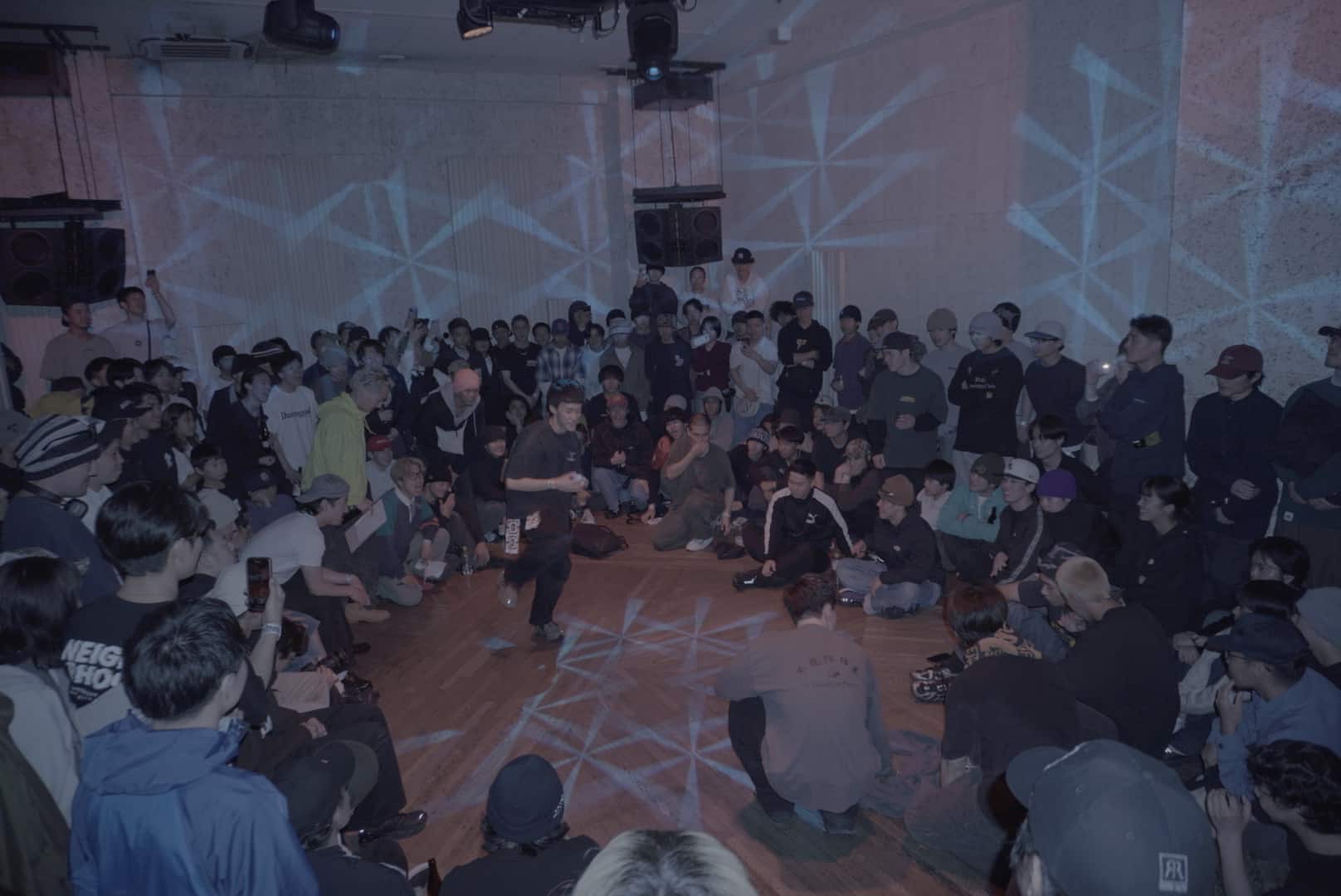
Start with the music, then show who you are
Sam: What does breaking mean to you?
JURA: Self-expression.
I feel like I break to prove who I am through my body.
Sam: There are all sorts of moves in breaking, aren’t there?
JURA: There are. I think of it as putting those moves together however you like.
But some things, like toprock and uprock, aren’t just tricks. The movements themselves have meaning.
Uprock, for example, has expressions that provoke your opponent.
Just as rappers battle with words, B-boys battle with dance. You don’t lay hands on the other person, but you show your intentions through movement.
Sam: Seen that way, it has things in common with an MC battle.
JURA: Yeah. I think that’s part of what makes breaking interesting.
You can also see COMIC’s battles on video. The official YouTube channel has footage of the 2025 final’s 7 TO SMOKE.9
COMIC THE FINAL 2025 — 7TO SMOKE
Watch COMIC THE FINAL 2025 — 7TO SMOKE
Video: COMIC FOR BBOY’s official YouTube channel. This is footage of the 2025 final. Watch on YouTube.
Sam: For anyone thinking of entering COMIC, what do the judges look for?
JURA: Someone who’s good at communicating what they think is cool.
I think breaking has to start with the music.
If you’re just doing the moves you prepared, and they have nothing to do with the music, it becomes a demonstration, doesn’t it?
Sam: So impressive tricks alone aren’t enough.
JURA: Right.
The BPM of the track the DJ is playing, the count, the feel of the funk…
You really ride the music, and then show your own dance on top of it: “This is me.”
I think people who can do that look great.
Sam: But different judges will see it differently, too.
JURA: Of course. Each judge has their own perspective, so I can’t say there’s one thing you can do that will guarantee a win.
But at COMIC, I think it’s tough unless you put 100 percent—maybe even 150 percent—of yourself out there.
That’s how much the level of the participants has risen.
You really ride the music, and then show your own dance on top of it: “This is me.”
JURA
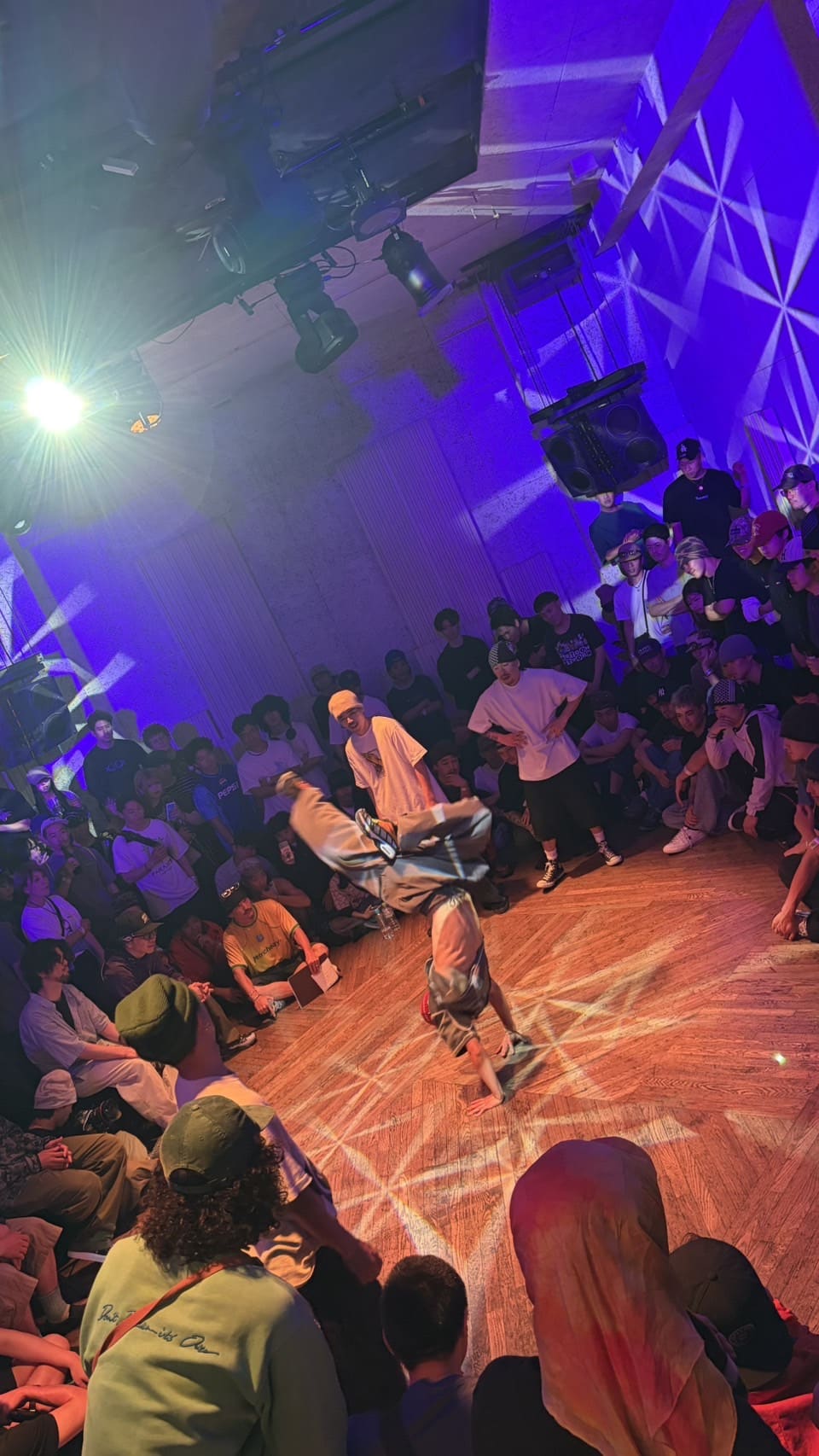
Sam: Can beginners enter too?
JURA: Absolutely. People who can barely do any moves yet actually come and compete.
Some people are like, “I can only do a chair or a Jordan,” and they dance, then go home.
Sam: How does the room respond when that happens?
JURA: It goes wild.
There’s that kind of pure feeling in the space at COMIC.
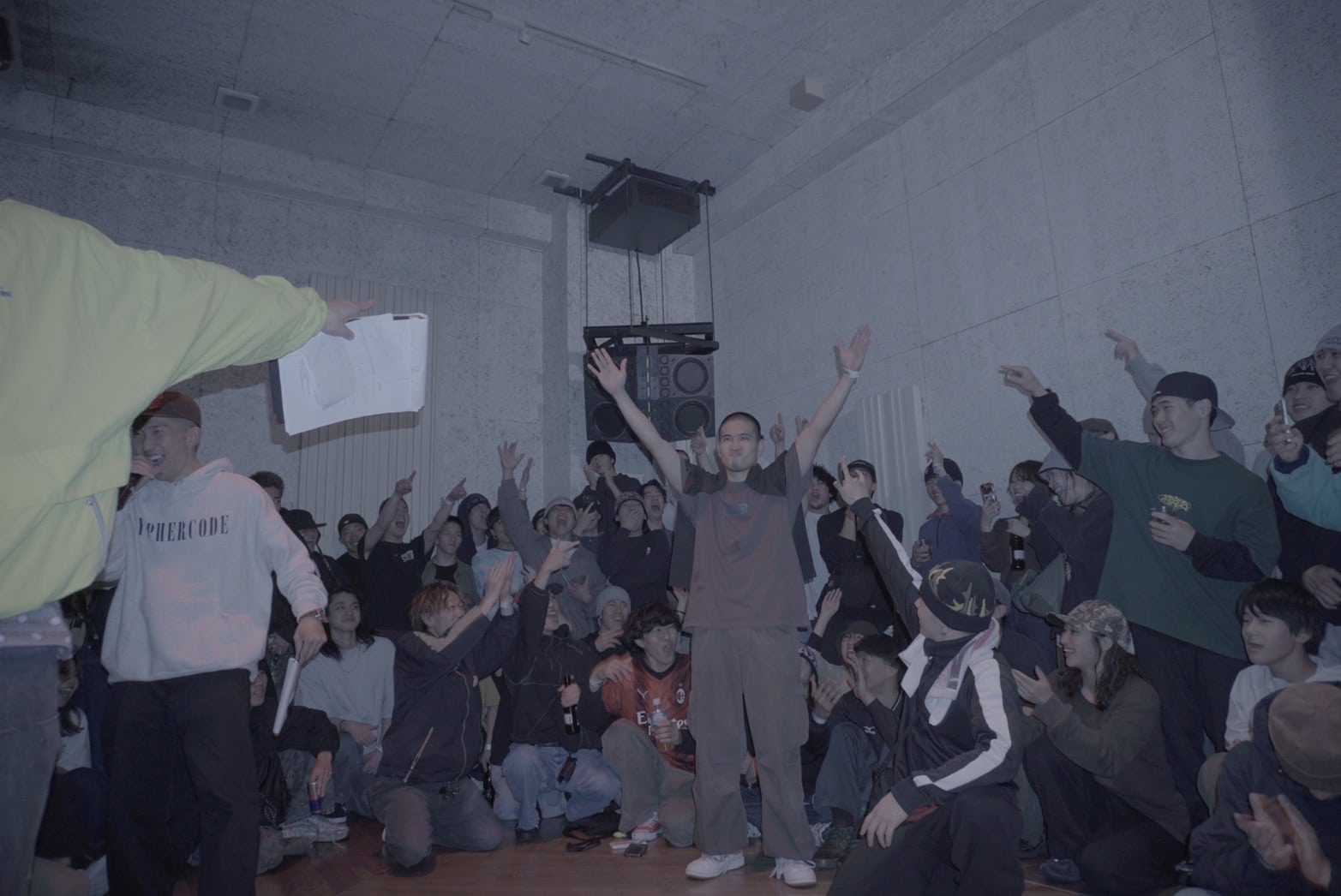
High-level battles and an atmosphere that welcomes first attempts: JURA describes both as part of the same floor. You do not have to build up a larger repertoire before you can step onto it. The question is how you show what you have right now, within the music. He says COMIC’s crowd responds to those first steps too.
What makes a B-boy stand out beyond the dancing
Sam: What has been the hardest part of keeping the event going?
JURA: I’ve learned a lot about being disappointed in people.
Sometimes I’d book someone because I’d seen their dancing or the way they looked and thought they were cool. Then I’d actually get to know them as a person and think, “Oh, it’s just the dancing.”
Sam: You mean their character?
JURA: Yeah. Those kinds of interactions between people made me feel pretty negative at the time.
With the other things, though, people around me have helped.
Sam: What kind of B-boy do you want to be?
JURA: I want to be a B-boy who embodies hip-hop.
That doesn’t just mean a person who does breaking. It means being a B-boy as a person.
Of course, you’re a B-boy because you break. But that’s the kind of B-boy I want to call myself.
Sam: It’s not just the dance, but whether the person themselves is hip-hop.
JURA: Exactly.
Sam: On the other hand, what do you think about young dancers who don’t dress in the traditional B-boy style?
JURA: I think that’s great. I’m the kind of person who doesn’t think appearance matters all that much.
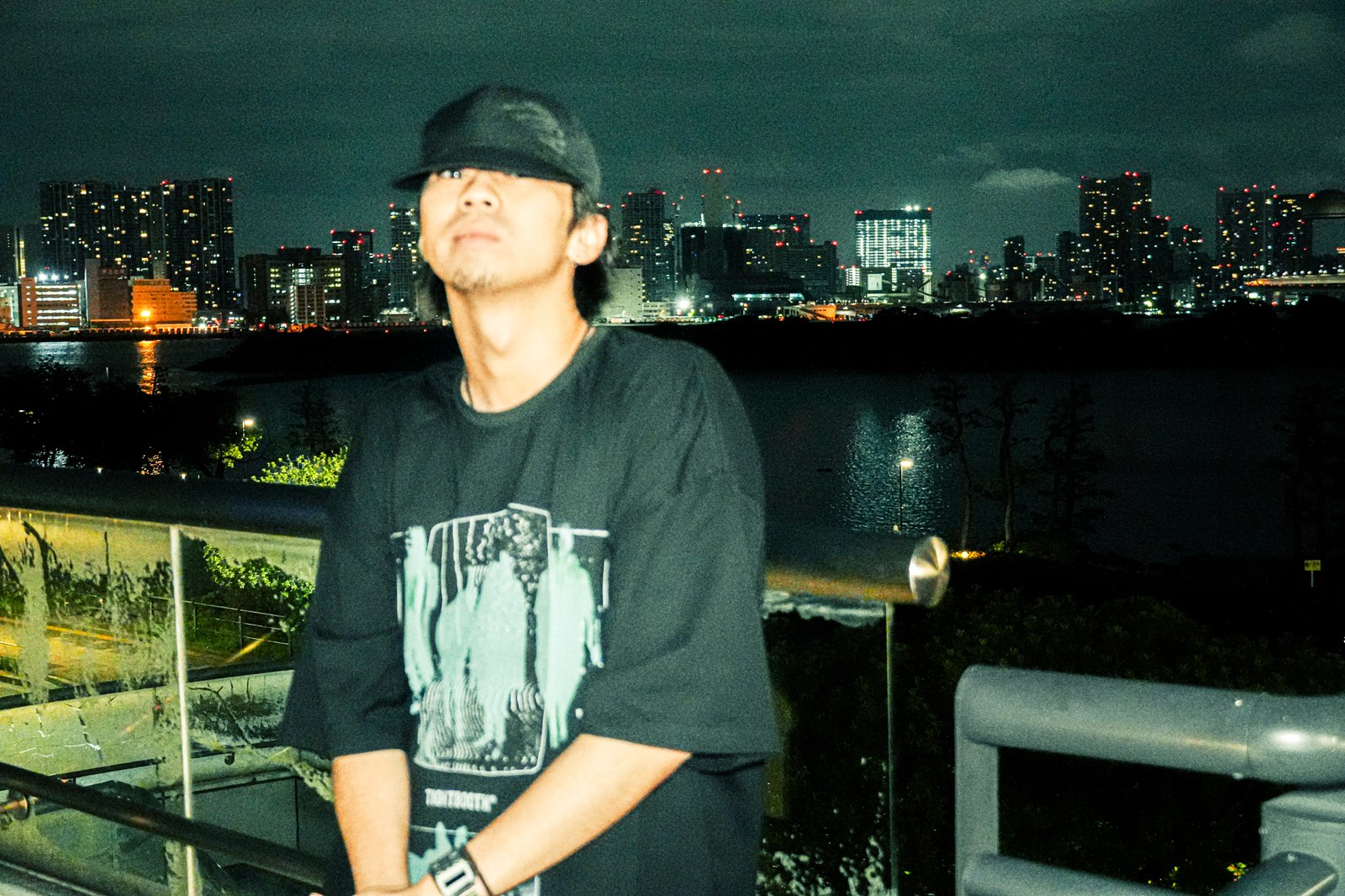
Embodying hip-hop does not mean dressing alike. It is about the connection between someone’s dancing and the way they conduct themselves. His experiences with other people have helped shape what JURA finds cool.
Sam: How do you choose COMIC’s judges?
JURA: There are three each time, and I choose all of them.
First, whether I think they’re cool. Not just their dancing—everything.
I also make a point of choosing three people who think differently.
Sam: Three people with different values?
JURA: Yeah. They all see dance differently, and other things too.
But each has something different that makes them cool. Those are the three people I try to choose.
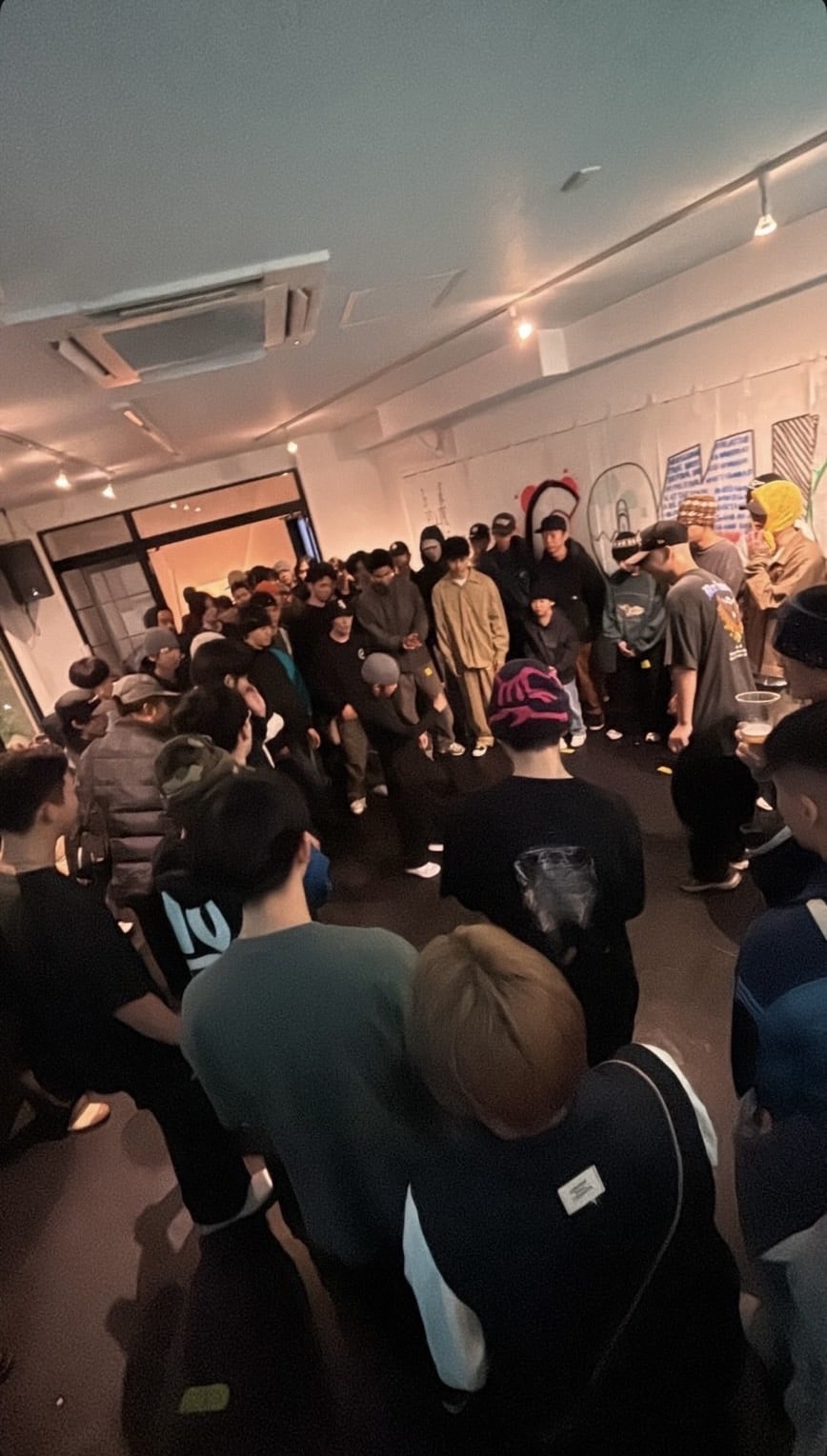
The judges announced for November 8 were T-LONE, KILL JOE and YoutheKnock. Three different perspectives on the dancing in front of them: that was another reason to watch COMIC.2
Beyond the win: MEDIA COMIC visits dancers’ hometowns
COMIC has also made MEDIA COMIC, a video series that visits battle winners in their hometowns and the places where they spend their everyday lives.
VIKN: One thing I thought was really good, looking from the outside, was that he followed the winners and went to film documentaries about them.
With a rapper, the way they grew up and their background can come through in the lyrics.
But with dancers, it can be hard to see that side of them.
Sam: Right. You can’t understand someone’s whole life just from watching them dance.
VIKN: Exactly.
Where they grew up, the places they dance, the kind of life they live…
When you know those things, I think you can feel more connected to them and support them.
He went to the winners’ hometowns and filmed that side of them too. I think that’s a really good thing to do.
The official YouTube channel includes a film visiting the hometown and familiar places of YoutheKnock, the EP5 vol.3 winner. YoutheKnock was also named as a judge for the opening round of EP6. Knowing the days that led to a win, as well as the winning moment, can add to the pleasure of watching the next battle.5
MEDIA COMIC — visiting YoutheKnock’s hometown and familiar places
Watch MEDIA COMIC — YoutheKnock Edition
Video: COMIC FOR BBOY’s official YouTube channel. Watch on YouTube.
Listen closely to a rapper’s music and you may become curious about the streets they grew up in. VIKN’s words point to a similar pleasure in these films about dancers. Watching one before heading to an event might give you another person to root for.
As reported in the original Japanese edition, it had not yet been decided whether the hometown documentary project would run again in 2026.
Helping COMIC grow while protecting what people love
Sam: What kind of event do you want COMIC to become?
JURA: First, I want to stay humble, the same as always.
I want to really understand what people are looking for, then think about how to give something back in my own way.
Rather than wanting COMIC to achieve something huge, I want to keep protecting the environment we have.
I want COMIC to grow while keeping the things people tell us they love about it.
I’d like more people to see it.
Sam: What do you particularly keep in mind when running COMIC?
JURA: That it all starts with the participants.
The B-boys who come pay an entry fee to be there.
So I don’t think it can just end with me expressing myself.
What are these kids looking for? What kind of environment would make them happy?
I’m always thinking about that.
Sam: You’re balancing your own vision as an organizer with what the participants want.
JURA: Yeah.
I want to express what I think is cool through the event. But I also want to give something back to the participants.
I’ve changed things while talking them through with VIKN and the others.
In the end, the participants are the ones making COMIC what it is.
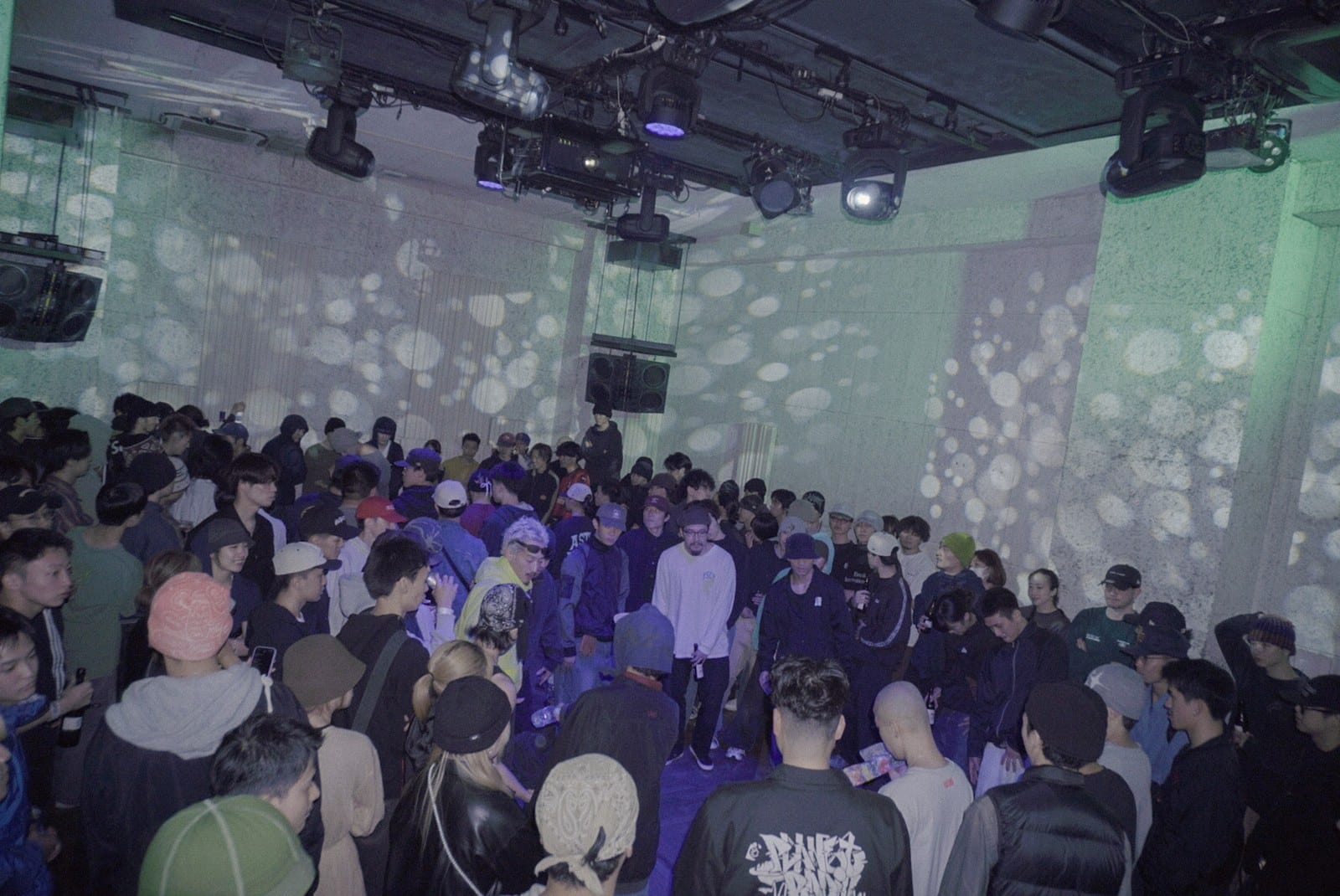
JURA says around 350 people, including competitors and spectators, attended a previous final. Even at that scale, his question remains the same: what can he give back to each person who takes part?
The faces of 7 TO SMOKE
View COMIC’s official Instagram post
An introduction to the B-boys taking part in 7 TO SMOKE. Source: COMIC’s official Instagram, @comic_for_bboy. View the post on Instagram.
And even now that he is an organizer, the desire to dance himself has not gone away.
Sam: As a dancer yourself, don’t you ever want to enter the battle you’re organizing?
JURA: I do. [Laughs]
But maybe that means I’m making an event good enough that I want to enter it myself.
“Saved”: the word that keeps him going
Sam: Finally, what is the biggest reason you keep COMIC going?
JURA: I wasn’t the kind of dancer who had the spotlight on him.
But then, through B-BOY PARK or some other opportunity, the spotlight would suddenly land on me.
I enjoyed that, and I traveled to other places and made friends.
I feel like breaking saved me.
Sam: Saved you—that’s how it feels.
JURA: Yeah.
Breaking is starting to look like a competitive sport, but for me it’s a culture before anything else.
I kept doing something I loved, and it changed my life.
So I’m sure there are people all over Japan who are like I used to be.
Maybe something changed because they came to COMIC. Or maybe they spent time working hard toward COMIC.
If that became something important in their lives, I’d be so happy.
I don’t see myself as going out and saving people. But I hope there are people who feel that way.
When someone actually tells me it saved them, that’s the happiest I’ve ever been doing this.
I think that’s why I keep going.
Maybe something changed because they came to COMIC. Or maybe they spent time working hard toward COMIC.
JURA
At the end of the conversation, JURA looked toward a future beyond breaking alone.
JURA: I want to build up hip-hop as a whole, not just the breaking scene.
I really love rap too, and there have been times when a rapper’s lyrics saved me.
So I think it would be interesting if rap, breaking, skating and fashion could come together and put something out into the world.
B-boys have something great to offer too, and I think more people should know about them.
I want breaking to reach more people, the way the rap scene is growing.
And it would be good if money circulated too, so everyone could keep doing what they do.
But I don’t want to make it all about money and end up being lame.
I want us to find that balance and build things up together.
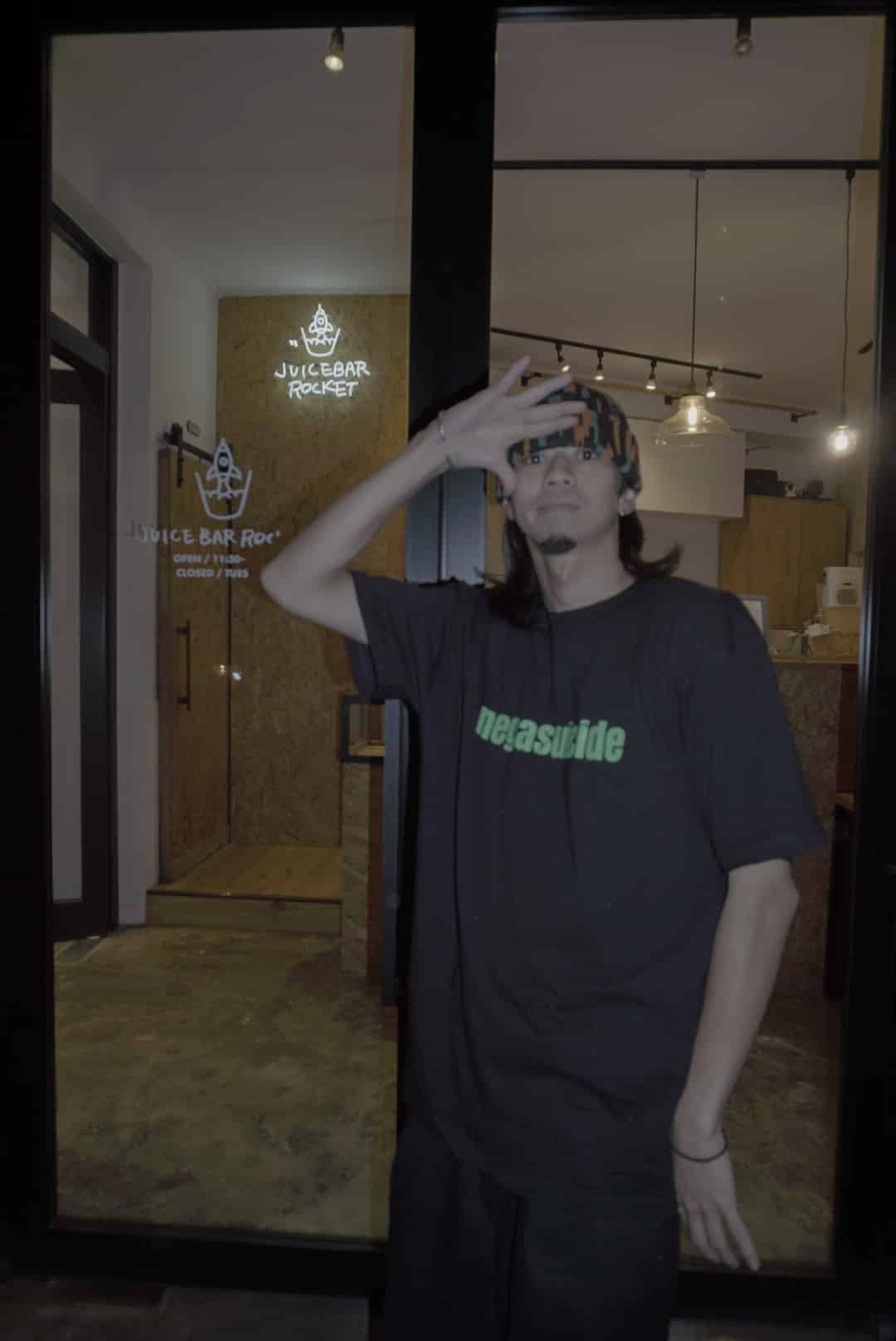
For the next person to step into the spotlight
JURA kept returning to the word “cool,” whether he was discussing dance technique, how he chooses judges, or his relationships with people. The B-boy he wants to be does not separate dancing from the way he lives.
A dance he saw on television looked cool. There was a competition he and his local friends worked toward. A B-boy he had never met, arriving from another part of Japan, surprised him. What he received through those experiences has become the place called COMIC.
There need not be just one way into hip-hop. Someone who loves rap might see a B-boy responding to a DJ’s selections and fall for the dance. Someone who starts dancing might then dig into the music and its history. JURA’s own path shows the pleasure of moving between them.
When this interview was first published, November 8 in Kita-Senju was still ahead, and no one knew who would win. But a dance witnessed there, or someone met that day, could become a reason to go back to practice.
“Maybe that means I’m making an event good enough that I want to enter it myself.” JURA’s admission stayed with us after the interview. He wants to pass on a place he can lose himself in to the next person. At COMIC, that wish takes shape on the floor, one event at a time.
Archived event information: COMIC EP6 vol.1 for U22
The opening round of the new season was announced for Sunday, November 8, 2026 at JUICE BAR ROCKET in Kita-Senju. Entries were handled through ENTER THE STAGE. The scheduled date and entry deadline have passed; the information below preserves the original announcement.2
| Date and time | Sunday, November 8, 2026, 14:00–20:00 (JST) |
|---|---|
| Venue | JUICE BAR ROCKET, 1-1-10 Senju, Adachi-ku, Tokyo |
| Category | BREAKIN SOLO BATTLE U22 OR STUDENTS; limited to 100 entries in the original article |
| Entry fee | ¥3,500, including one drink |
| Spectator fee | Not specified in the original article |
| Entry deadline | Saturday, November 7, 2026, 21:00 (JST) |
| Judges | T-LONE / KILL JOE / YoutheKnock |
| DJs | GABAWASH / LARGE RICE |
| MCs | CRUDE / GET HIGH |
| Organizer | JURA |
View the original organizer listing.
The Japanese edition checked the event information on November 2, 2026 against the organizer’s ENTER THE STAGE listing. When checked for this English edition on November 9, 2026 (JST), the listing marked the event as ended.
The announced format called for 16 dancers to advance from the preliminaries, with one solo turn per dancer in the round of 16, two in the quarterfinals and semifinals, and a three-point system in the final. The listed cash prize was ¥20,000. Other winner’s prizes were a place in EP6’s 7 TO SMOKE, an original wooden winner’s board and the EDGE LINK PRIZE.
In the season plan JURA described for this interview, three U22 competitions would take place during the year. Two dancers from each, plus two wild cards, would make an eight-person final. He also envisaged events with no age limit, whose winners would choose partners to enter the final’s two-on-two battle. He named WALL&WALL in Omotesando as the final venue.
For subsequent events, check the organizer’s current announcements for eligibility, spectator fees, season selection rules and dates. The number of qualifiers and the selection system may differ from earlier seasons.
Original event flyer and lineup graphics
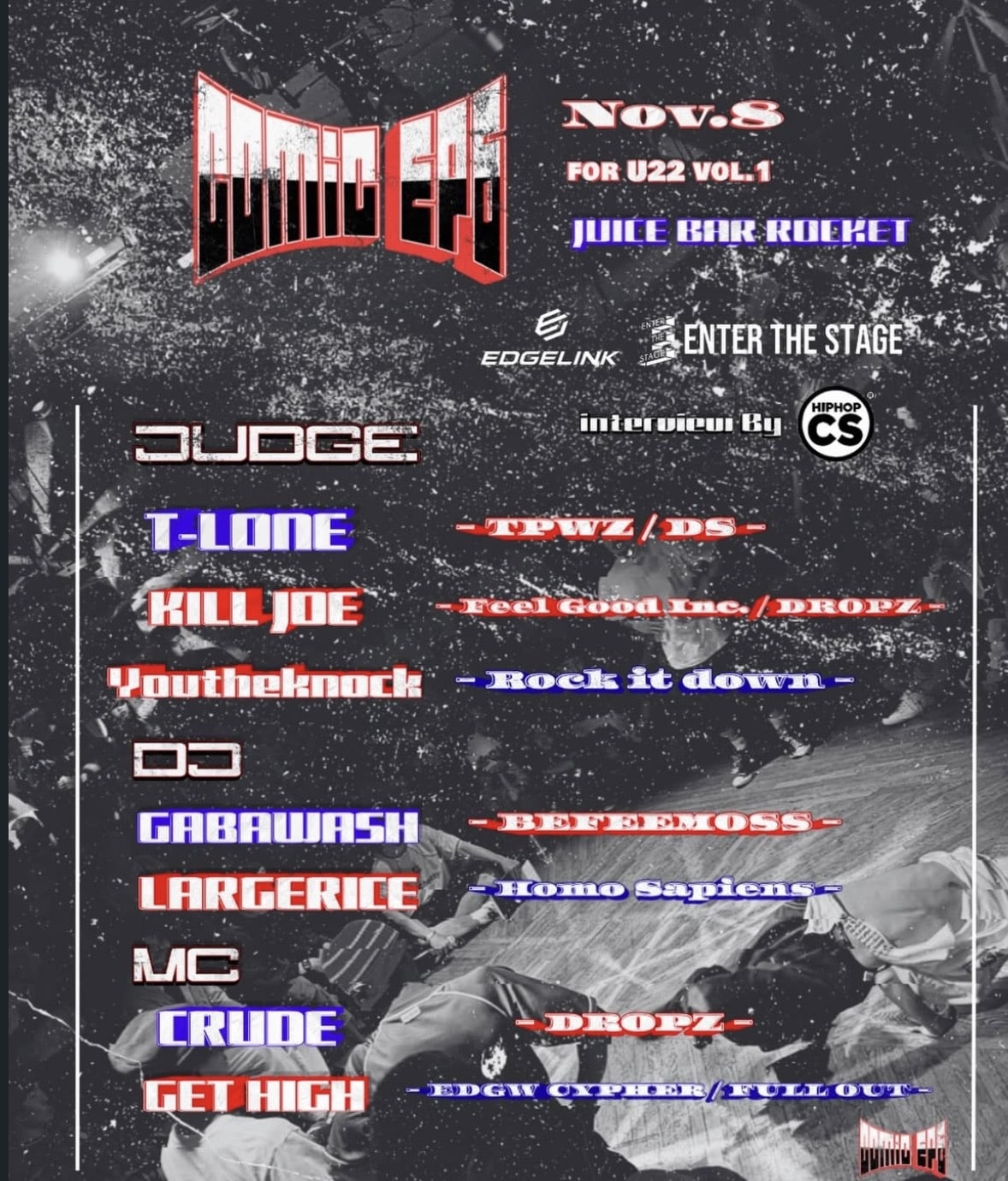
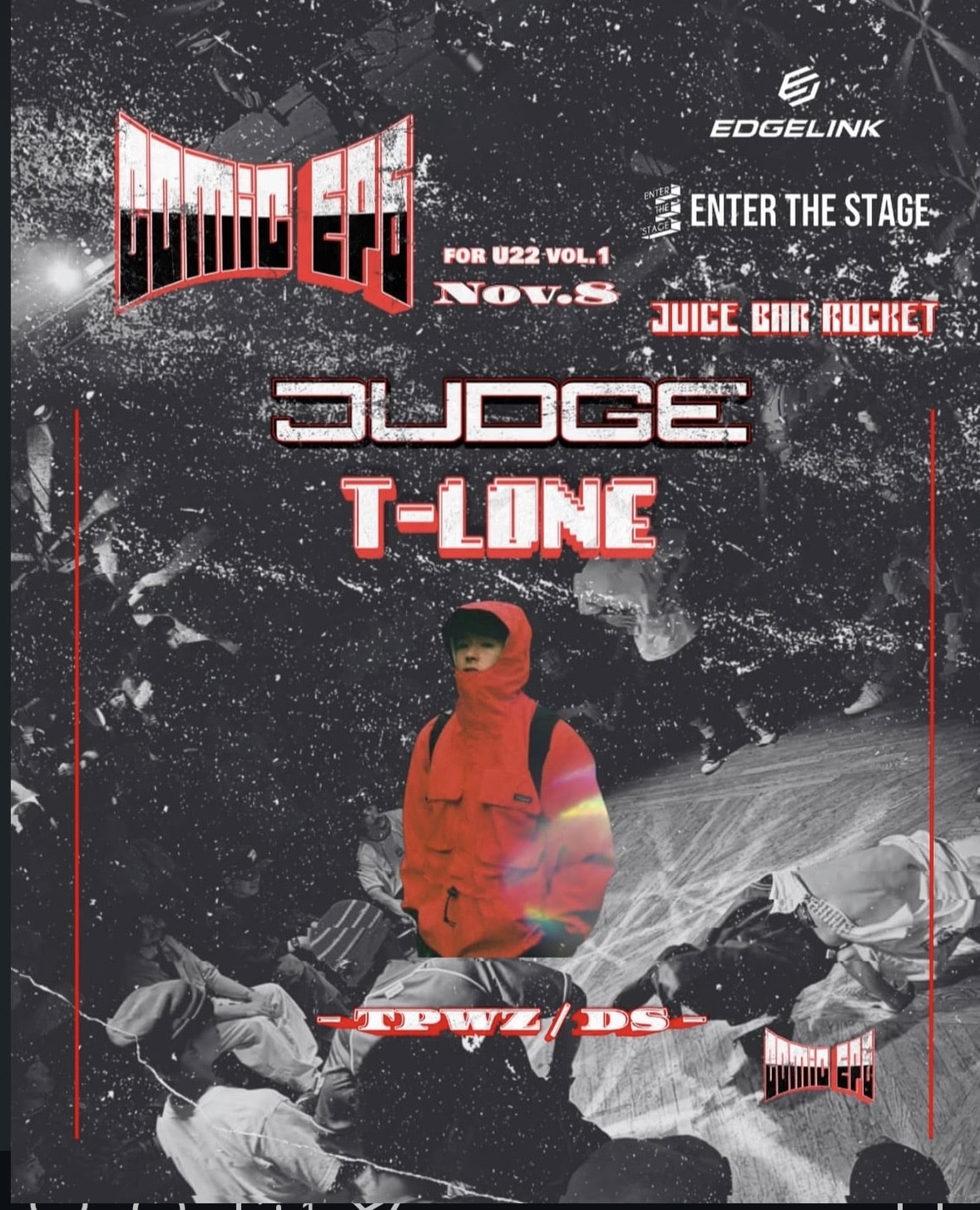
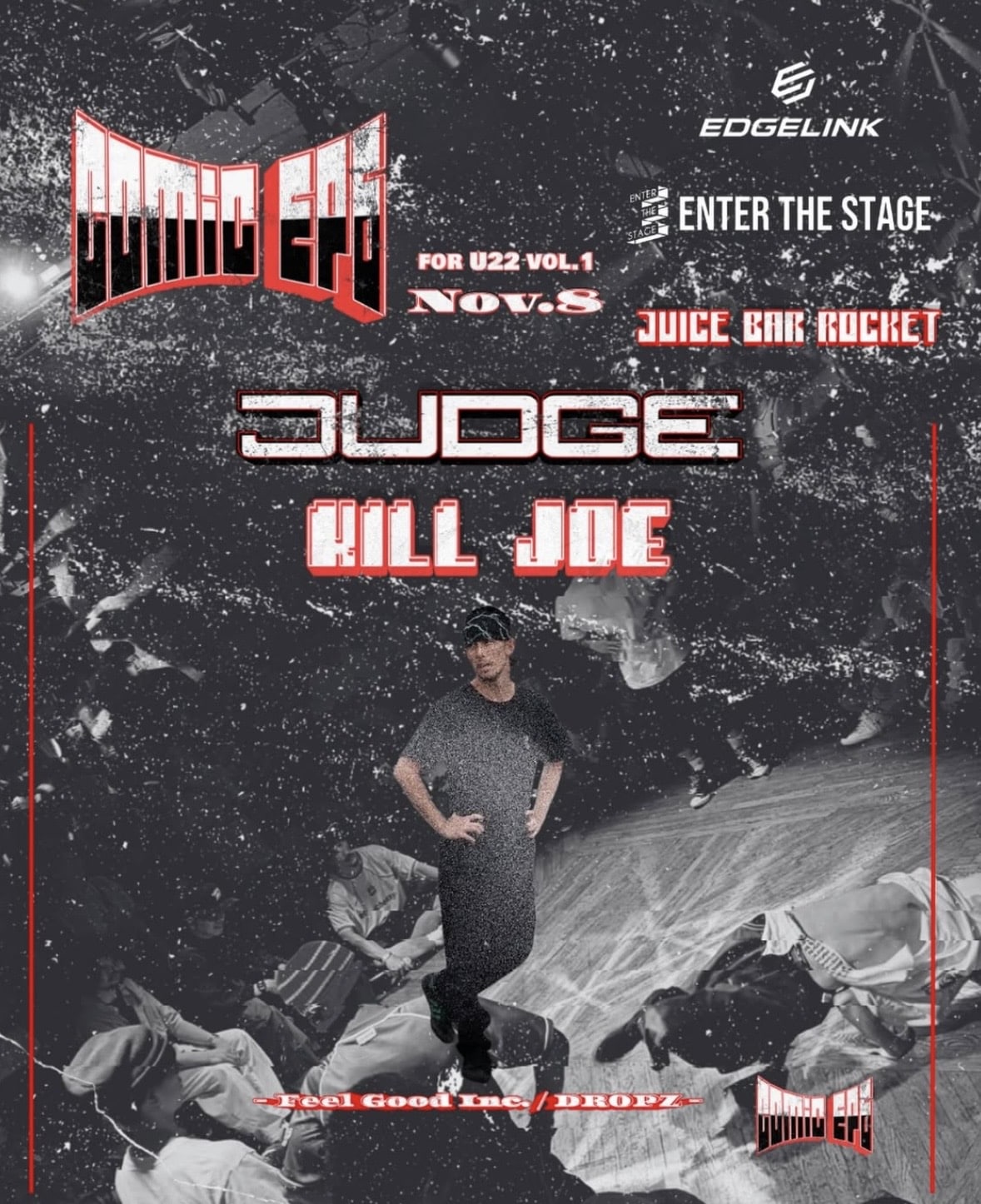
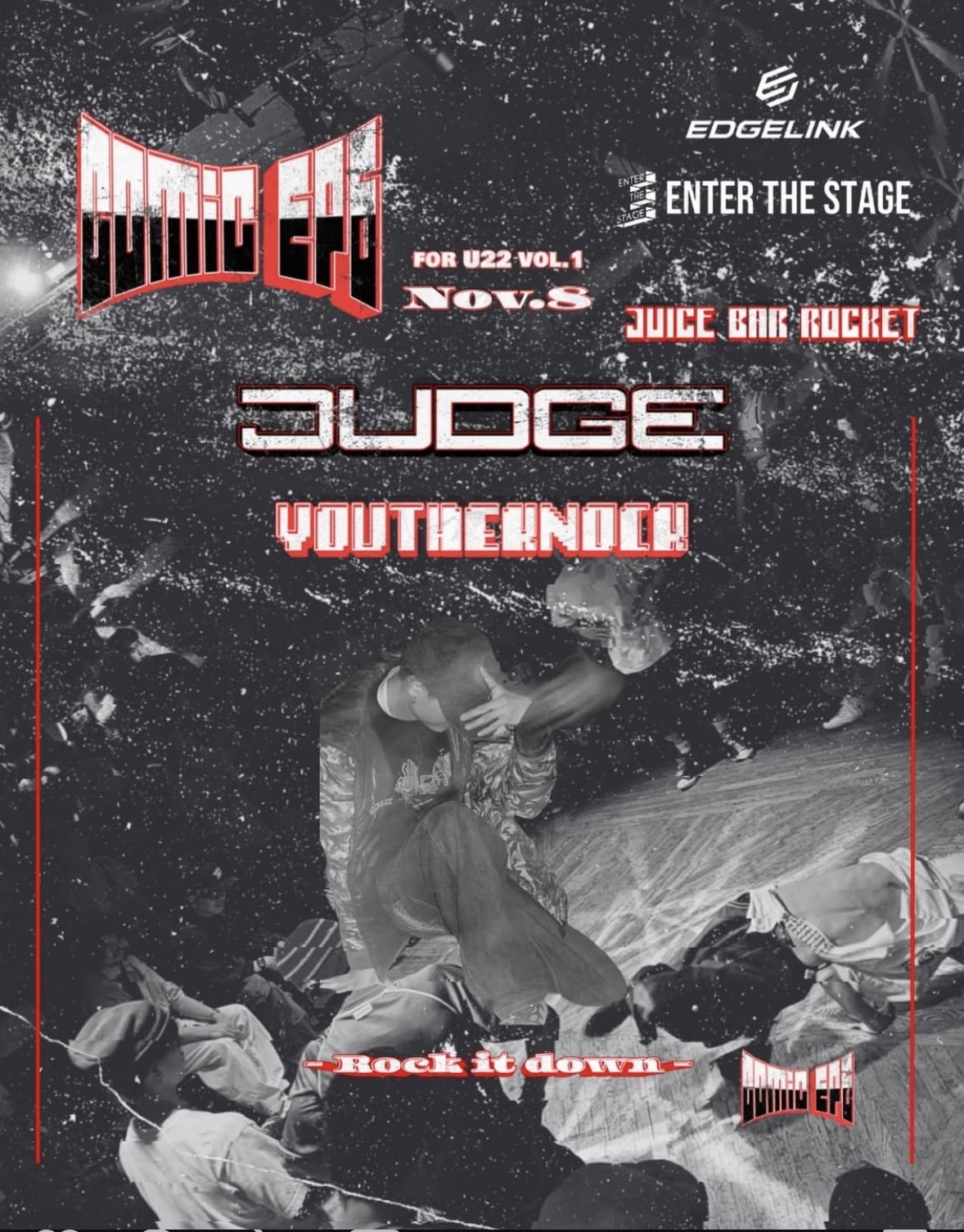
Judge introduction graphics: supplied materials.
December 26: the party announced in the original edition
The original Japanese edition also announced a party at JUICE BAR ROCKET for December 26, 2026. The plan was a party only, with no battle.
JURA especially encouraged B-boys, as well as people living nearby, to come along. Check COMIC’s official announcements for the latest details.
About the interview
Interview: Sam (HIPHOPCs). Writing and structure: Rei Kamiya. Interview participants: JURA, organizer of COMIC, and VIKN. Editing: HIPHOPCs editorial team.
Photographs and promotional graphics: supplied materials.
This article is based on HIPHOPCs’ own interview and supplementary information and corrections received afterward. The Japanese edition adjusted some wording and the order of passages for readability while preserving the speakers’ meaning. This English translation retains that published conversation. Material from outside sources, including competition records, is identified in the editorial passages.
Related reading
MAIKI BOOGIE Interview: Bringing Southern Dance Culture to Japan
Explore HIPHOPCs’ original interviews in English.
Sources supplementing the interview
The dialogue comes from HIPHOPCs’ original interview. The materials below support the historical context, event information and earlier results.
- Smithsonian National Postal Museum — Stamp Stories: Hip Hop: hip-hop’s four elements.
- ENTER THE STAGE — COMIC EP6 vol.1 for U22: the organizer’s listing of the date, venue, participants, entry conditions, rules, prizes and deadline.
- ENTER THE STAGE — FACE OF THE SCENE #005 JURA Interview, May 15, 2026: the meaning of COMIC’s name and philip’s inclusion among the announced judges for the 2026 final.
- FINEPLAY — COMIC THE FINAL 2023 event report, May 3, 2023: philip’s qualifying runner-up result, wild-card entry and 7 TO SMOKE win.
- COMIC FOR BBOY — MEDIA COMIC YoutheKnock Edition: the official documentary visiting the EP5 vol.3 winner’s hometown and familiar places.
- VIKN — TuneCore Japan artist profile: his artist name and its Japanese reading, and his connection to JUICE BAR ROCKET.
- COMIC’s official Instagram — philip’s 7 TO SMOKE win at COMIC THE FINAL. The post is linked above.
- COMIC’s official Instagram — the eight B-boys in 7 TO SMOKE. The post is linked above.
- COMIC FOR BBOY — COMIC THE FINAL 2025 7TO SMOKE: the official video of the 2025 final, linked above.
COMIC’s official Instagram: @comic_for_bboy.